Scandola nature reserve
An ancient volcano that collapsed into the sea, red cliffs and osprey nests: the reserve can only be seen by boat, and its rules are being revised.
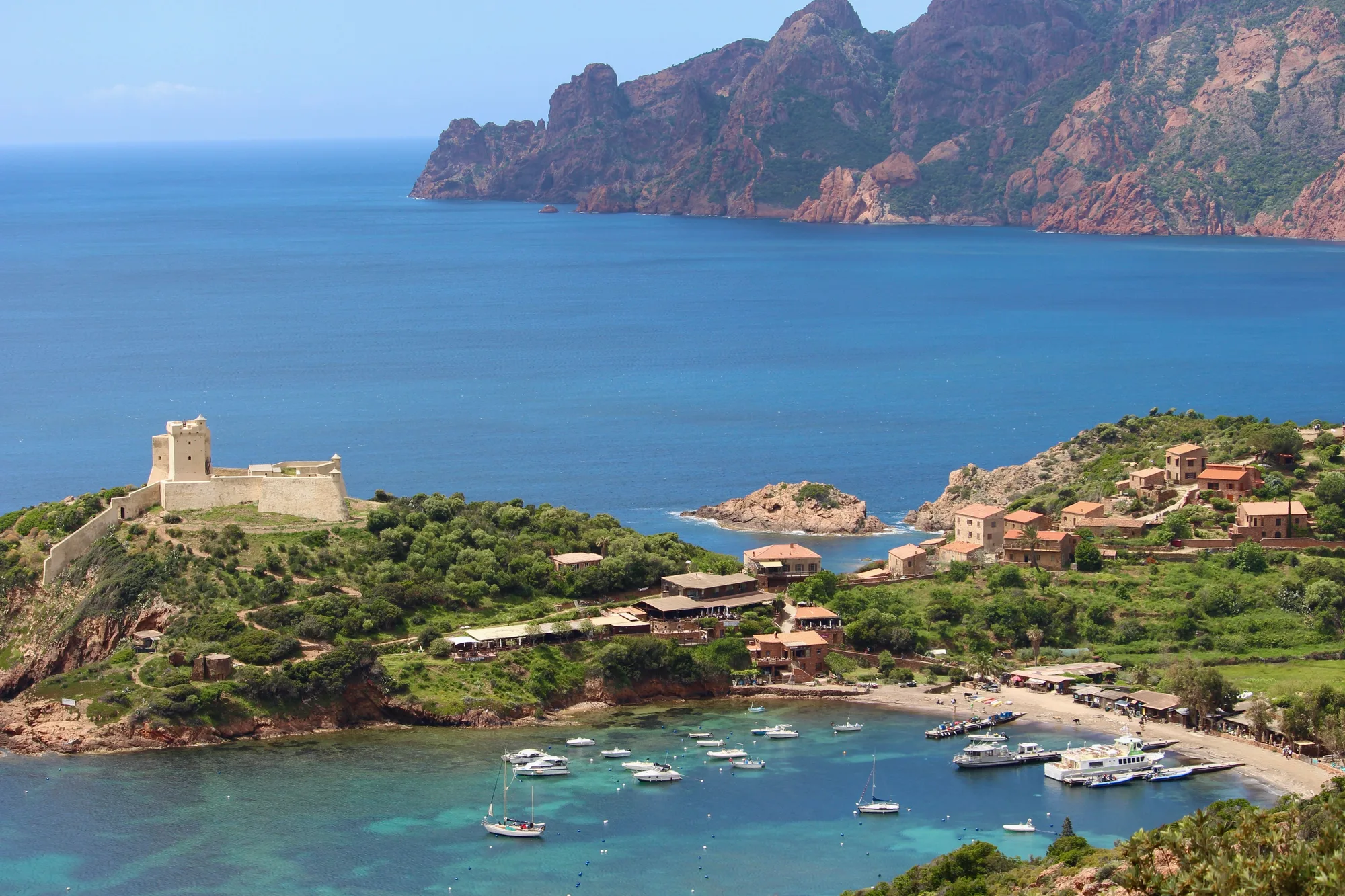
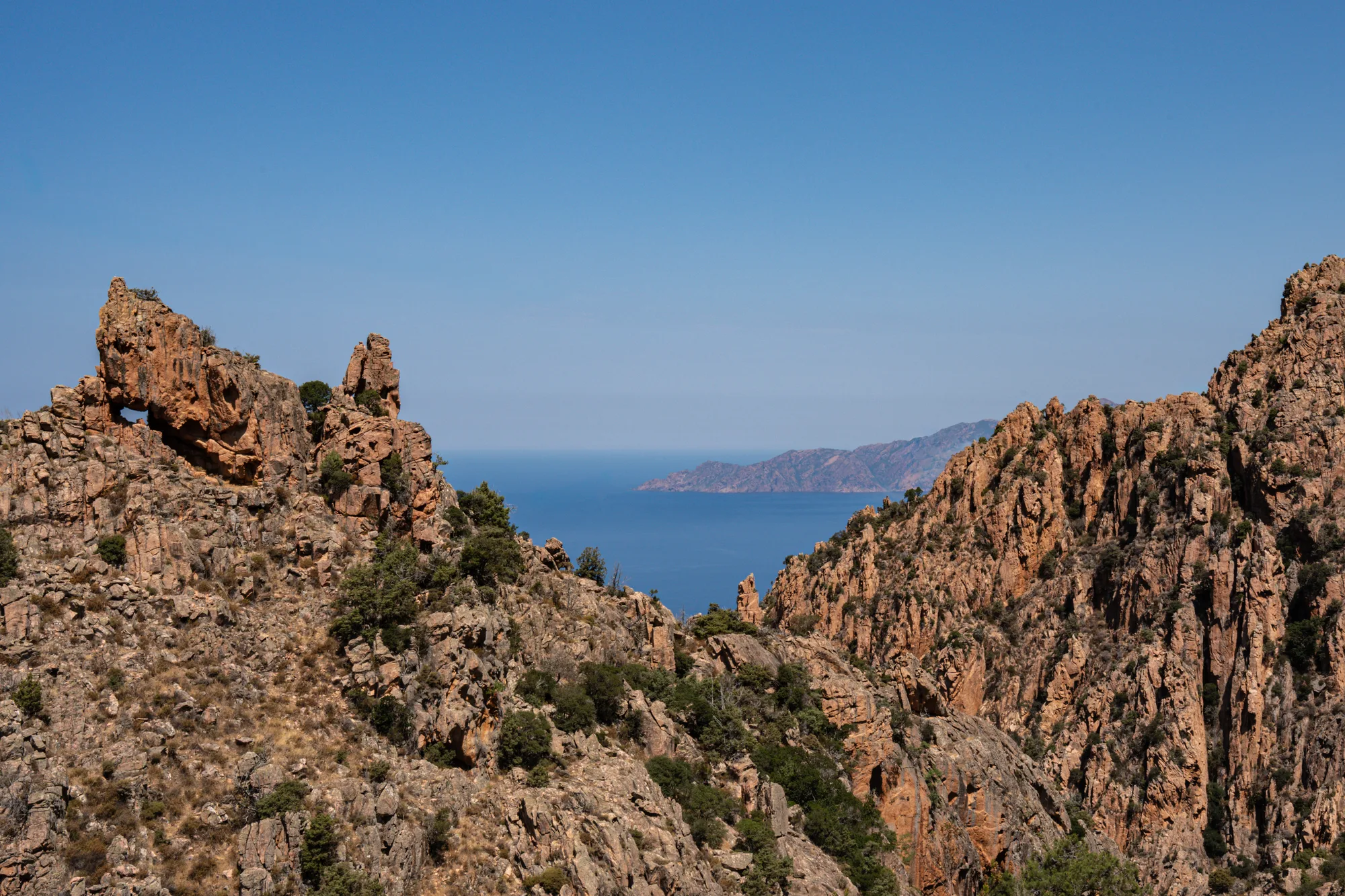
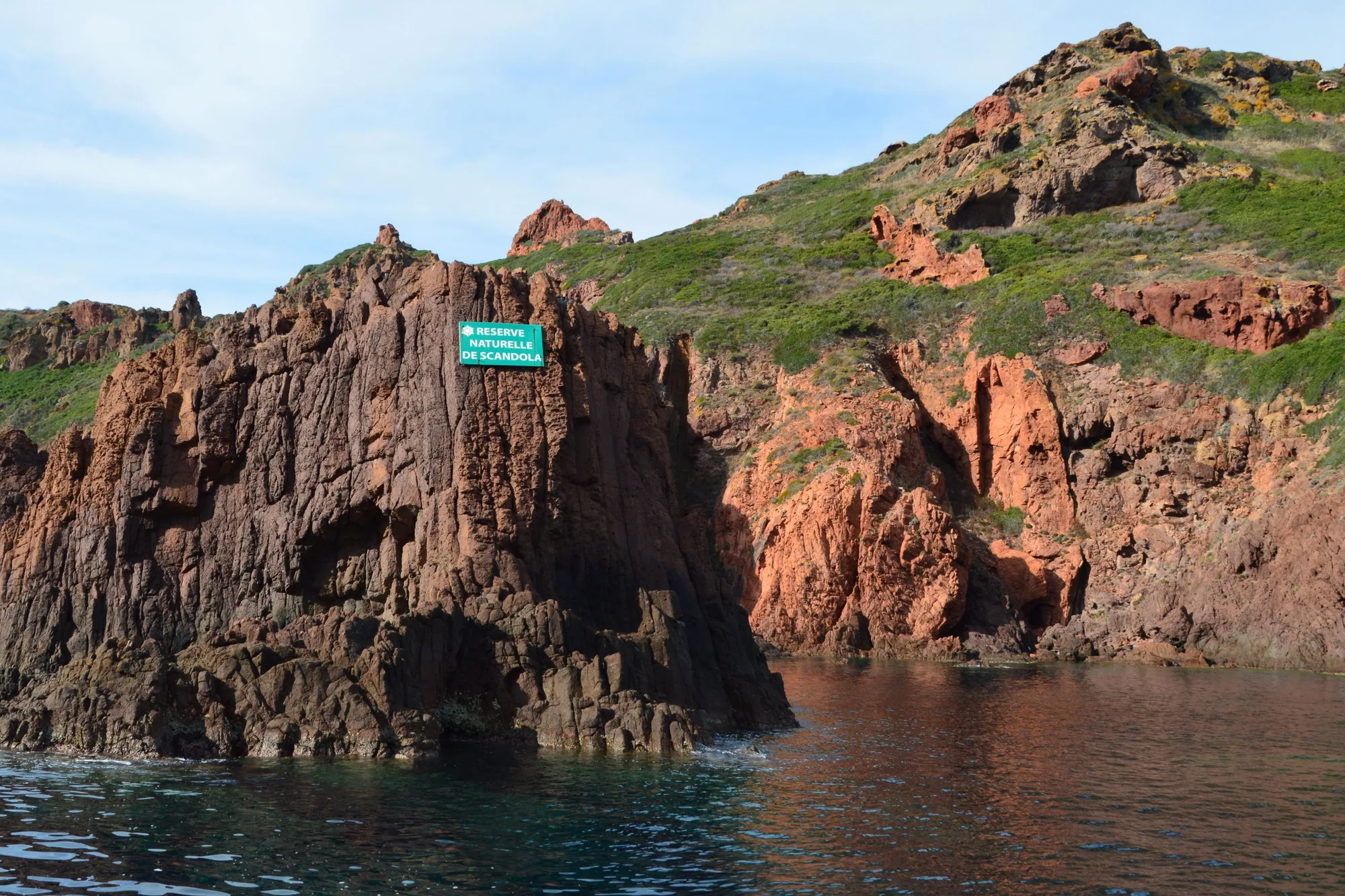
The Scandola peninsula, at the northern end of the Gulf of Porto, is the visible part of an ancient volcano that collapsed into the sea. Lava flows, rhyolite columns, caves and red pinnacles drop straight into very clear water. It was declared a nature reserve in 1975, the first in France to cover both land and sea, and since 1983 it has been part of the UNESCO World Heritage property listed as ‘Gulf of Porto: Calanche of Piana, Gulf of Girolata, Scandola Reserve’.
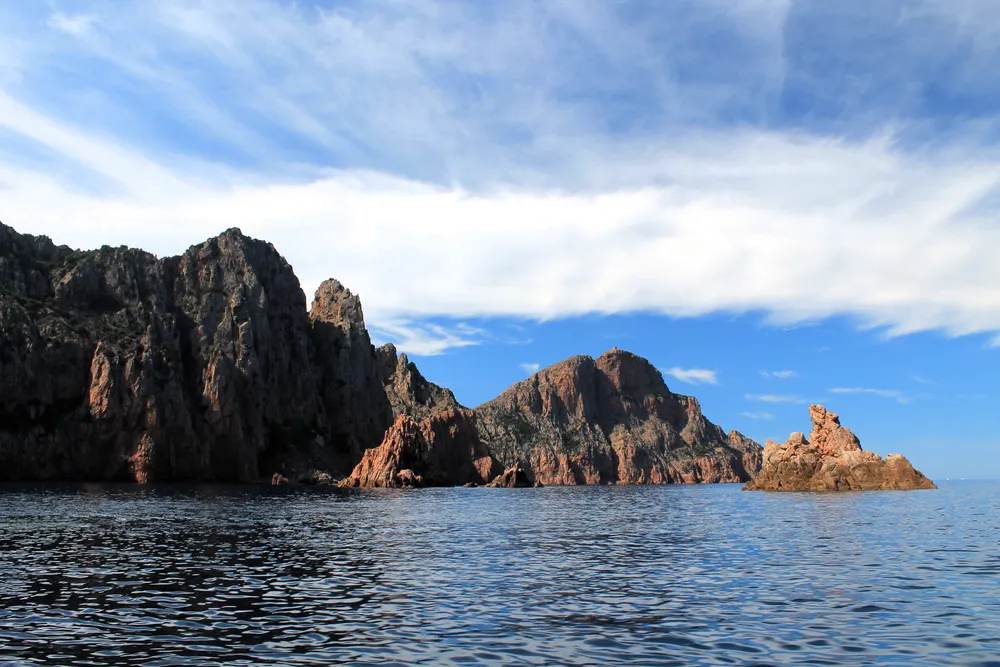 Photo : arnaud audoin / Pexels
What you will see
The reserve covers 919 ha on land and 604 ha at sea, including 70 ha of strict reserve. From the boat, you follow cliffs ranging from rust to violet, tunnels cut into the rock and the islet of Gargalu, at the northern tip.
The reserve is home to 38 endemic plant species, 17 of them protected. It is best known for its ospreys: 14 to 18 pairs settled there each year between 2020 and 2023. Their nests, perched on rock stacks above the water, can be seen from the sea. Underwater, the seabed runs from the surface down to great depths, with red coral, groupers and more than 450 species of algae.
Why go
It is the finest boat trip in Corsica, and the only way to see this coast: no road runs along it. In August, several hundred boats a day pass in front of the cliffs. Come in May, June or September instead, preferably in the morning, when the sea is calm and there are fewer boats. The late-afternoon light brings out the colours of the rock best, but the sea often gets up with the breeze.
Updated 30 October 2026
Getting there
No road and no path open to the public leads to the reserve: you see it from a boat, which follows the cliffs without landing.
From Porto
The nearest departure point. Standard trips last 1 hour 30 minutes to 2 hours 30 minutes; allow 3 hours or more with the stop at Girolata.
From Calvi
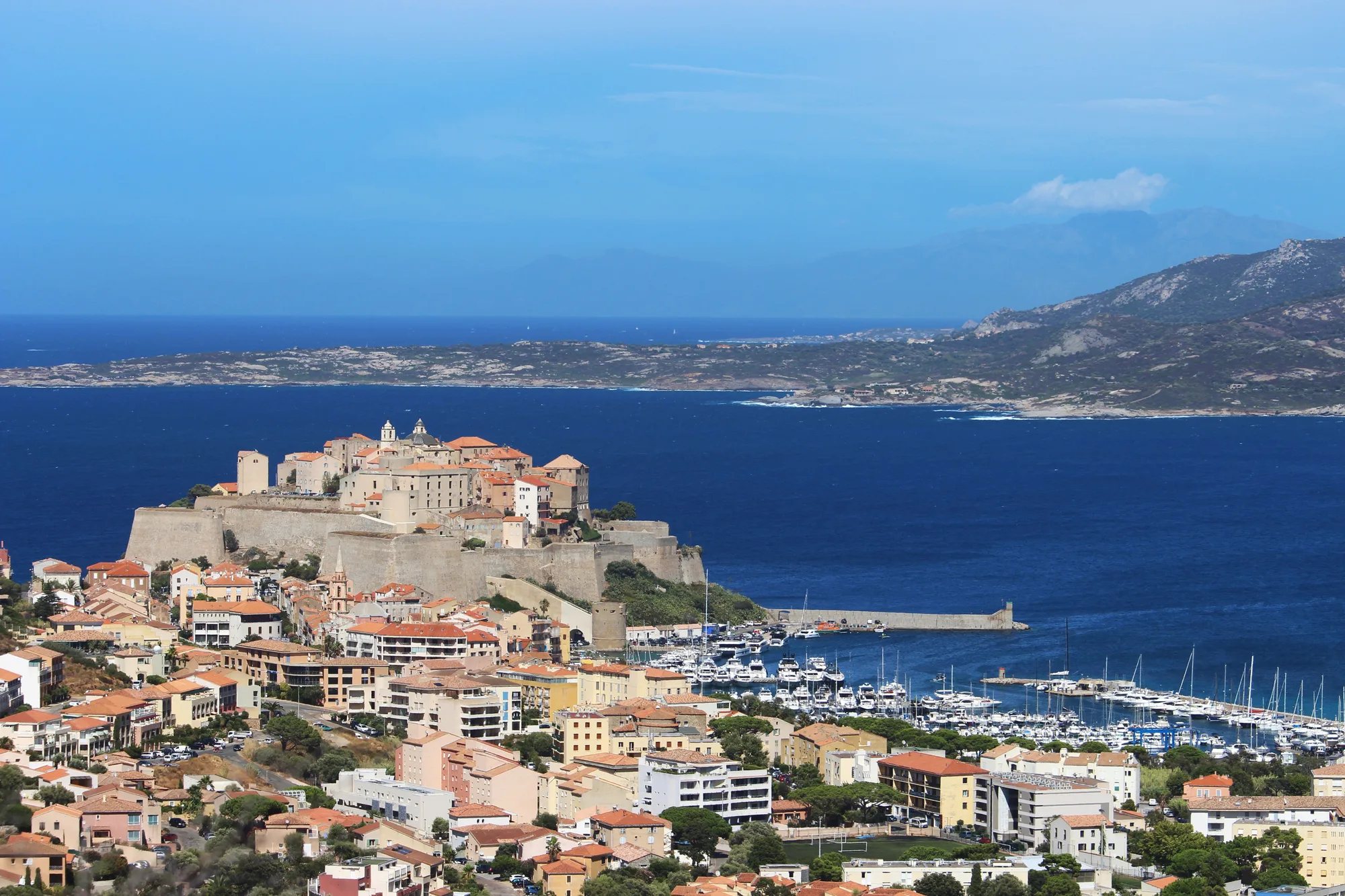
Boats round the Revellata peninsula, then follow the coast to Scandola: a half-day trip, or a full day with Girolata. See visiting Calvi.
From the south of the gulf
Excursions also leave from Ajaccio, Porticcio, Sagone, Cargèse and Propriano from April to November, and from Galéria in July and August only. The journey is longer: often a full day.
The ticket
The price may include the tax on sea passenger transport to protected natural areas, collected by French customs. See our travel formalities for Corsica.
The reserve’s rules
The reserve is governed by the decree of 9 December 1975 and managed by the *Parc naturel régional de Corse* (Corsica’s regional nature park). A revision of this decree is under way: the rules below are those that apply today.
Anchoring
Anchoring is banned at night throughout the reserve, and by day and night in the strict reserve, between the island of Gargalu and Punta Palazzu (maritime prefect’s order no. 17/2000). Boats may not stay for more than 24 hours.
Fishing and diving
Recreational fishing in all its forms, scuba diving and spearfishing are banned, as is taking any fauna or flora.
On land
Camping, fires, hiking, climbing and hunting are banned on the land area. Flying below 1,000 m is prohibited, drones included.
Ospreys
Quiet zones around the nests restrict approaches to the cliffs in spring and summer; they are set each year by prefectoral order. Boats must keep their distance.
The revision under way
The draft new decree, put to public consultation from 8 January to 12 February 2025, provides for a ban on anchoring by day and night across the whole marine area and a speed limit of 5 knots, with a strict protection zone around Gargalu. As of 30 October 2026, it has not been published. No text in force sets a quota on boats.
Finding out more
Up-to-date rules on the website of the Parc naturel régional de Corse and from the Mediterranean maritime prefecture.
Safety and precautions
Check the marine forecast
In a westerly wind, the sea builds quickly on this exposed coast and trips are cancelled. Keep a spare day.
Choose your boat
A large motor launch is more stable; a RIB is faster and gets closer to the caves, but is bumpier. A small group costs more, but you can hear the guide.
Protect yourself from the sun
There is hardly any shade on a RIB: bring a hat, sun cream, sunglasses and a bottle of water.
No swimming in the reserve
Excursion boats do not stop for swimming at Scandola. If you want to swim, choose a trip with a stop at Girolata or in a cove outside the reserve.
Boat trips to Scandola
Rated excursions from Porto, Calvi and Ajaccio.
Prices and ratings checked on GetYourGuide in October 2026. We may earn a commission when you book through our partner links, at no extra cost to you.