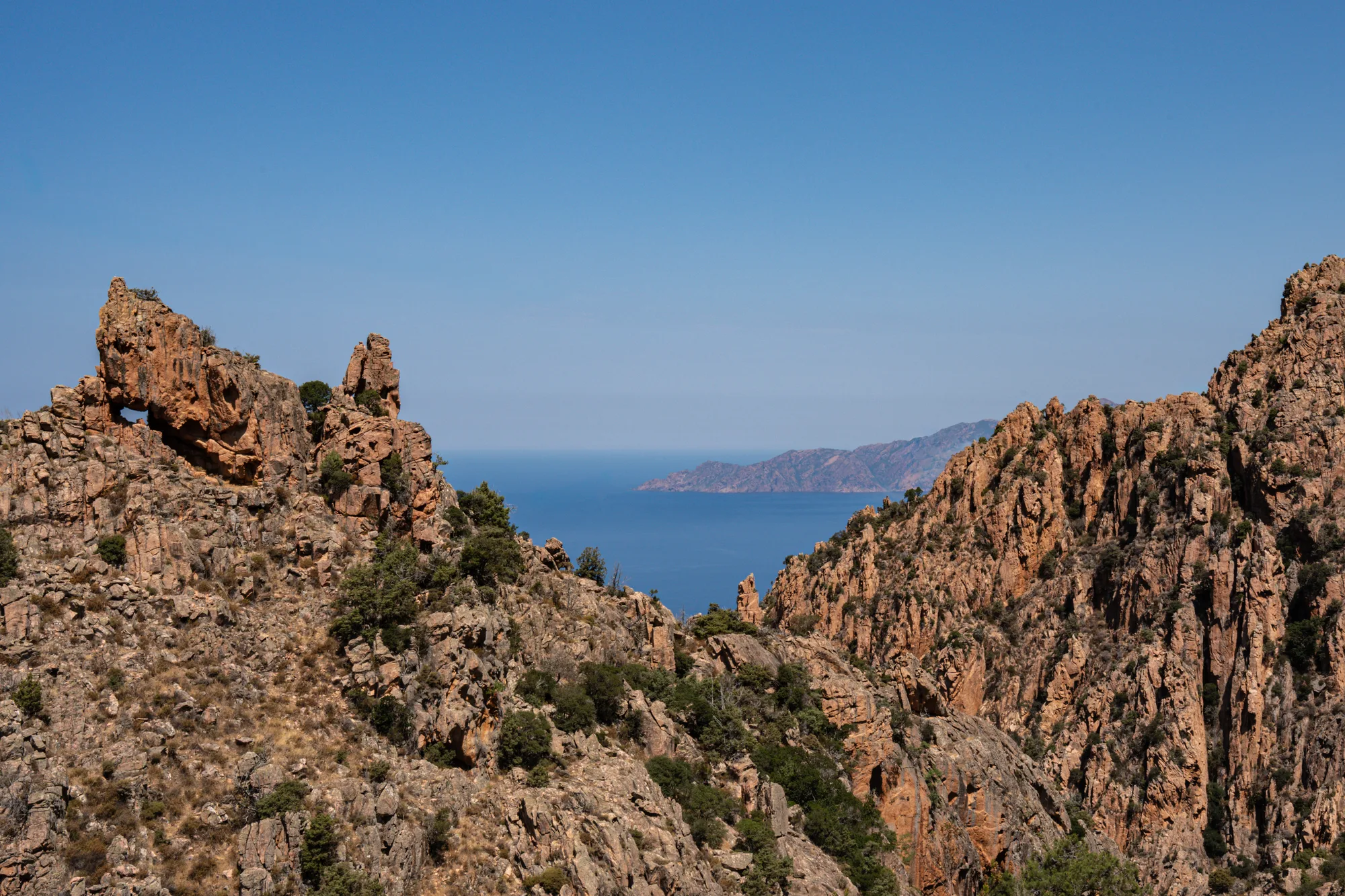
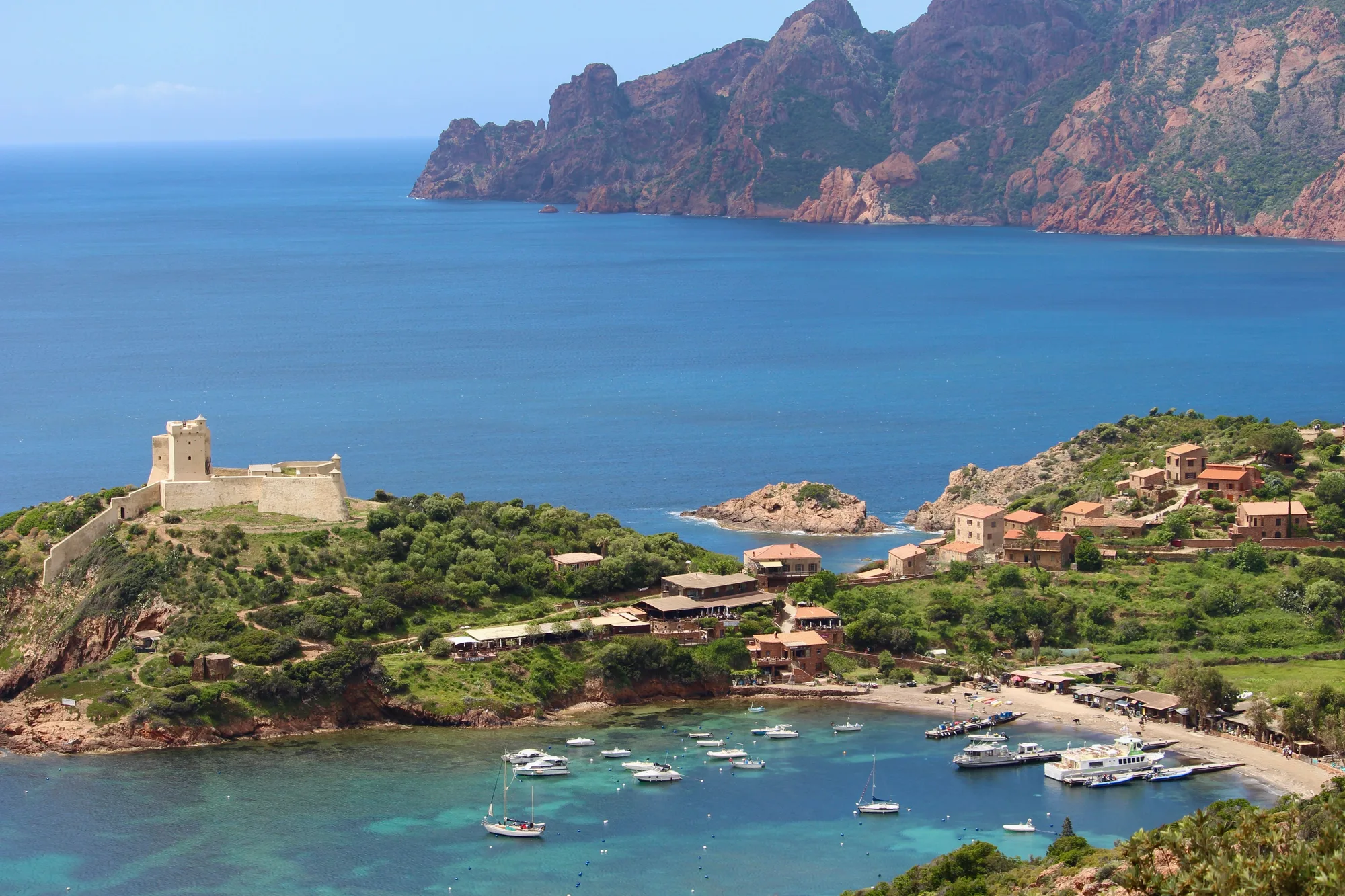
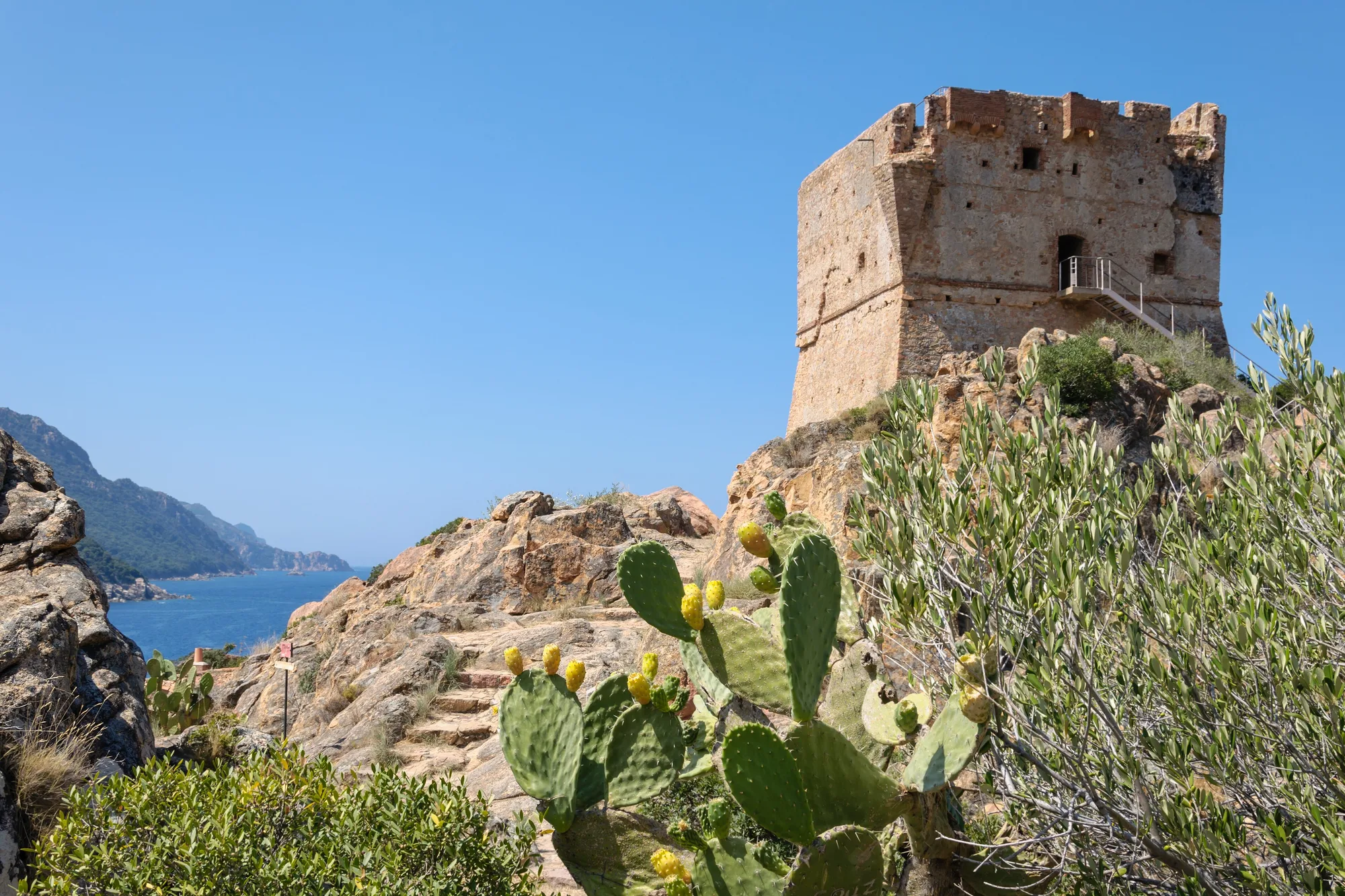
The calanche of Piana (singular calanca), known in French as the Calanques de Piana, tower over the Gulf of Porto on the west coast, halfway between Ajaccio and Calvi. Erosion has carved the red granite into hollows (the taffoni), arches and pinnacles, and from the road you can pick out all sorts of shapes. Maupassant described them as ‘up to three hundred metres high’ above the sea. The site is part of the property inscribed on the UNESCO World Heritage List in 1983.
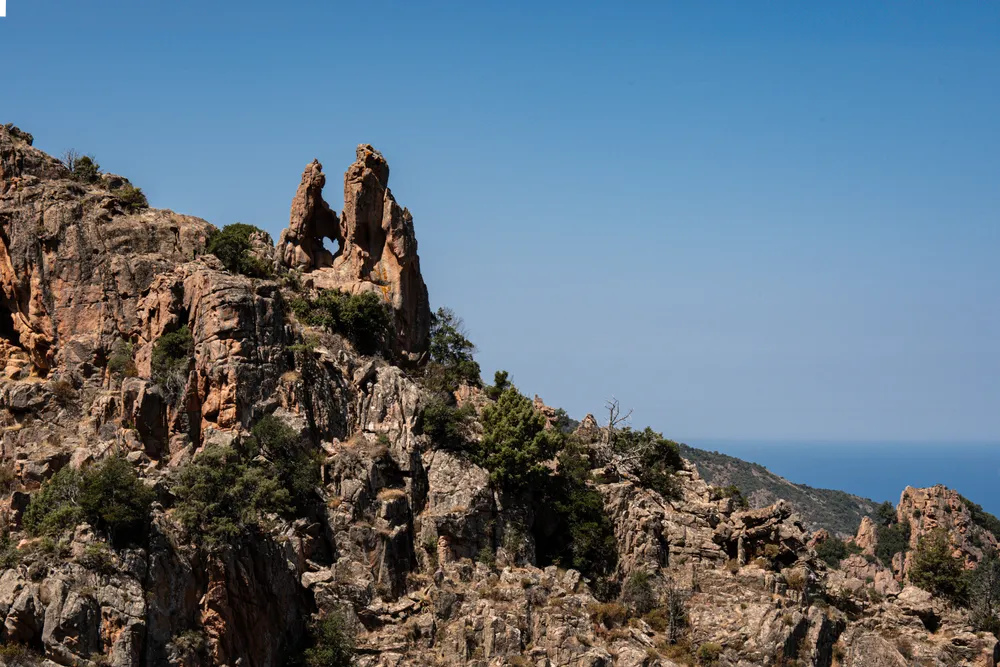 Photo : Tina P. / Pexels
What can you see at the Calanques de Piana?
Coming from Porto, the Tête de Chien (Dog’s Head) appears on a hairpin bend about 7 km from the town and marks the entrance to the site. As you follow the D81, look out for:
- the Dromedary (le Dromadaire), on the ridge above the Roches Bleues chalet;
- the profile of an Indian chief, to the right of a rock called the Prayer (la Prière);
- the Tortoise (la Tortue), which you can see from the Roches Bleues terrace;
- the Bishop (l’Évêque), with his mitre, at the foot of the Heart;
- the Heart of the Petrified Lovers (le Cœur des amants pétrifiés), a heart-shaped rock with a hole through it, about 9 km from Porto, where you leave the calanche.
The rocks change with the time of day: late afternoon, when the sun sinks over the gulf, gives the granite its reddest colour.
Why go
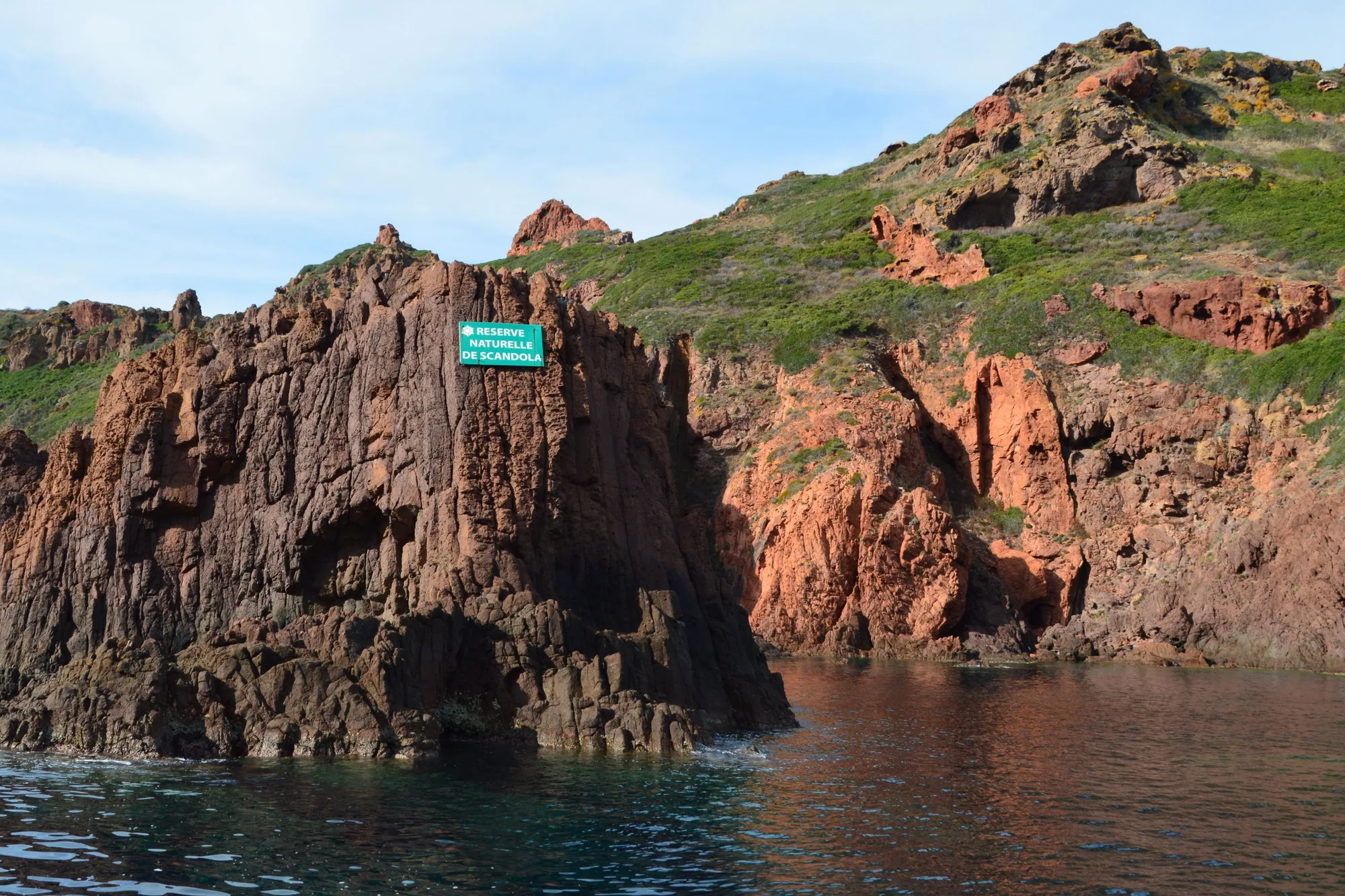
It is one of the most spectacular roads in Corsica, and you can drive it in an hour. Seeing them from the car is not enough, though: you cannot stop wherever you like, and the bends leave little time to look. Park and walk for an hour along the mule track: you will see the rocks up close, in peace, away from the traffic. From the sea the view is completely different, with the cliffs dropping straight into the water.