Palombaggia Beach (Porto-Vecchio): tips and photos
Two kilometres of sand between the pines and the red rocks, facing the Cerbicale islands: the best-known beach in the south of Corsica.
We may earn a commission when you book through our partner links, at no extra cost to you. Updated 1 November 2026
Why go to Palombaggia
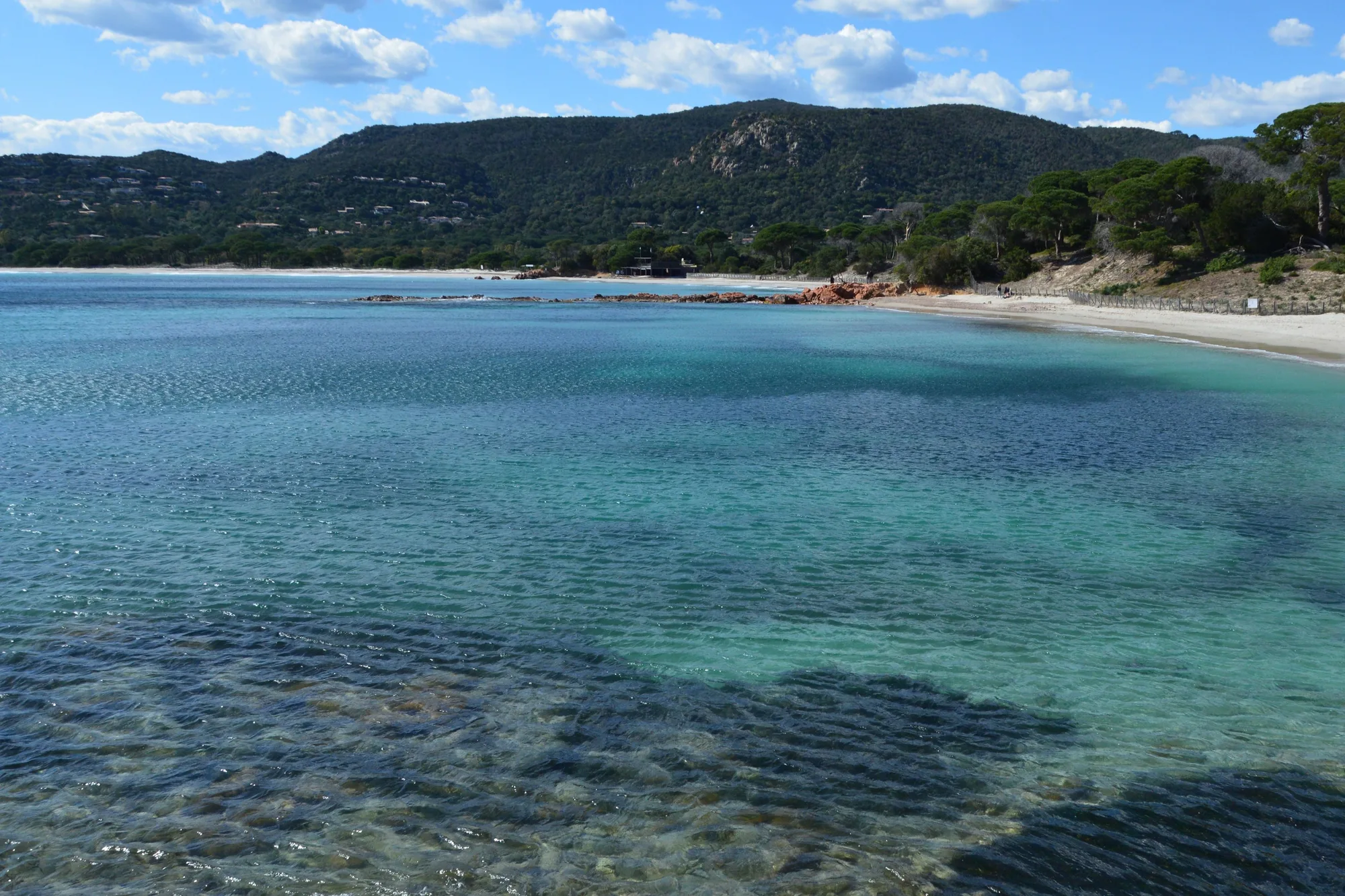
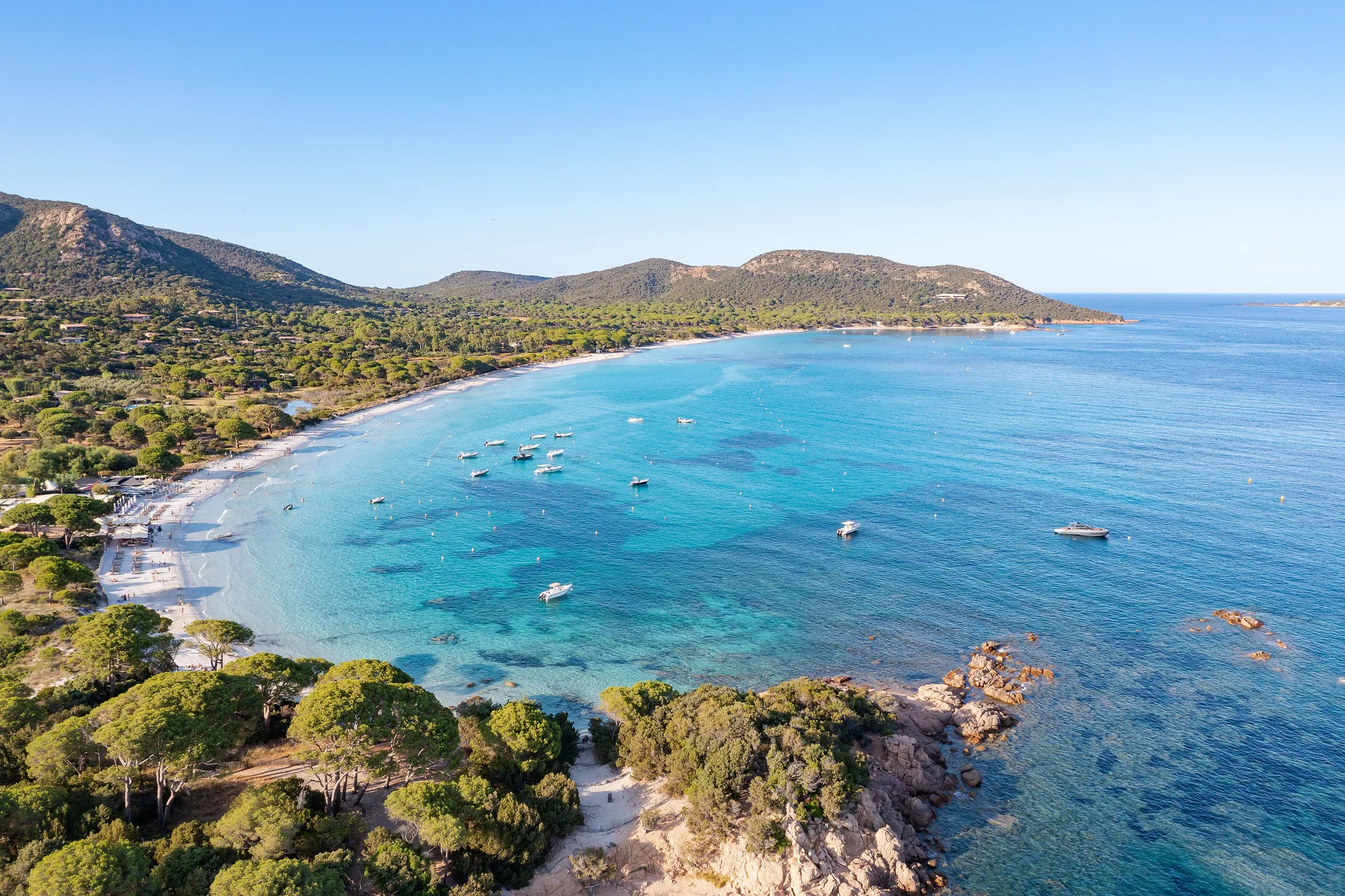
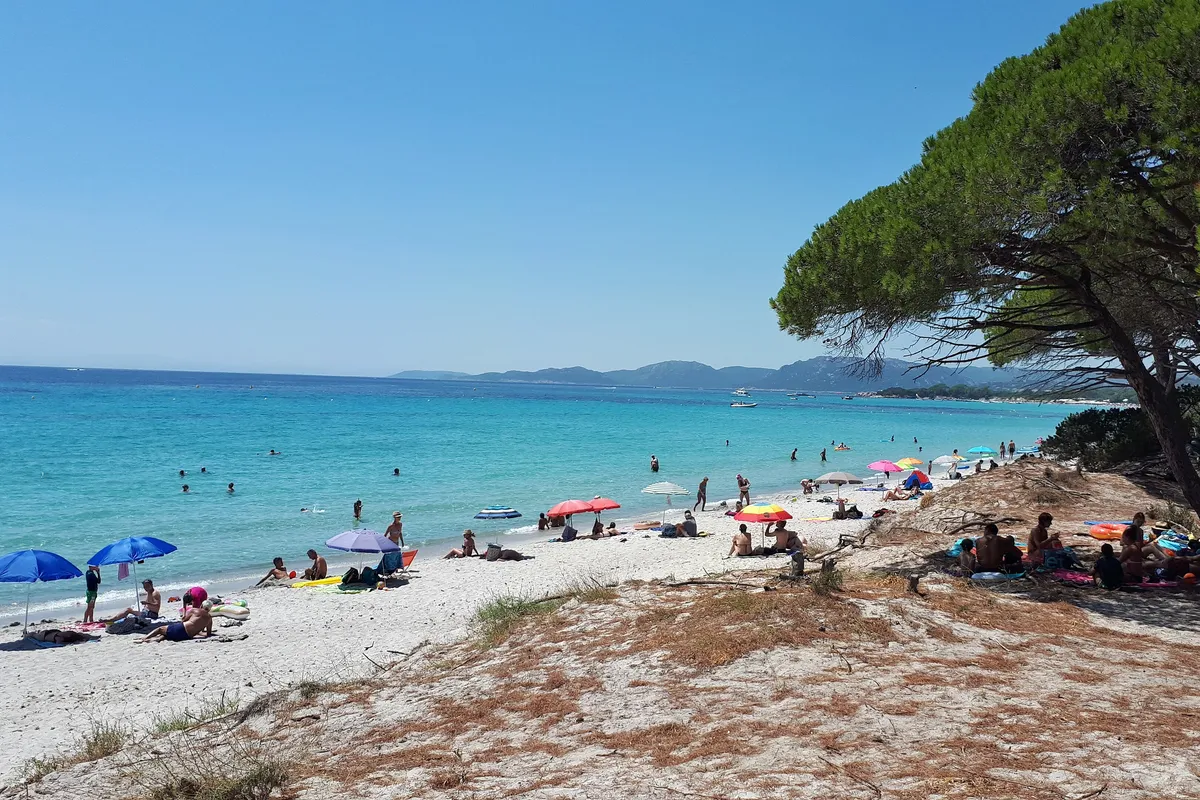
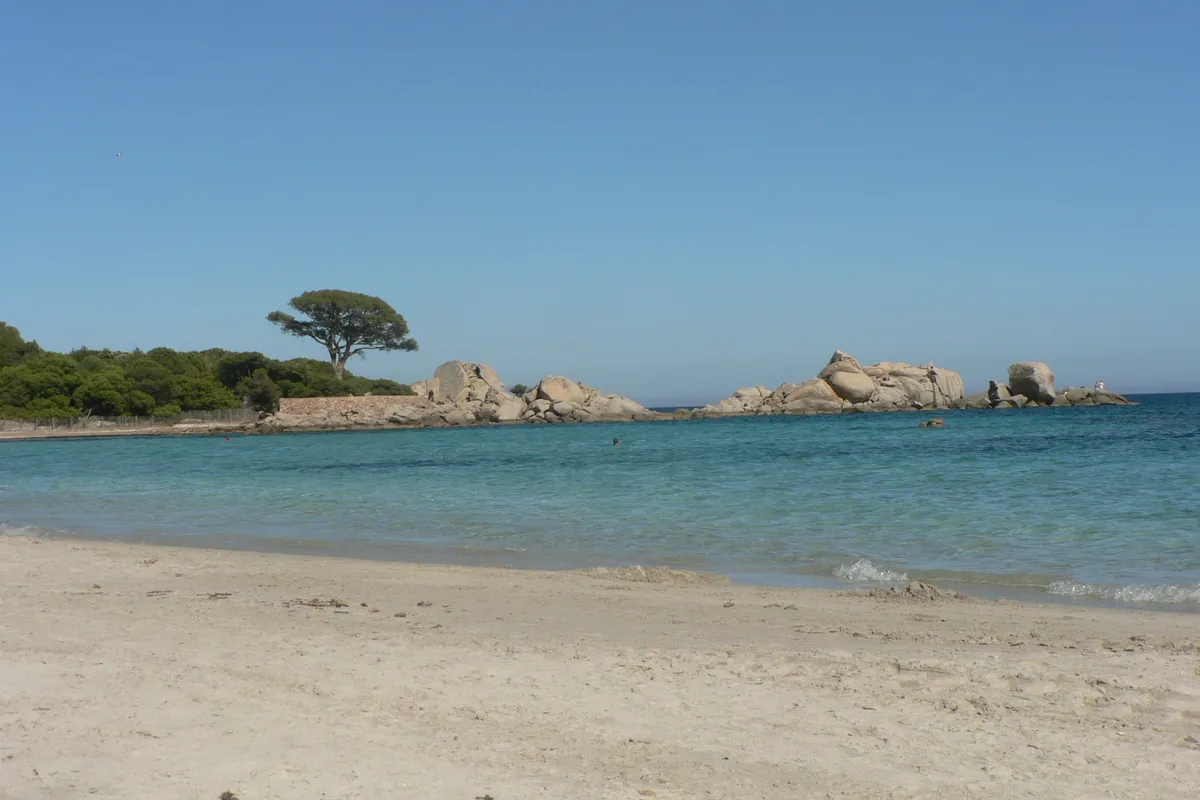
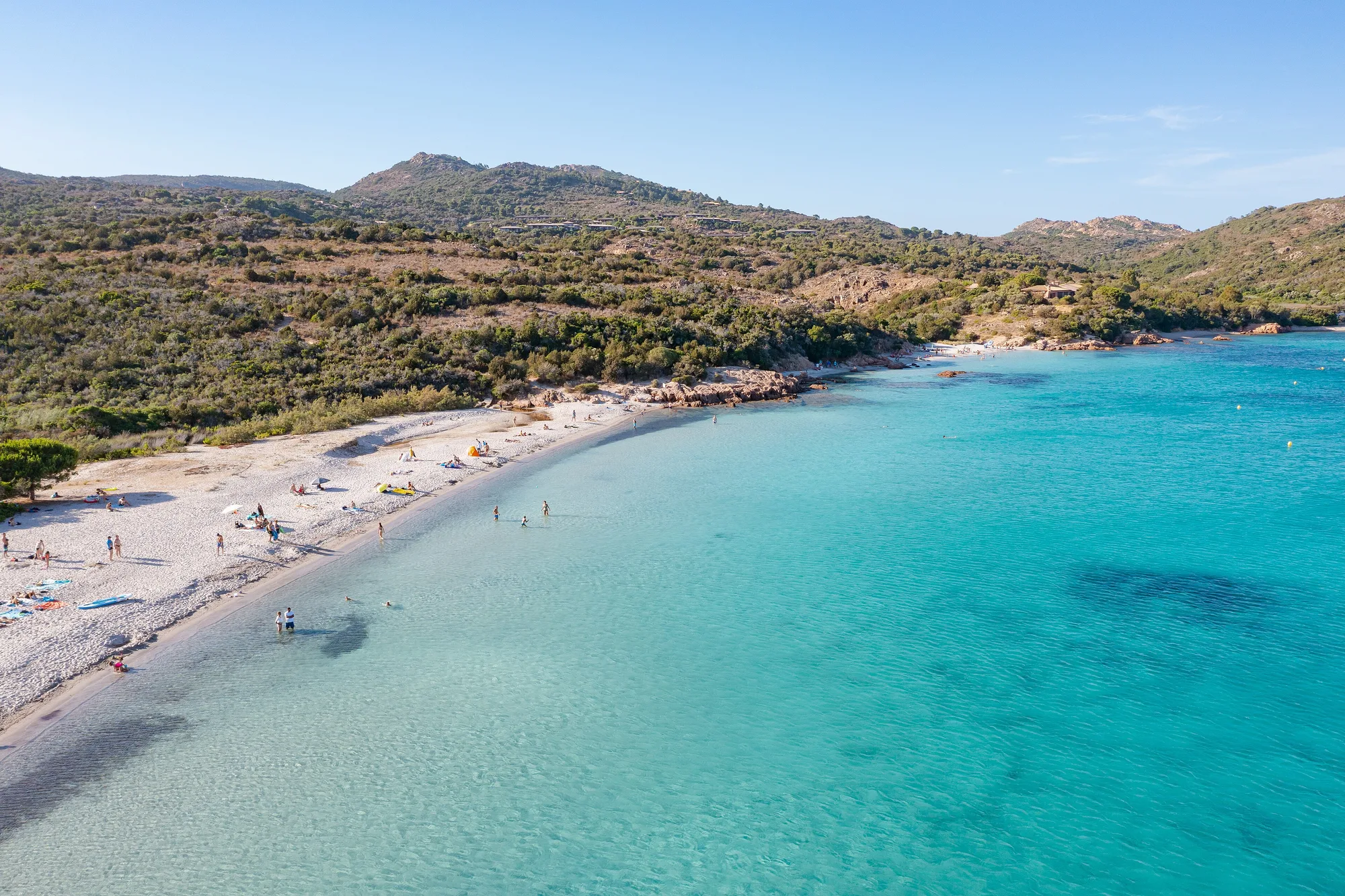
Palombaggia is the beach people come to see in the south of Corsica, and it lives up to its reputation: nearly two kilometres of pale sand, umbrella pines right down to the water, pink porphyry rocks at both ends and, offshore, the Cerbicale islands. The beach faces south-east, so in the morning the sun rises almost straight ahead.
The downside is well known. In July and August, the access road is jammed, the car parks fill up before mid-morning and the middle of the beach disappears under towels. It is worth the trip if you choose your moment: early in the morning in summer, or in June and September, when the sea is still warm and the crowds have gone.
Type of beach: sand, water and swimming
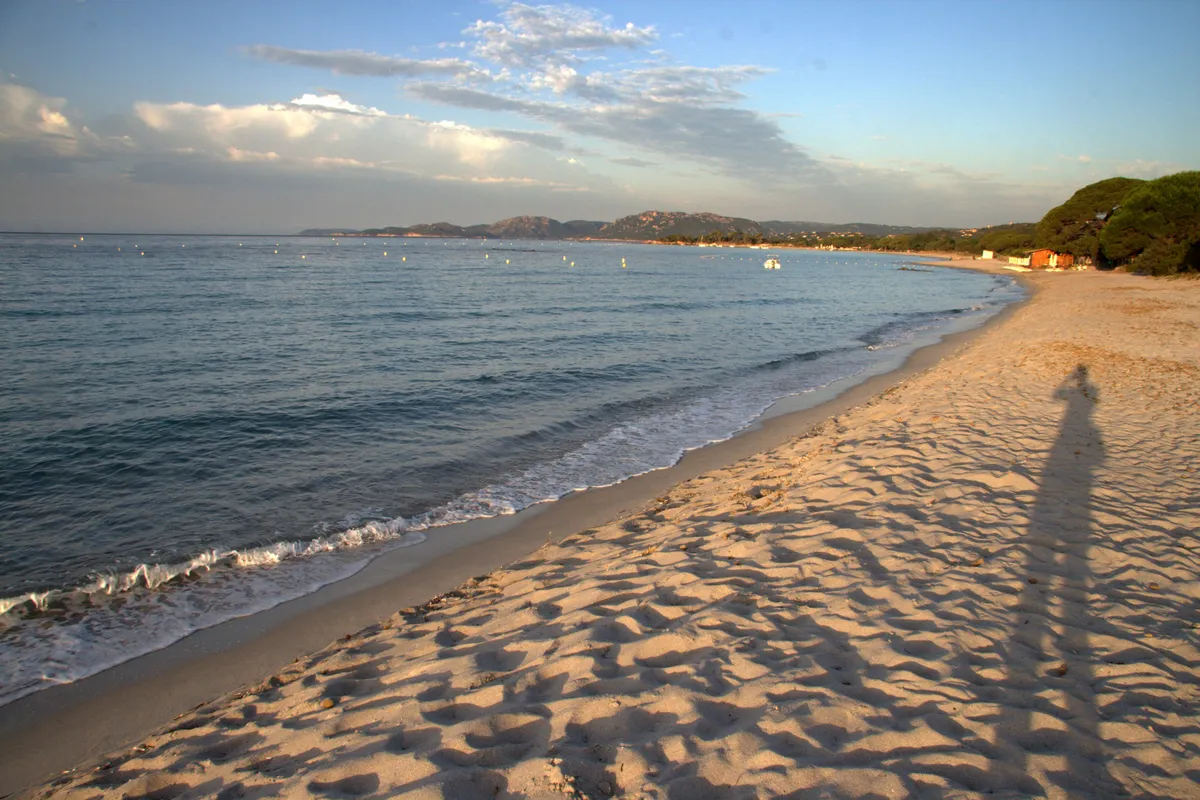
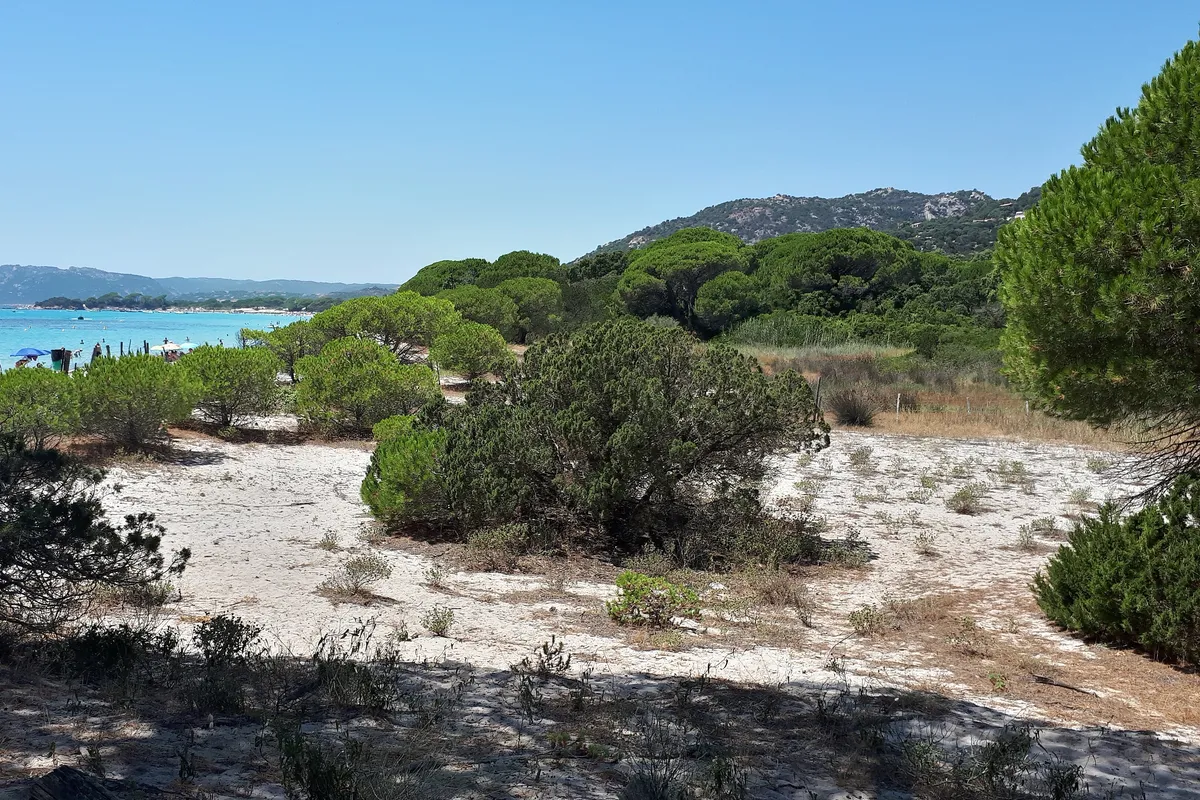
It is a narrow beach of pale sand, backed by a dune covered with pines and low vegetation. The Conservatoire du littoral, the public body that protects the French coastline, protects this 18-hectare site, which it calls Palumbaggia. The dune is fragile: sand fences close it off, and you reach the beach along marked paths.
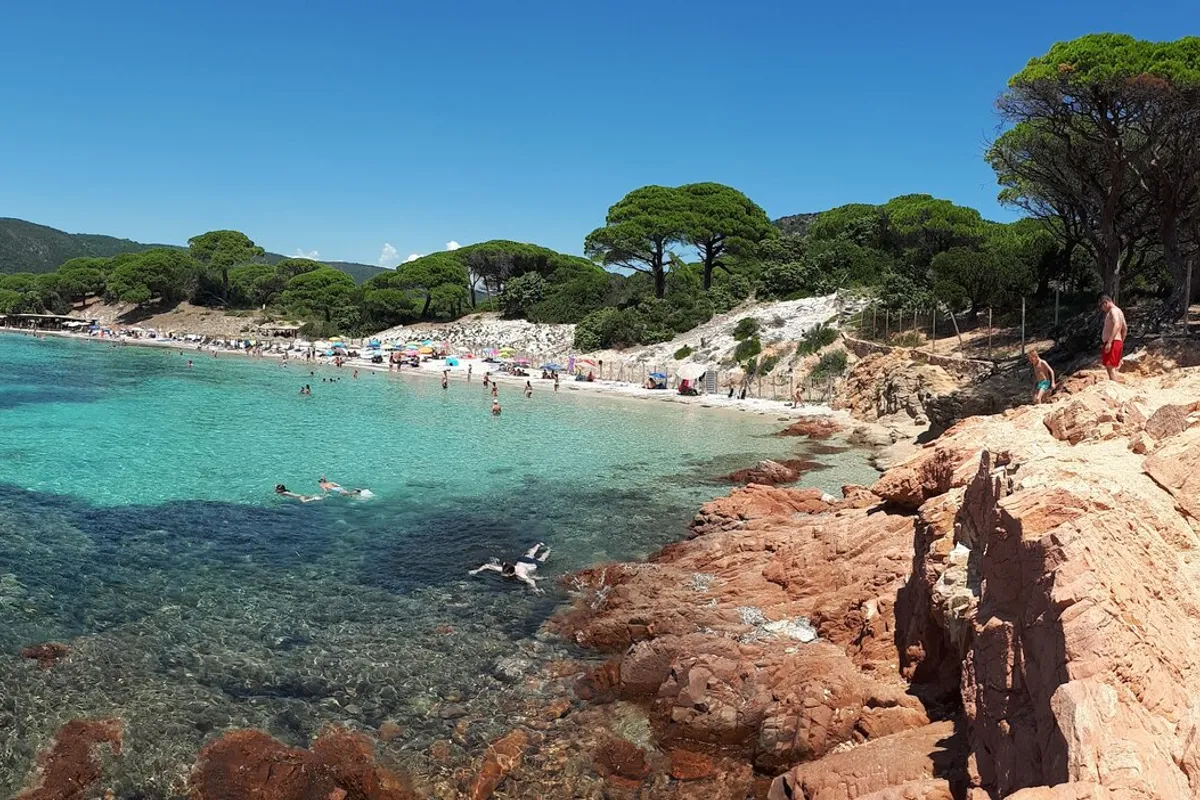
The water is clear and turns turquoise over the sandy patches. At both ends, the porphyry rocks form coves where you can snorkel. According to recent averages (2023-2025) from the Open-Meteo Marine dataset, the sea offshore is around 23 °C in June, 26 °C in July, 27 °C in August and 24 °C in September. It drops back to about 22 °C in October.
Swimming is supervised in July and August, from 11.30am to 6pm, from the lifeguard station at Cala di Lume, in the middle of the beach (Porto-Vecchio tourist office, 2026 season). The rest of the year, and everywhere else on the beach, you swim at your own risk.
The parts of the beach
The beach changes a little from one end to the other. The tourist office and the Agence du tourisme de la Corse (the Corsican tourist board) describe it in two parts, plus the south-western end.
To the north-east, I Pini is the most sheltered part: the water stays shallow, the free car park is just behind it under the pine wood, and there are accessible toilets. The pink rocks of the point close off the beach on this side.
In the middle, Cala di Lume has the lifeguard station, the beach restaurants and, in summer, most of the swimmers.
To the south-west, towards Punta di Colombara, the sand ends in rocks and a small islet topped with a pine. Beyond the point, another beach begins: Tamaricciu.
When to go
June and September are the best months: the sea is already or still warm, and parking is easy. In July and August, come before 9.30am, as the tourist office advises, or late in the afternoon, when some of the crowd heads home. The beach faces south-east: in an easterly wind, the sea gets up and the water turns cloudy. Check the marine forecast the day before.
Respecting the dune and the pine wood
The rules on Conservatoire du littoral land are simple: no camping, no fires, no motor vehicles outside the car parks, and take your rubbish away with you. On the beach, keep off the dune and do not park under the pines outside the marked spaces: trampling and unauthorised parking do the most damage.
Palombaggia or Santa Giulia?
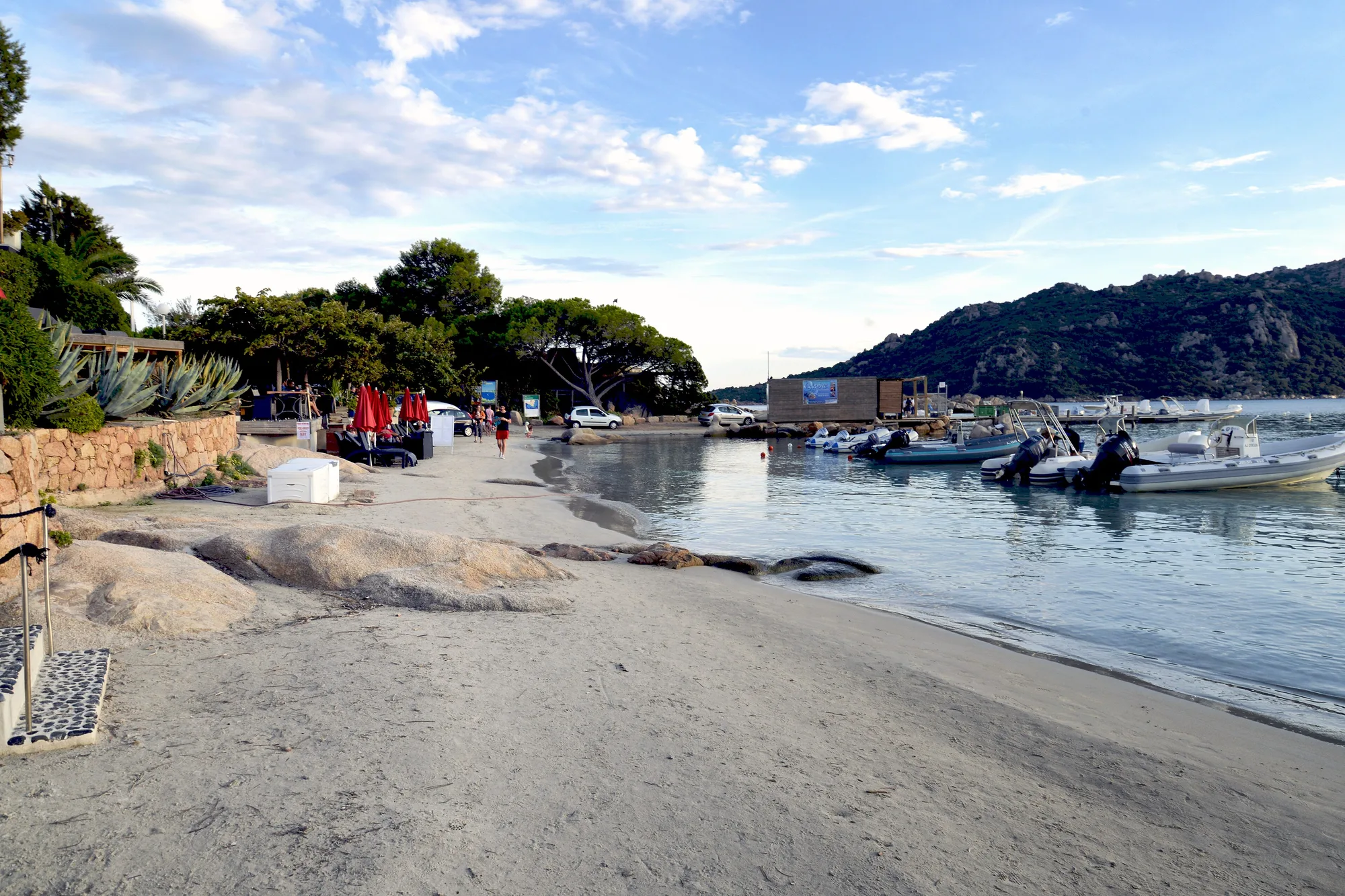
Both beaches lie south of Porto-Vecchio and look alike in photos. Palombaggia has the length of sand, the pines and the view of the Cerbicale. Santa Giulia, further south, is an enclosed bay, almost a lagoon, with very shallow water and a watersports centre: it is often the easier choice with young children. If you have a week in the area, see both, and keep Palombaggia for a morning in June or September.
For a trip out to sea, the Cerbicale islands opposite the beach are a nature reserve: you can sail along them or dive there, leaving from Porto-Vecchio.
How to get there
Palombaggia is about a dozen kilometres south of the centre of Porto-Vecchio. Without a car, the only service is the summer shuttle bus.
By car
Allow about half an hour from the centre of Porto-Vecchio (13.6 km, OSRM calculation, outside summer and without stops): take the T10 towards Bonifacio, then the Palombaggia road, the D859, which runs along the coast. The road is narrow and very busy in July and August.
Parking
According to the tourist office, there is a free public car park under the pine wood; the beach restaurants also have their own car parks, reserved for their customers. In July and August, the office advises you to arrive before 9.30am.
From the car park to the sand
From the pine-wood car park, to the north-east, the sand is 320 m away, about 5 minutes on foot (OpenStreetMap walking route). Stay on the marked paths: the dune is closed off with sand fences.
By shuttle bus
In summer, a shuttle bus links the centre of Porto-Vecchio with the beaches of Palombaggia, Santa Giulia and Pinarello. This year’s timetable is not published online: ask the Porto-Vecchio tourist office.
Where the beach is
Good to know
Dogs
No municipal by-law has been published for Palombaggia. Keep your dog on a lead, follow the signs at the beach entrance and, if in doubt, check with the town hall in Porto-Vecchio.
Wheelchair users
Both parts of the beach, I Pini and Cala di Lume, hold the regional Una Piaghja per Tutti label: access mat and beach wheelchair, plus accessible toilets at I Pini (Agence du tourisme de la Corse). A Tiralo beach chair is set up in season near the lifeguard station.
With children
The water is shallow at the I Pini end, to the north-east, and swimming is supervised in summer at Cala di Lume, in the middle. The only shade comes from the pines at the back of the beach: bring a parasol.
Naturism
No official text designates Palombaggia as a naturist beach. The La Chiappa naturist village is a little further north-east, on the same peninsula.
Eating
Several beach restaurants line the sand. In summer they are often full at lunchtime: book, or bring water and a picnic.
The beach in pictures
Out at sea from Porto-Vecchio
Diving at the Cerbicale islands, opposite the beach, or a day at sea to the Lavezzi: trips rated by travellers.
Prices and ratings checked on GetYourGuide in October 2026. We may earn a commission when you book through our partner links, at no extra cost to you.
Staying near the beach
The closest area to the beach in our Porto-Vecchio guide: The Palombaggia road.
- Résidence Belvedere de Palombaggia 9.7/10 on Booking · Oct 2026 Officially rated 4 stars (Atout France)Book
See 3 more places to stay Hide
We may earn a commission when you book through our partner links, at no extra cost to you.
Frequently asked questions
Where is Palombaggia beach?
In the commune of Porto-Vecchio, in south-eastern Corsica, about a dozen kilometres south of the town on the D859. The beach faces the Cerbicale islands.
Where can I park for Palombaggia beach?
In the free public car park under the pine wood (Porto-Vecchio tourist office), at the north-eastern end of the beach, about 5 minutes on foot from the sand. In July and August it is full by mid-morning: arrive before 9.30am.
Is there a lifeguard at Palombaggia beach?
Yes, in July and August: the lifeguard station at Cala di Lume, in the middle of the beach, supervises swimming from 11.30am to 6pm (tourist office, 2026 season). Outside these hours, and for the rest of the year, swimming is unsupervised.
Palombaggia or Santa Giulia: which is better?
Palombaggia for the length of sand, the pines and the view of the Cerbicale; Santa Giulia, further south, for its enclosed bay with very shallow water and its watersports centre, which makes it easier with young children.
Where can I eat at Palombaggia?
At the beach restaurants along the sand, which you should book in summer. There are no shops on the beach: bring water if you are staying all day.
Other beaches nearby
Santa Giulia Beach
Rondinara Beach
Petit Sperone beach