

The best beaches in Porto-Vecchio
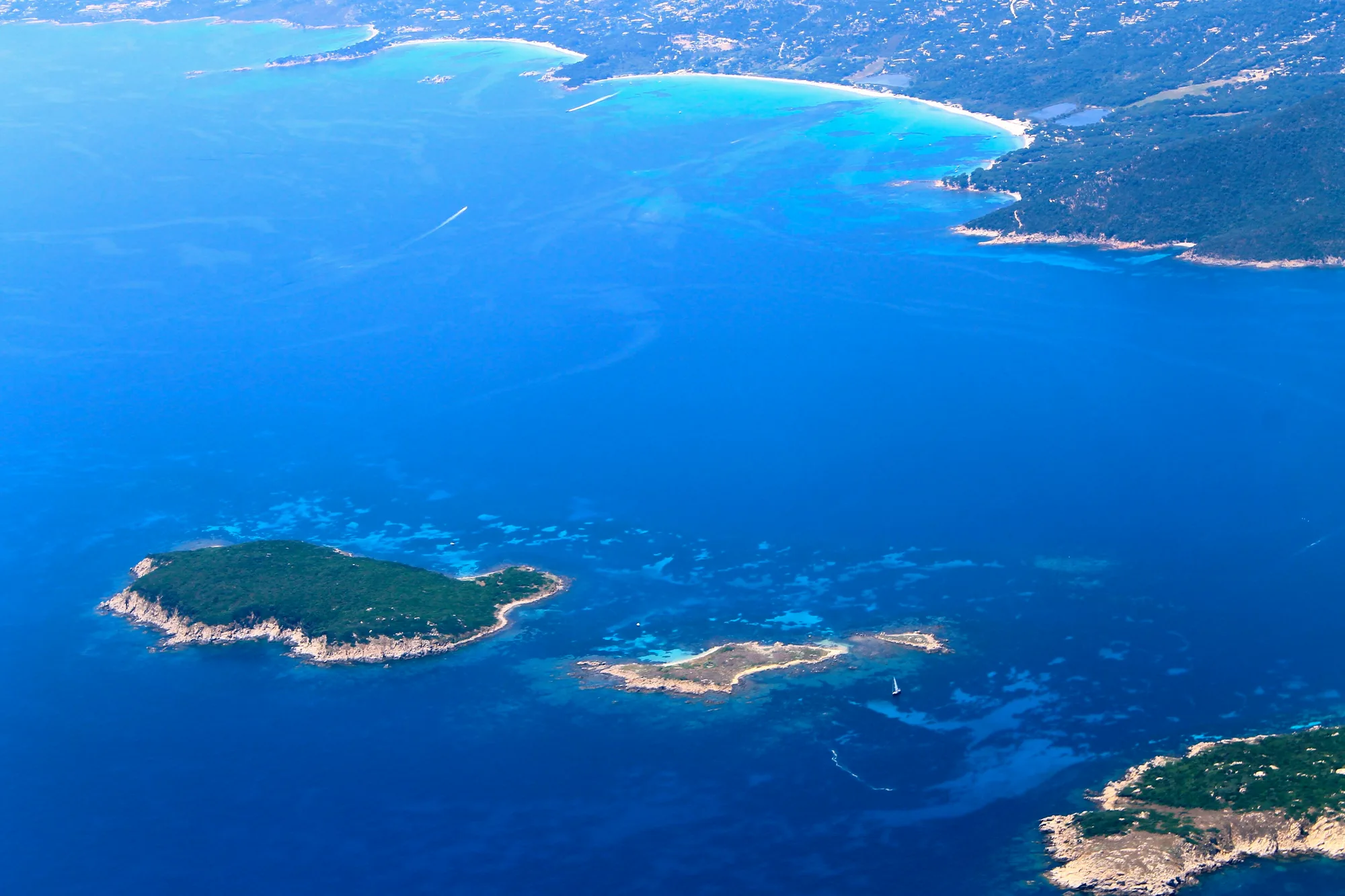
The big beaches of Porto-Vecchio lie outside the town. Palombaggia and Santa Giulia follow one another to the south, on the road to Bonifacio; Pinarello closes off a gulf to the north, in the commune of Zonza. All three have pale sand and calm water, but parking, shade and lifeguard cover vary from one beach to the next.
The beaches on the map
The beaches one by one
-
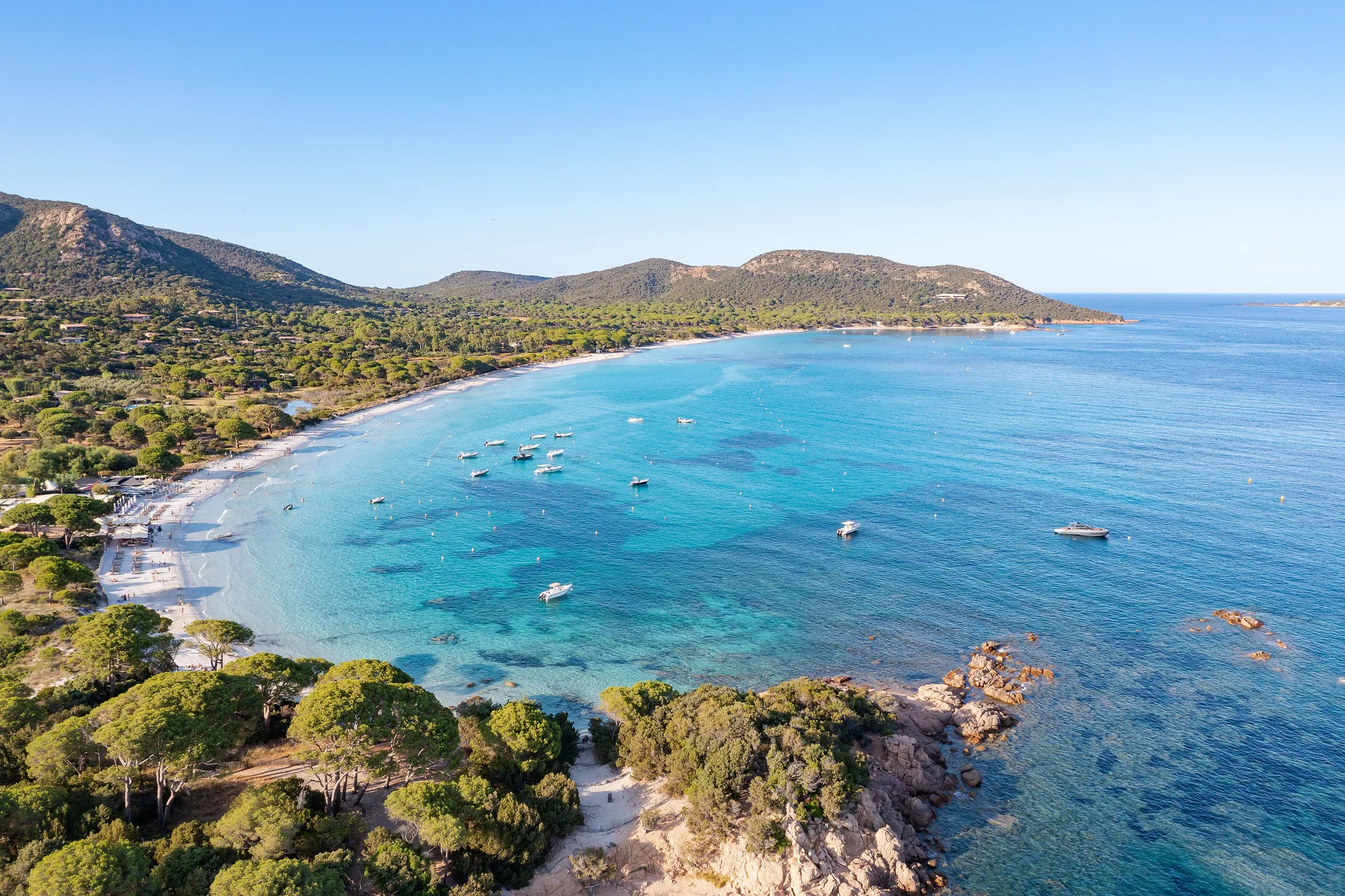
Palombaggia Beach
Pale sand, dunes and pines · About 5 minutes on foot · Lifeguards: July-August, 11.30am-6pm
See the beach guide →Nearly two kilometres of pale sand, umbrella pines down to the water’s edge, pink porphyry rocks at both ends and, offshore, the Cerbicale islands: this is the view people come for. Allow about half an hour from the centre on the D859, outside summer and without stops. According to the tourist office, the public car park under the pine wood is free, five minutes from the sand; in July and August, the office advises arriving before 9.30am. The water is shallow at the I Pini end, and swimming is supervised in summer at Cala di Lume.
-
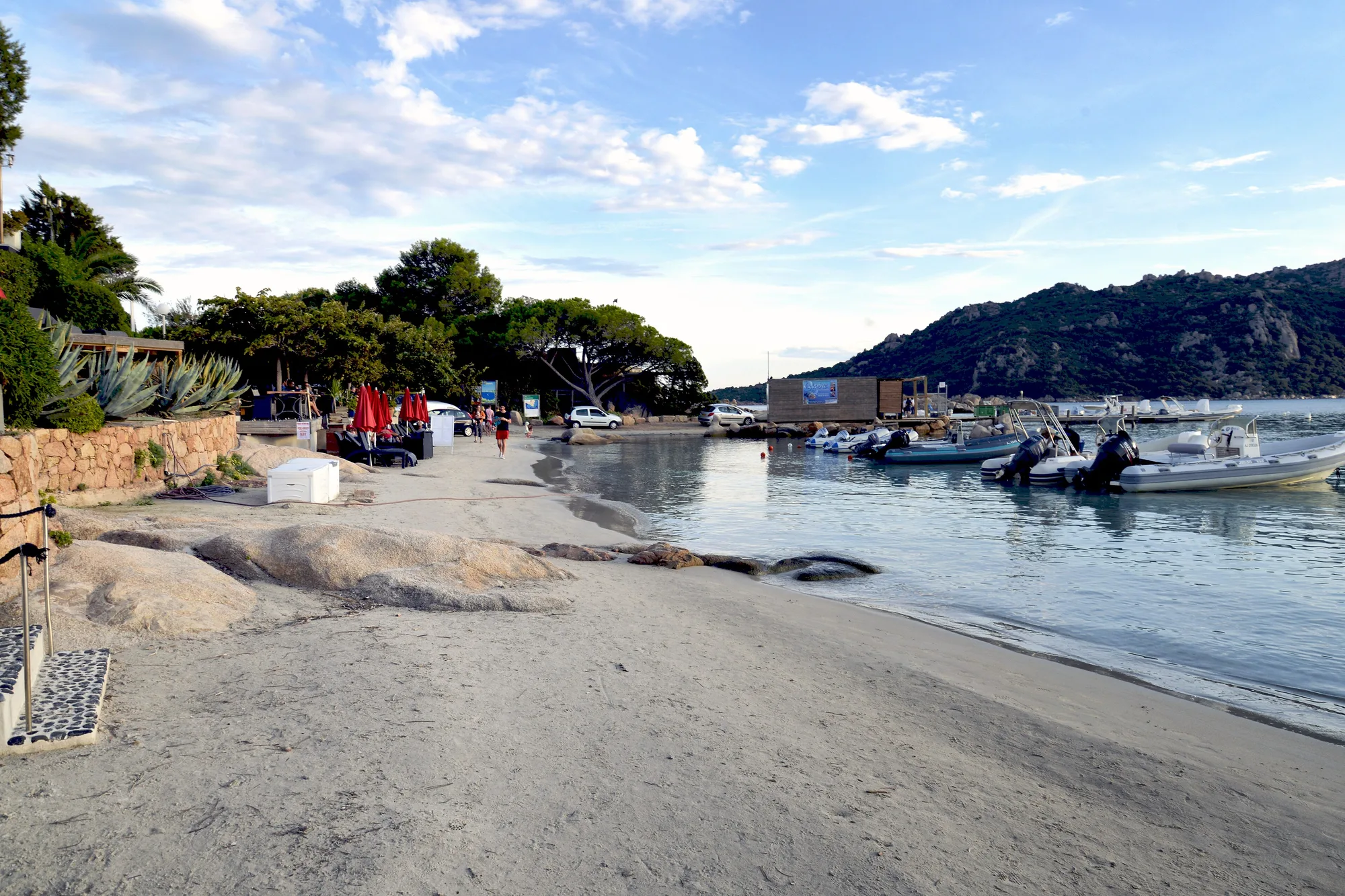
Santa Giulia Beach
Fine white sand, narrow beach · About 3 minutes on foot · Lifeguards: July-August, 11.30am-6pm
See the beach guide →An enclosed bay facing east, where more than a kilometre of white sand borders very shallow turquoise water, especially to the south. With young children, it is often the easiest choice: swimming is supervised along 730 m in July and August, and the watersports centre hires out kayaks, paddleboards and boats. Behind the narrow strip of sand lies a protected pond. The centre is about a quarter of an hour away, outside summer and without stops. According to the tourist office, the car parks are private and paying; some beach restaurants offer free parking to their customers.
-
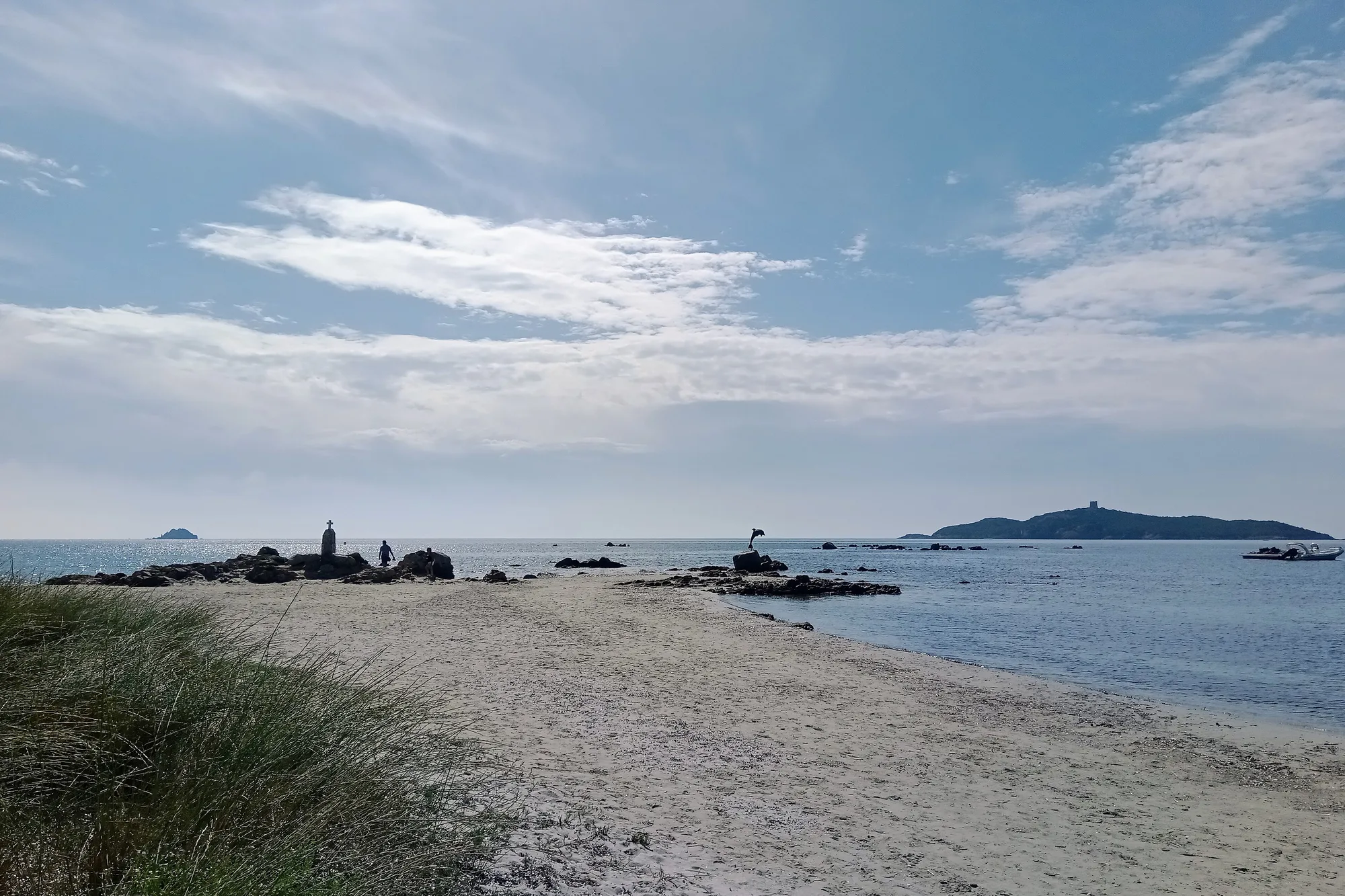
Pinarello Beach
Fine white sand · 2 to 6 minutes on foot
See the beach guide →About fifteen kilometres to the north, in the commune of Zonza, some two kilometres of fine white sand run along a pine wood, then past a small village and its restaurants. At the mouth of the gulf, an island carries a Genoese tower completed in 1591. The water stays shallow for a long way out, and the pine wood gives shade. The tourist office lists free car parks, two to six minutes from the sand; allow less than half an hour’s drive from Porto-Vecchio. No lifeguard station is listed for 2026: keep an eye on your children.
Where to stay near the Porto-Vecchio beaches
For Palombaggia, the closest area is the Palombaggia road, among the pines between the town and the beach. For Santa Giulia, you can stay on the edge of the bay, in the area of the same name. Pinarello is further north: Cala Rossa and Saint-Cyprien, on the other side of the gulf, bring you closer to it. Our page on Porto-Vecchio describes each area and where to stay in it. For the rest of the far south, from Bonifacio to the Bavella needles, see our guide to south Corsica.
Frequently asked questions
What is the best beach in Porto-Vecchio?
It depends on what you are looking for. Palombaggia has the length of sand, the pines and the view of the Cerbicale islands. Santa Giulia has the shallowest water and a watersports centre. Pinarello, to the north, has shade under the pine wood and a village right by the sand.
Santa Giulia or Palombaggia: which beach should I choose?
With young children, Santa Giulia: an enclosed bay with very shallow water. For the scenery, Palombaggia. As for parking, the tourist office says the Palombaggia car park is free and the Santa Giulia ones are private and paying. Both have lifeguards in July and August, from 11.30am to 6pm.
Which beaches near Porto-Vecchio can I reach without a car?
In summer, a shuttle bus links the centre of Porto-Vecchio with Palombaggia, Santa Giulia and Pinarello. This year’s timetable is not published online: ask the Porto-Vecchio tourist office. The rest of the year, you need a car.