Corsican charcuterie comes from the mountains of the interior, where pigs were slaughtered in winter and their meat preserved to last the whole year. Since 2012, its three best-known cuts have been protected by a PDO (protected designation of origin, AOP in French), and four more by a PGI (protected geographical indication, IGP) since 2023.
PDO Corsican charcuterie
All three PDOs require the Corsican nustrale pig breed, raised in the island’s mountains where it finds most of its food, and processing in winter only, according to the INAO (the French body for quality and origin labels). The area covers the whole of Corsica except the coastal strip.
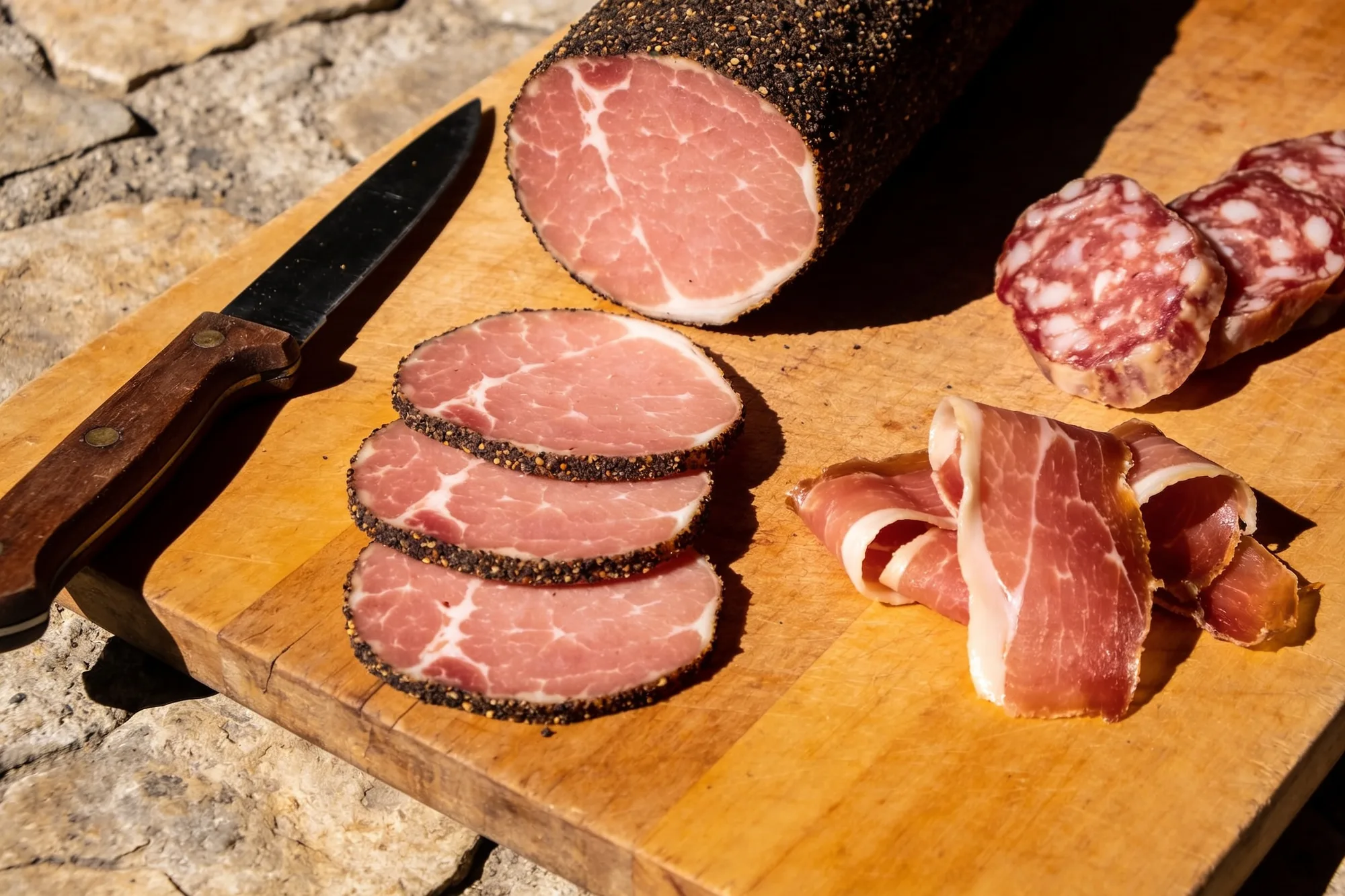
- Prisuttu (“Jambon sec de Corse - Prisuttu”): the leg, salted, dried and aged for at least a year, without the trotter. It is eaten all year round.
- Lonzu (“Lonzo de Corse - Lonzu”): the loin, salted, dried and aged, eaten from spring onwards, in thin or thick slices.
- Coppa (“Coppa de Corse - Coppa di Corsica”): the neck, salted, peppered, dried and aged, eaten from spring to the end of summer.
The PGIs of the Île de Beauté
Since 2023, four types of charcuterie have had a protected geographical indication, according to the INAO. They carry the name Île de Beauté (“Isle of Beauty”, Corsica’s nickname):
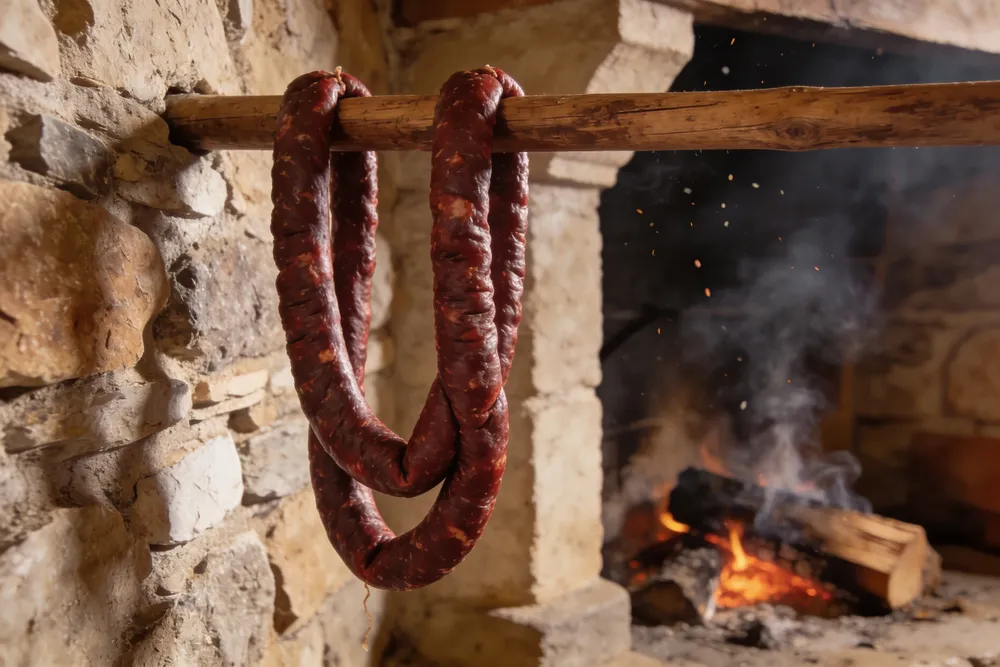
- figatellu (“Figatelli” or “Figatellu de l’Île de Beauté”): a U-shaped pork liver sausage, sold raw, to be cooked over a wood fire, in a frying pan or in the oven. You will mostly find it in winter;
- salciccia (“Saucisson sec” or “Salciccia de l’Île de Beauté”): salted, peppered, dried and aged;
- panzetta (“Pancetta” or “Panzetta de l’Île de Beauté”): the belly, salted, peppered, smoked and dried;
- bulagna (“Bulagna de l’Île de Beauté”): the jowl, salted, smoked and aged.
How to recognise Corsican charcuterie
Not all charcuterie sold as “Corsican” is made from pigs born and raised on the island. The exact name of the appellation on the label is the best guide: a PDO guarantees the nustrale breed and rearing in Corsica. At markets, buy from the producer and ask where the animals come from. For seasons and markets, see markets in Corsica.
Other Corsican products also have their own appellation: chestnut flour (PDO), honey (PDO), wines and brocciu, the only Corsican cheese with PDO status.