As well known as Corsican charcuterie, and perhaps more so, Corsican cheese is famous for its character: a forthright smell and a flavour that builds as it ages. Asterix in Corsica (1973) even turned it into a weapon: in the book, a Corsican cheese left on board makes the pirates’ ship explode.
Behind the legend lies a mainly farmhouse production, from Corsican breeds of sheep and goats, with a single cheese under an official appellation, brocciu, and a family of tommes that each take the name of their area.
Brocciu, the only PDO Corsican cheese
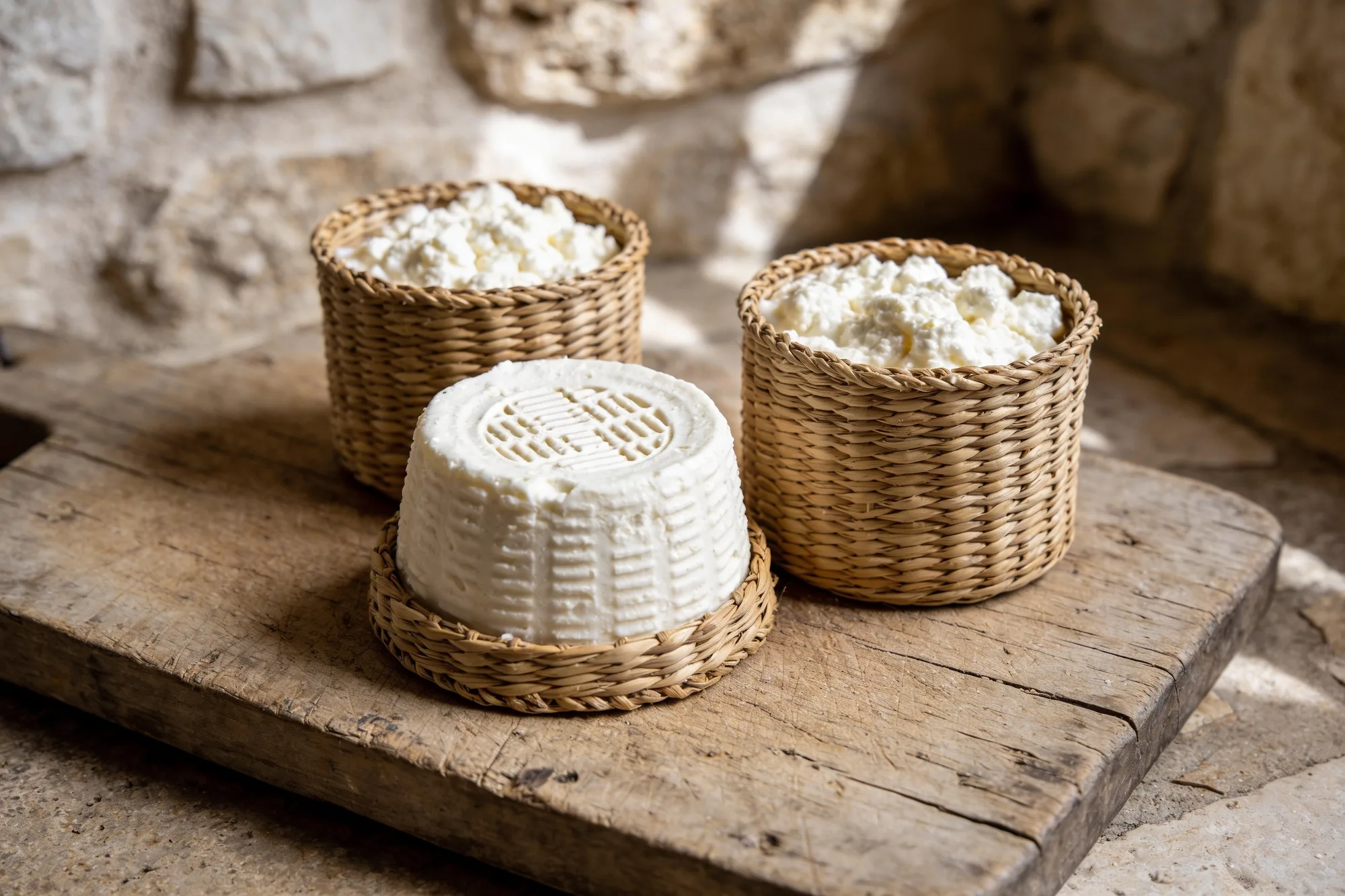
Brocciu is not an aged cheese like the others: it is made from the whey of ewe’s or goat’s milk, heated with raw whole milk. It has been a PDO (protected designation of origin) since June 1996, across the whole island. Only Corsican breeds, the brebis corse (Corsican ewe) and the chèvre corse (Corsican goat), are permitted. It is sold in two forms, and the label must state which:
- fresh, to be eaten within a few days, plain, salted, or in cooking (fiadone, fritters, omelettes, pasta);
- passu, aged for at least 21 days, firmer and saltier.
The PDO specification is being revised: the national committee of the INAO (the French body for quality and origin labels) approved a new version in June 2026. You will find details of how it is made on our page about brocciu.
Do not look for another appellation: no other Corsican cheese currently has a PDO or a PGI (protected geographical indication). The farmhouse tommes described below are traditional cheeses, recognised by custom and by the Venaco competition, not by an official label.
The main types of Corsican cheese
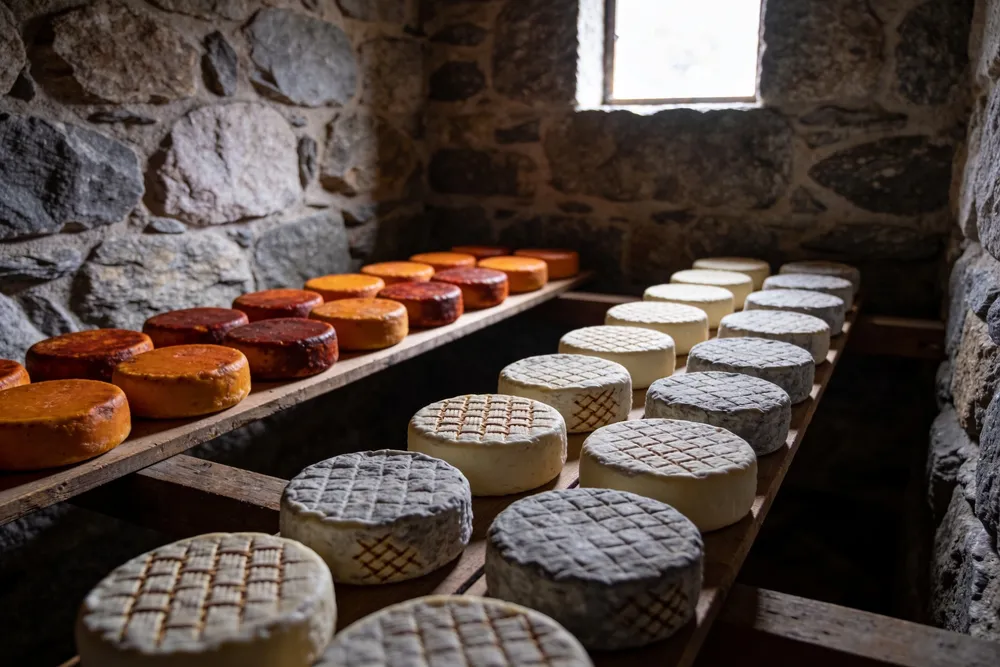
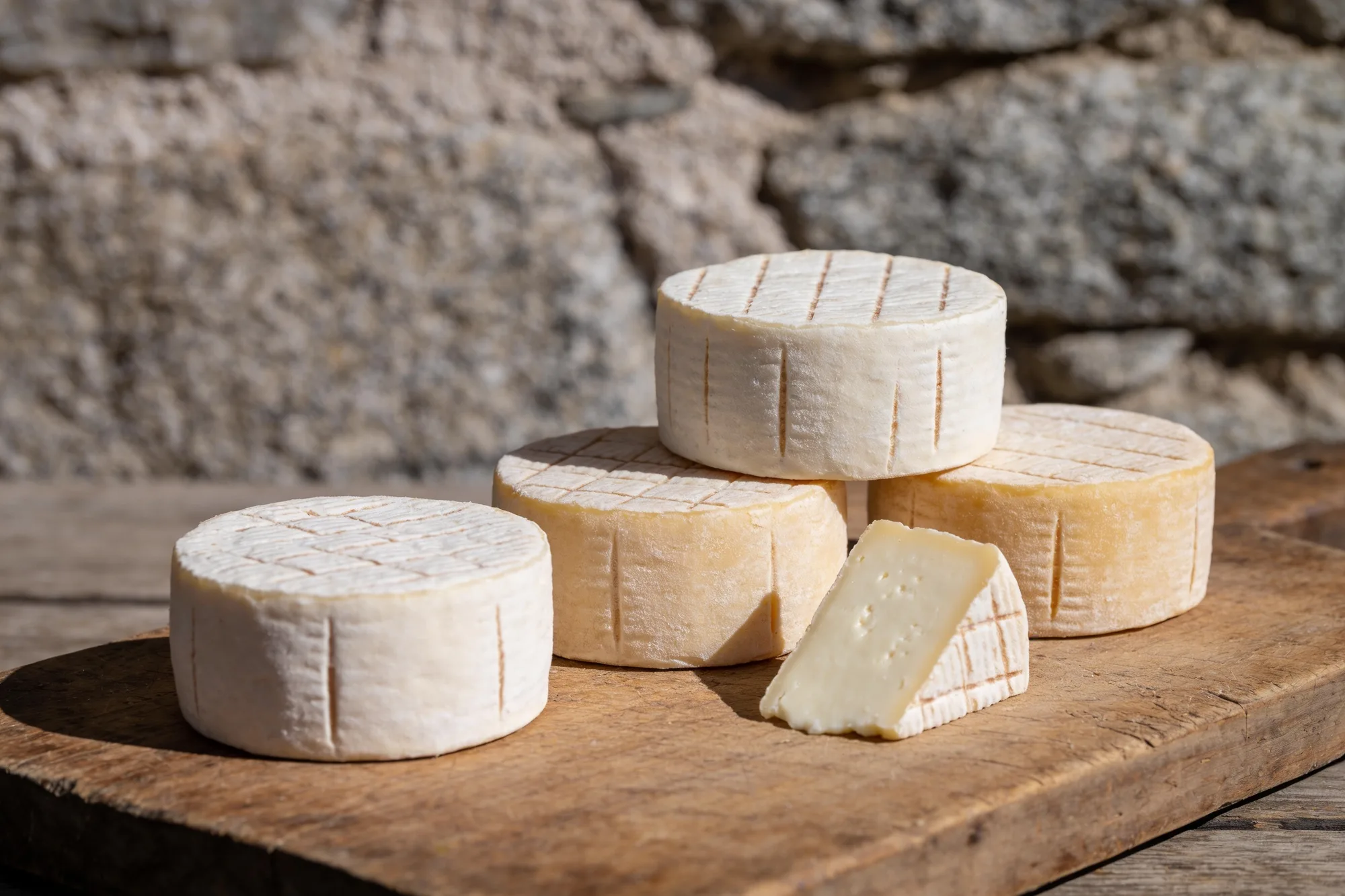
Most Corsican cheeses are farmhouse cheeses made from raw ewe’s or goat’s milk, soft or semi-firm, with a washed or rubbed rind. They are grouped into five types, named after their area of origin. These are the types judged every year at the Venaco competition.
- Sartinesu (Sartène and the Taravo and Rizzanese valleys): the firmest of the family. Small, round and fairly heavy, it becomes dry and sharp at the end of ageing. Some producers smoke it.
- Niulincu (Niolo): a square cheese with an off-white rind tending to yellow, with fruity, spicy aromas. It is eaten well aged, with a glass of white or rosé.
- Venachese (Venaco): smooth orange to ochre rind, supple paste and a pronounced flavour.
- Calinzanincu (Calenzana, in the Balagne): off-white or cream washed rind, best eaten fairly ripe.
- Bastelicacciu (Bastelica and Bocognano): round and ivory-coloured, soft, slightly runny and creamy when ripe, with rich aromas.
There is no specification for these cheeses: every shepherd has their own method, ageing times and rind. That is the whole point. Two venachesi from neighbouring farms are not always alike. Talk to the shepherd or the stallholder to find the one that suits you.
You may hear about casgiu merzu, a cheese deliberately left to fly larvae, a cousin of the Sardinian casu marzu. It is a local curiosity and is not sold commercially.
The Corsican cheese season
Corsican ewes and goats are in milk from late autumn to early summer, after the lambs and kids are weaned. In practice:
- fresh brocciu is available from December to May or June; in summer, there is little apart from passu;
- tommes made in spring are ready in summer and autumn, depending on how long they are aged.
If you come in July or August, you will find aged cheeses but rarely fresh brocciu. To taste it at its best, aim for spring: see our page on when to go to Corsica.
Where to buy Corsican cheese
- On the farm: many shepherds sell on site. It is the best way to understand what you are buying and to taste before you choose.
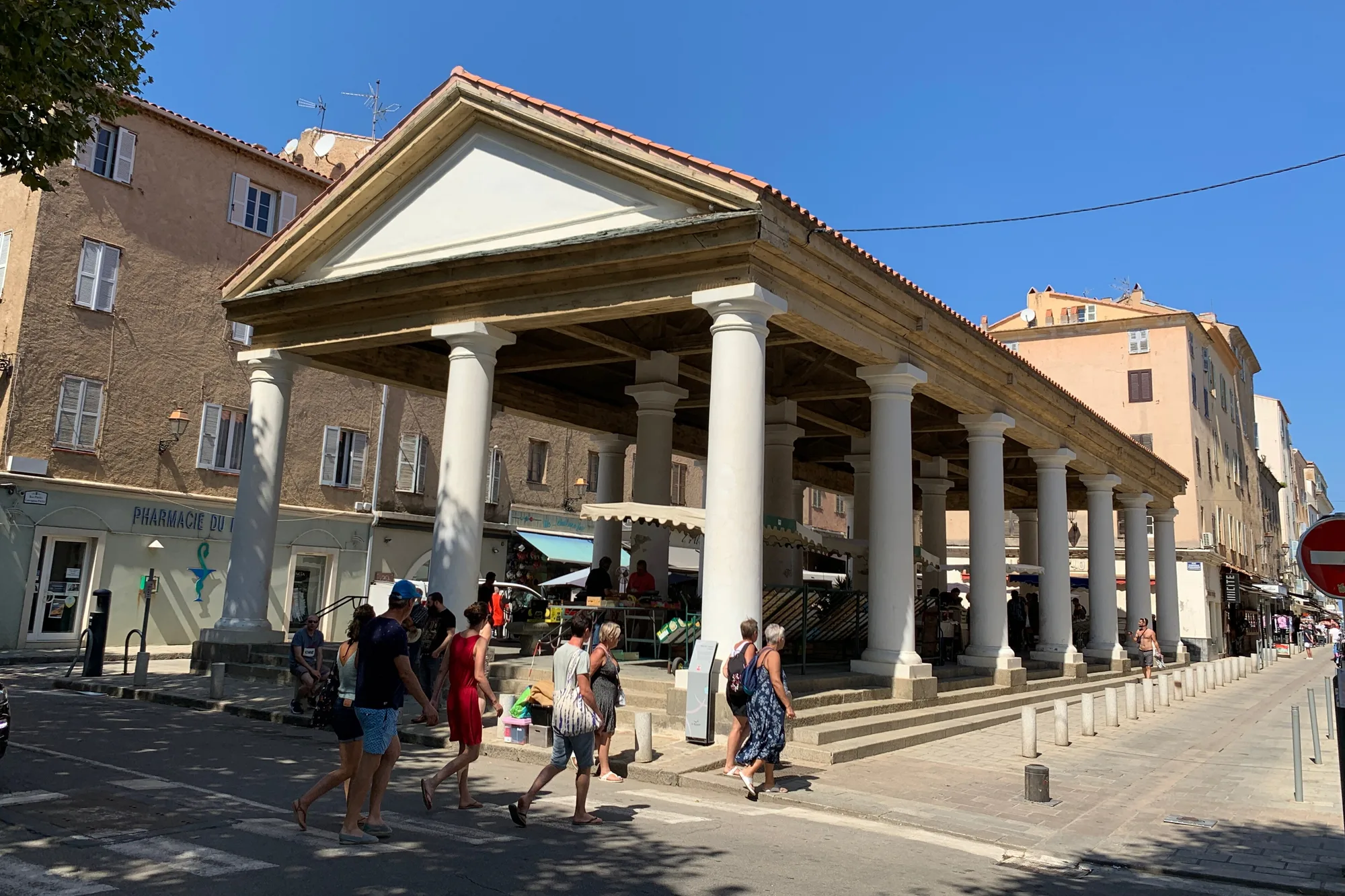
- At producers’ markets in towns and villages, which often have one or two cheesemakers. See our guide to markets in Corsica.
- At rural fairs: from spring to autumn, the Fiere di Corsica federation awards its label to a series of village fairs, where there are plenty of cheesemakers. The calendar is published on foiresdecorse.com.
- From members of the Route des Sens Authentiques, a network of producers, craftspeople and restaurants run by the ODARC (the Corsican agricultural development office), which lists farms open to visitors. Overview on the Agence du tourisme de la Corse website.
- In delicatessens, handy for taking home a vacuum-packed cheese: check that it really is a farmhouse cheese from the island.
A tip: a Corsican farmhouse cheese usually carries the name of the producer and their commune. The association Casgiu Casanu, which has brought together farmhouse cheese producers since 1999, champions this production and co-organises the Venaco competition.
A tasting tip
Enjoy your cheese on a piece of fresh bread, with fig jam and fresh walnuts. Take it out of the fridge an hour beforehand: a Corsican cheese served too cold loses most of its aroma. As for wine, a white or rosé from the island goes well with young cheeses, and a more structured red with aged tommes. To choose, see our selection of Corsican AOC wines.
The Corsican cheese fair in Venaco
It all began with a group of friends from the Venaco area. Wanting to support pastoral farming and showcase the island’s farmhouse cheeses, they set up the association “A Fiera di u Casgiu” in 1996.
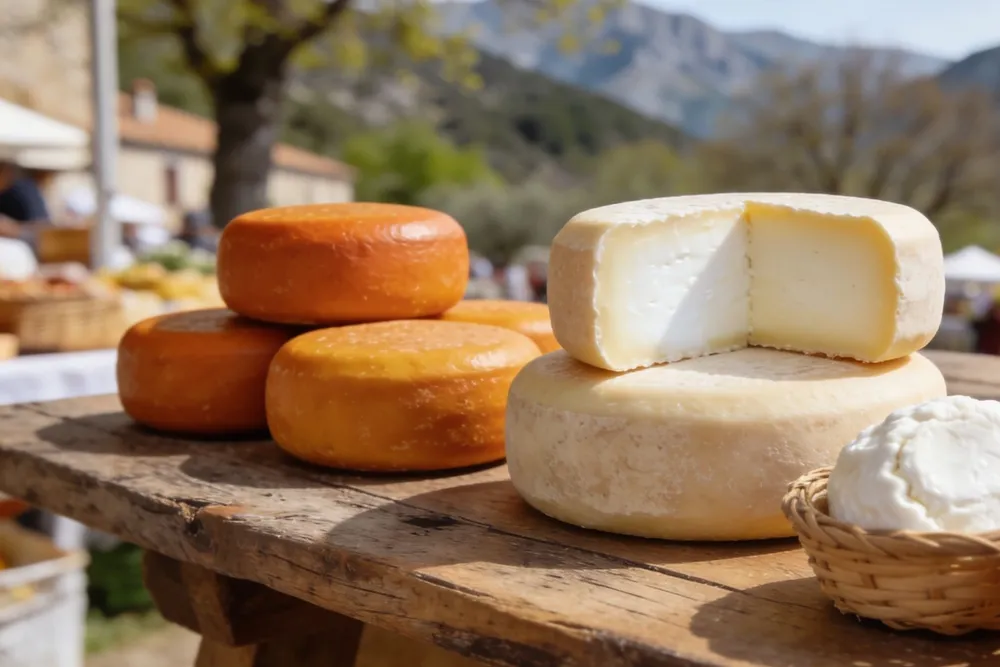
This volunteer initiative has become one of the island’s major events. It takes the form of a cheese fair every year, on the first weekend of May (at the peak of cheese production), at the Paul Giacobbi stadium in Venaco. In 2026 it was held from 1 to 3 May and celebrated its 30th anniversary. In 2025 it brought together 140 stands, including 36 farmhouse cheesemakers from all over Corsica.
A Fiera di u Casgiu is also a regional competition that rewards the best farmhouse cheeses, judged blind, type by type. And it keeps the spirit of the old rural fair: a lively market and a place to meet and talk, with a party where Corsican songs and music go on late into the night.
On the programme:
- sale of food products and work by craftspeople (wood, leather, knives, jewellery);
- regional competition for Corsican farmhouse cheeses;
- live music;
- tasting workshops;
- demonstrations of cheese and brocciu making.
Venaco is in the centre of the island, south of Corte: take the opportunity to visit Corte. Programme and dates of the next edition on the association’s website: fromages-corse.org.