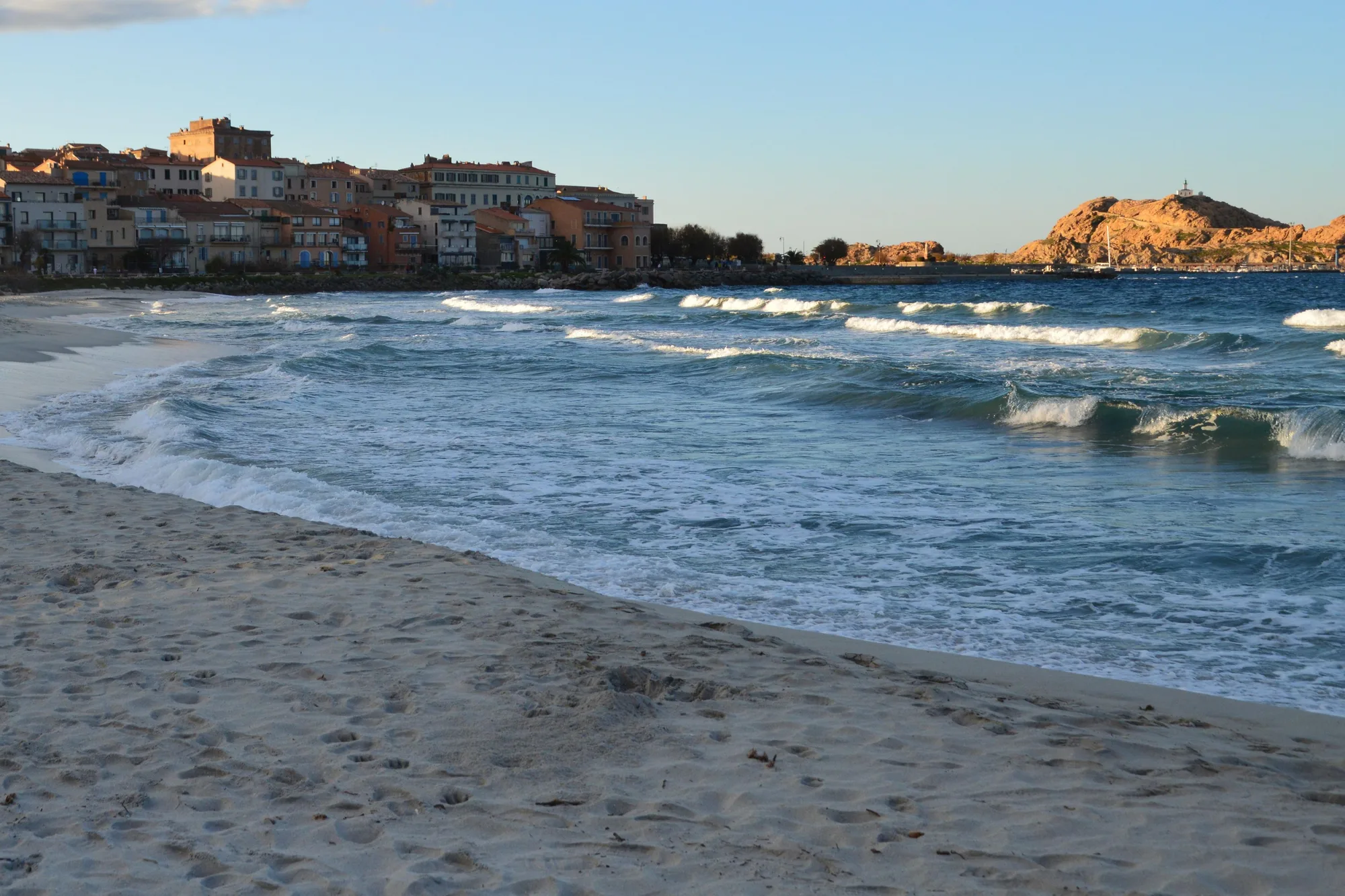
Bodri and Ghjunchitu Beaches (Corbara): tips and photos
Two fine sandy beaches separated by a rocky point, 3 km from L’Île-Rousse, with a Balagne train stop five minutes’ walk away.
We may earn a commission when you book through our partner links, at no extra cost to you. Updated 1 November 2026
Why go to Bodri
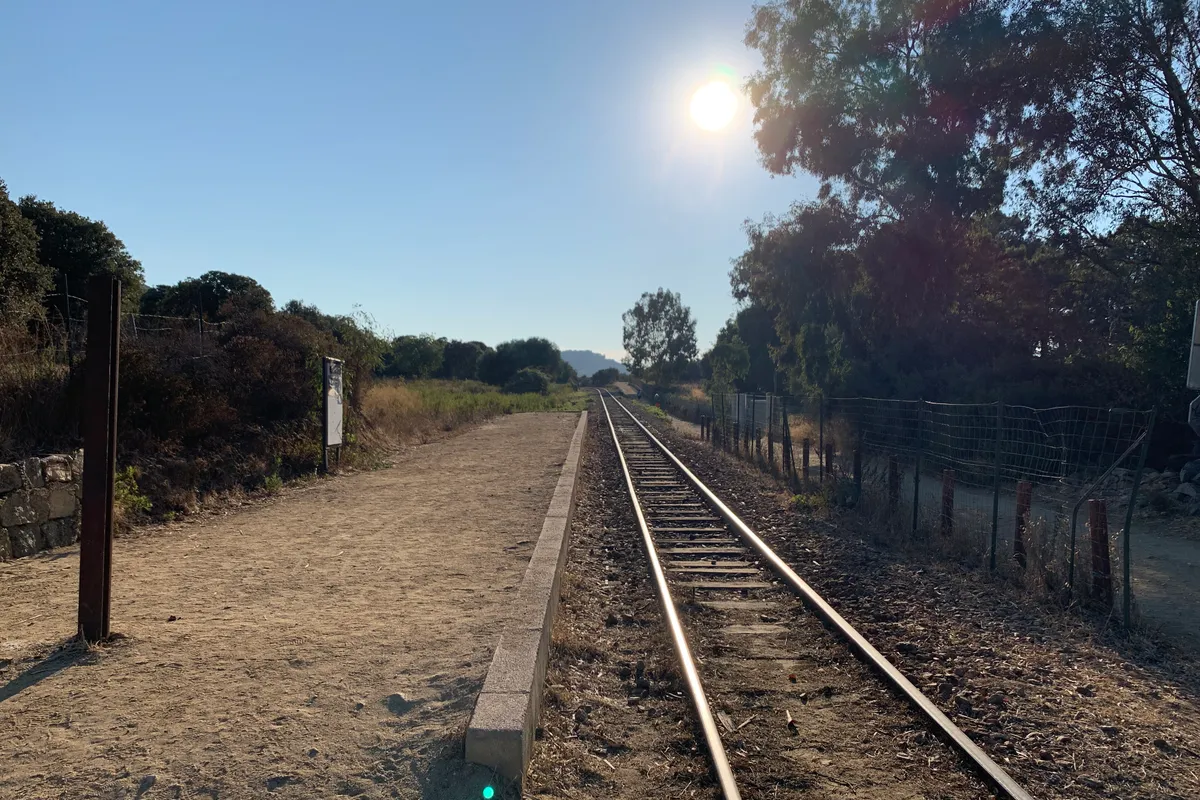
You can reach Bodri without a car: the Balagne train stops five minutes’ walk from the sand, six minutes after L’Île-Rousse station. By road, the beach is only 3.3 km from the town centre.
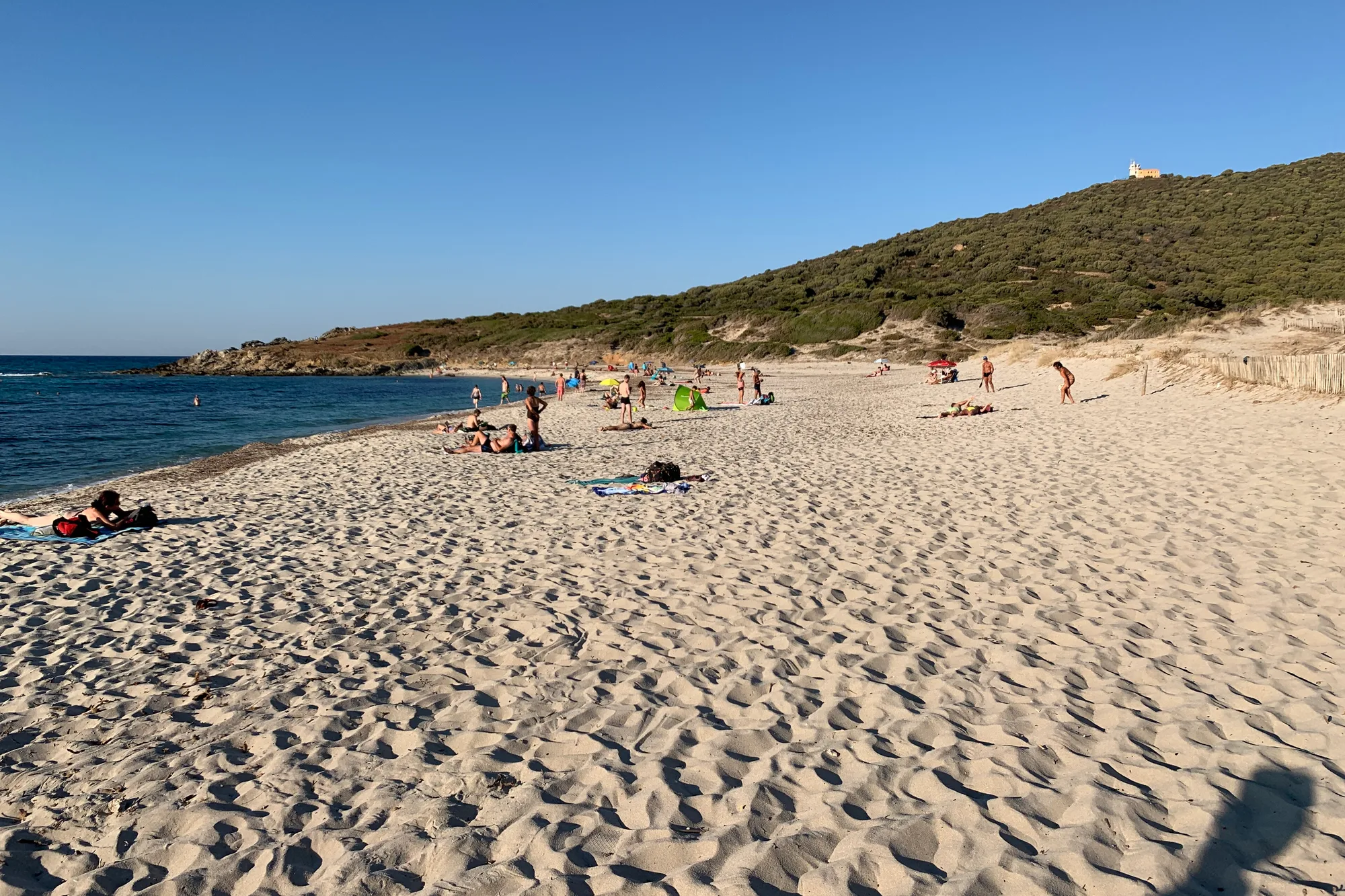
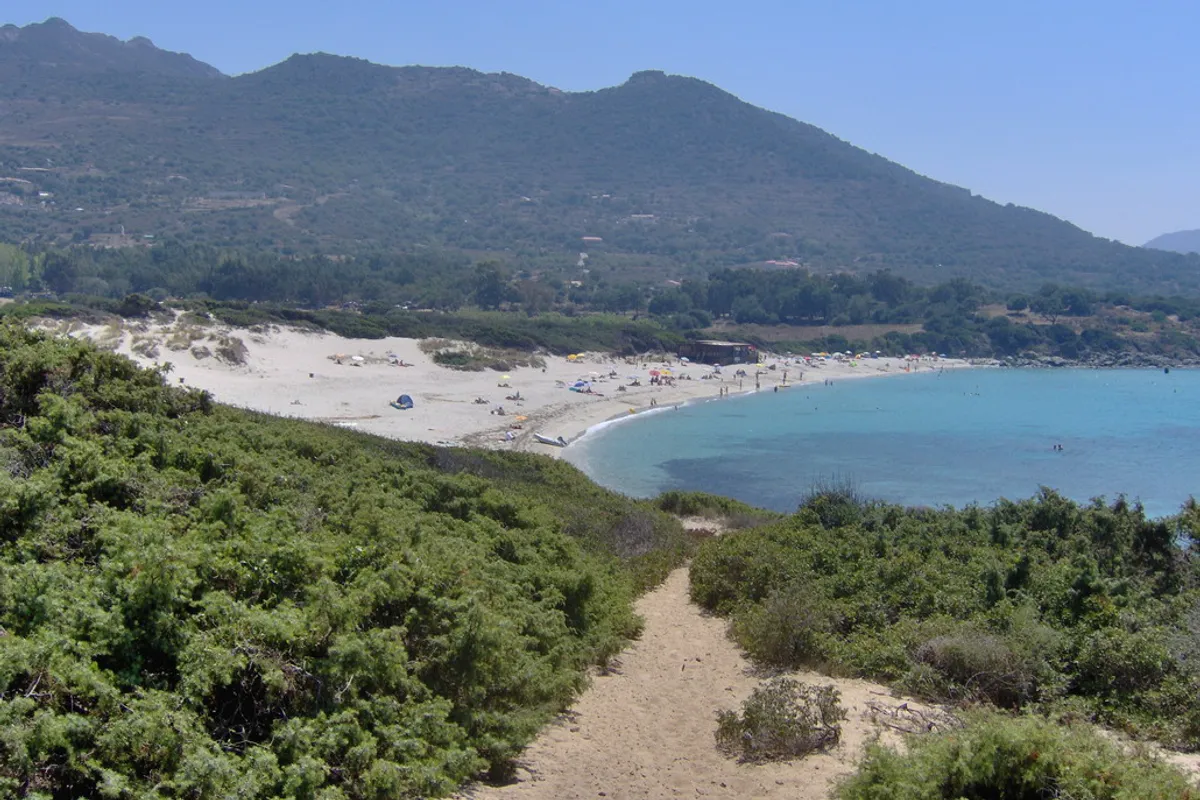
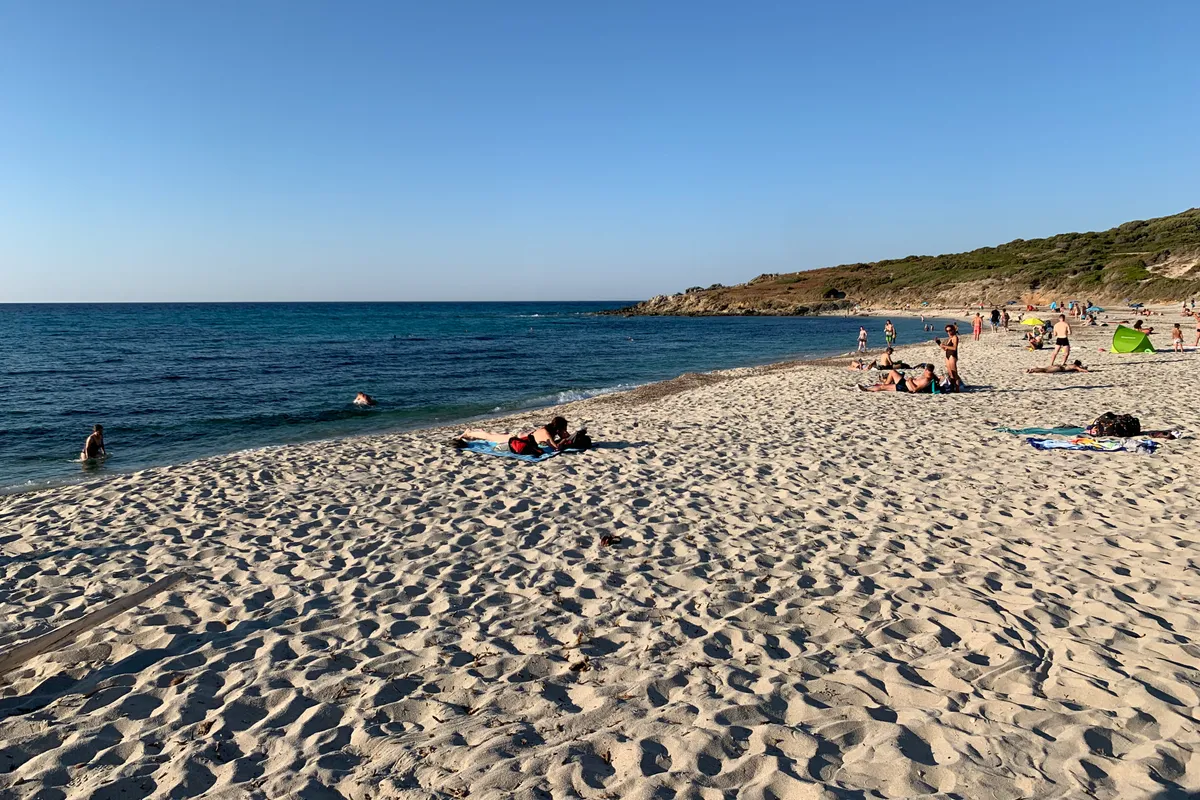
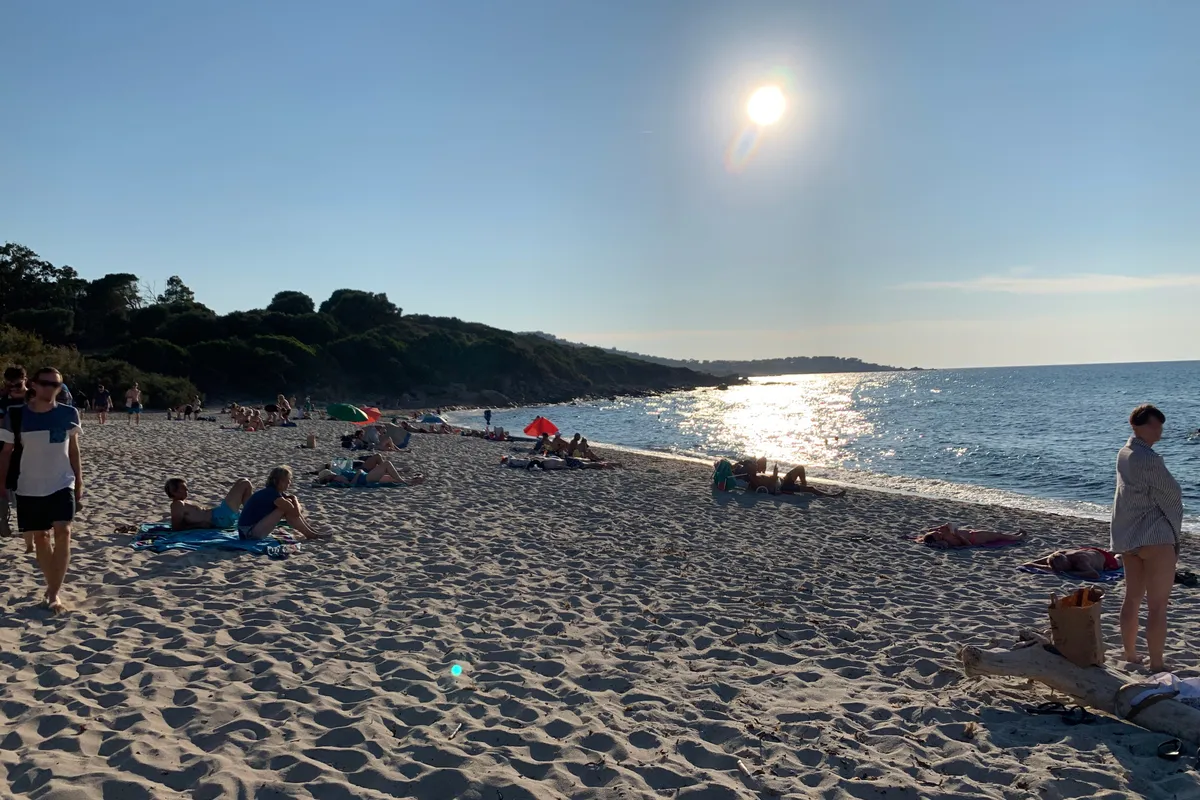
It is a cove with about 350 m of fine sand, between the sea and the maquis, in the commune of Corbara. Dunes rise behind it; to the west, past the Punta di Ginebre, its neighbour Ghjunchitu carries on along the coast. The two beaches share the train stop, and each has a lifeguarded swimming area in July and August.
Type of beach: sand, water and swimming
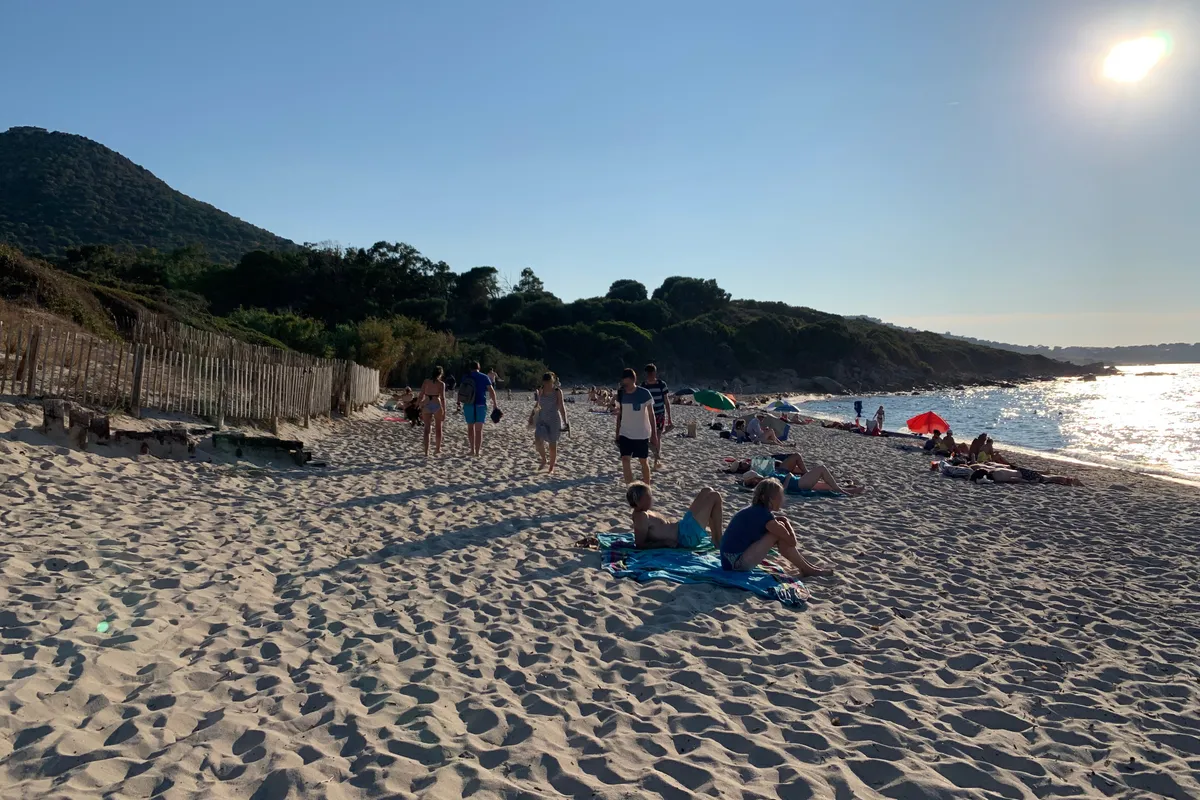
The sand is fine (Calvi-Balagne tourist office). The beach faces north-west: late in the day, the sun goes down over the sea, and the tourist office mentions sunsets worth photographing.
According to recent averages (2023-2025) from the Open-Meteo Marine dataset, the water reaches about 23 °C in June, 26 °C in July and August, and 24 °C in September. In May, it is still around 18 °C.
In windy weather, Bodri draws kitesurfers and windsurfers (Agence du tourisme de la Corse). The tourist office then advises caution when swimming, especially with children.
The municipal by-law of 15 June 2026 sets up a lifeguarded swimming area at Bodri and on the eastern part of Ghjunchitu, every day from 1 July to 31 August, from 10.30am to 6.30pm. The flags show the state of the sea: with no flag, swimming is unsupervised; with a red flag, it is forbidden. At sea, navigation and anchoring near the shore are governed by the orders of the maritime prefect.
The parts of the beach
To the south-west is where the path from the car park and the train stop comes out. This is the entrance to the beach, at the foot of the dune.
The centre holds the summer lifeguarded area, with its paddling area marked out with floats for younger children.
To the north-east, the beach turns rockier, and the coast continues towards L’Île-Rousse. The tourist office points out small coves at the edges of both beaches, where you can watch fish and crustaceans.
Bodri or Ghjunchitu?
Ghjunchitu lies west-south-west of Bodri, beyond the Punta di Ginebre: about 250 m of rocks separate the two stretches of sand. It is longer, nearly 480 m, and faces north. Its eastern part, on the point side, has lifeguards on the same dates as Bodri; to the west, rocks and small coves lead towards the seaside hamlet of Davia.
Each beach has its own municipal car park. On foot, you can go from one to the other in about a quarter of an hour along the chemin de Bodri, inland. From the train stop, allow 5 minutes to Bodri and about ten to the middle of Ghjunchitu.
Choose Bodri if you come by train or with young children: the walk is short, and that is where the paddling area is. Choose Ghjunchitu for more space.
Protected dunes and maquis
Both beaches are part of the Dunes et pointes rocheuses de Botre et de Giunchetu ZNIEFF, a scientific inventory of notable natural habitats (it is not a legal protection). The Conservatoire du littoral, the public body that protects the French coastline, also owns land at Bodri, within its Rivages de Corbara site. Stay on the paths so as not to trample the dune.
When to go
In July and August, the beach has lifeguards every day; arrive in the morning to get a parking space. In June and September, the sea is already or still warm, but there is no lifeguard station. Out of season, trains are less frequent: from 2 November 2026 to 3 January 2027, only two in each direction at weekends and on public holidays.
How to get there
Bodri and Ghjunchitu are in the commune of Corbara, below the T30 that links L’Île-Rousse with Calvi. The Balagne train stops a few hundred metres from the sand.
By car
From the centre of L’Île-Rousse, allow less than a quarter of an hour (3.3 km); from Calvi, about half an hour (21.6 km), OSRM calculation, outside summer and without stops. Take the T30 towards Calvi, then the chemin de Bodri, which runs down to the car park; the entrance is signposted. For Ghjunchitu, carry on a little further along the T30 to the Ghjunchitu road.
Parking
The commune has two parking areas, one at Bodri and one at Ghjunchitu. For the 2026 season, it set a charge of €3 per vehicle, paid on entry, from 1 June to 30 September (council decision of 25 November 2025). Charges for later seasons have not yet been published.
From the car park to the sand
The sand at Bodri is 750 m away, about 10 minutes on foot (OpenStreetMap walking route). The path crosses the railway at a signposted crossing: look both ways.
By train
Get off at the Botri stop, the first after L’Île-Rousse towards Calvi: 6 minutes from L’Île-Rousse and 35 minutes from Calvi, on the Balagne line of the Chemins de fer de la Corse (Corsican railways). It is a request stop: signal to the driver. Bodri is then about 5 minutes on foot, and the middle of Ghjunchitu about 10 minutes. The summer timetables have not yet been published: see the operator’s website.
Where the beach is
Good to know
Dogs
The municipal by-law of 15 June 2026 bans dogs and all other animals from the beaches and bathing areas, even on a lead. The Calvi-Balagne tourist office also points this out.
Wheelchair users
Neither the commune nor the tourist office lists any equipment for getting into the water. From the car park, you have to cross the railway and then walk on sand: check before you come.
With children
In July and August, a paddling area marked out with floats is watched more closely. In windy weather, the tourist office advises caution, especially with children. No official source describes the slope or the depth.
Naturism
The 2026 municipal by-law bans going about the beaches and bathing areas in dress “offending decency and public morals”.
Eating
The commune lists a snack bar at Bodri and a restaurant at Ghjunchitu. Their opening periods are not published: bring water.
The beach in pictures
By catamaran along the Agriate
From L’Île-Rousse, catamaran trips sail along the Agriate coast, for the day or until sunset.
Prices and ratings checked on GetYourGuide in October 2026. We may earn a commission when you book through our partner links, at no extra cost to you.
Staying near the beach
The closest area to the beach in our L’Île-Rousse guide: The Calvi road.
- A Chiosella 9.6/10 on Booking · Oct 2026Book
See 4 more places to stay Hide
We may earn a commission when you book through our partner links, at no extra cost to you.
Frequently asked questions
Bodri beach or Ghjunchitu?
Bodri if you come by train or with children: the sand is 5 minutes from the stop, and the beach has its lifeguarded area in July and August, with a paddling area. Ghjunchitu, which is longer, gives you more room; only its eastern part has lifeguards. They are about a quarter of an hour’s walk apart.
How do I get to Bodri beach by train?
Take the Balagne train and get off at Botri, the first stop after L’Île-Rousse towards Calvi (a 6-minute journey). It is a request stop: signal to the driver. The sand is about 5 minutes on foot.
Do you have to pay to park at Bodri?
Yes, in season: for 2026, the commune of Corbara set a charge of €3 per vehicle, from 1 June to 30 September. The car park is about 10 minutes on foot from the sand.
Is there a lifeguard at Bodri beach?
Yes, in 2026 from 1 July to 31 August, every day from 10.30am to 6.30pm, according to the municipal by-law. The eastern part of Ghjunchitu has lifeguards too, on the same dates.
Are dogs allowed at Bodri beach?
No. The Corbara municipal by-law bans animals from the beaches, even on a lead.
Other beaches nearby
L’Île-Rousse Beach
Lozari Beach
Ostriconi Beach
Sant’Ambroggio Beach