Corsica travel guide
River swimming

The Cavu natural pools

Freshwater rock pools between the granite slabs of the Cavu valley, half an hour from Porto-Vecchio via Sainte-Lucie.

From Porto-Vecchio
About 30 min
Car park to pools
About 1.5 km
Admission
Free, paid parking in season
Overview

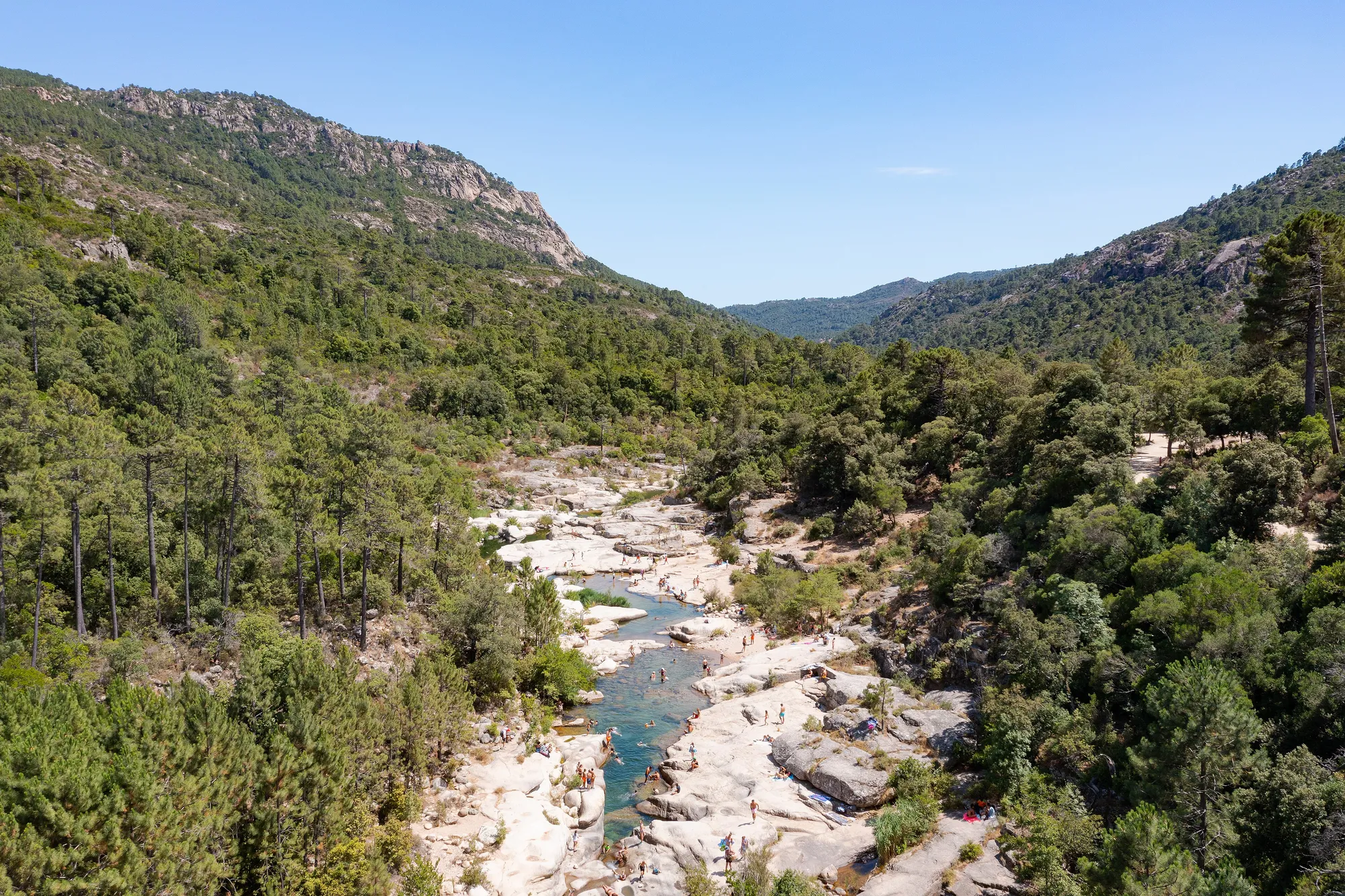
The Cavu natural pools are a series of freshwater pools carved into the granite at the bottom of a pine-wooded valley, inland from Sainte-Lucie-de-Porto-Vecchio. The Cavu (the Cavo on maps) flows between large pale slabs where you can stretch out between swims. The site is in the commune of Zonza, half an hour’s drive from Porto-Vecchio.
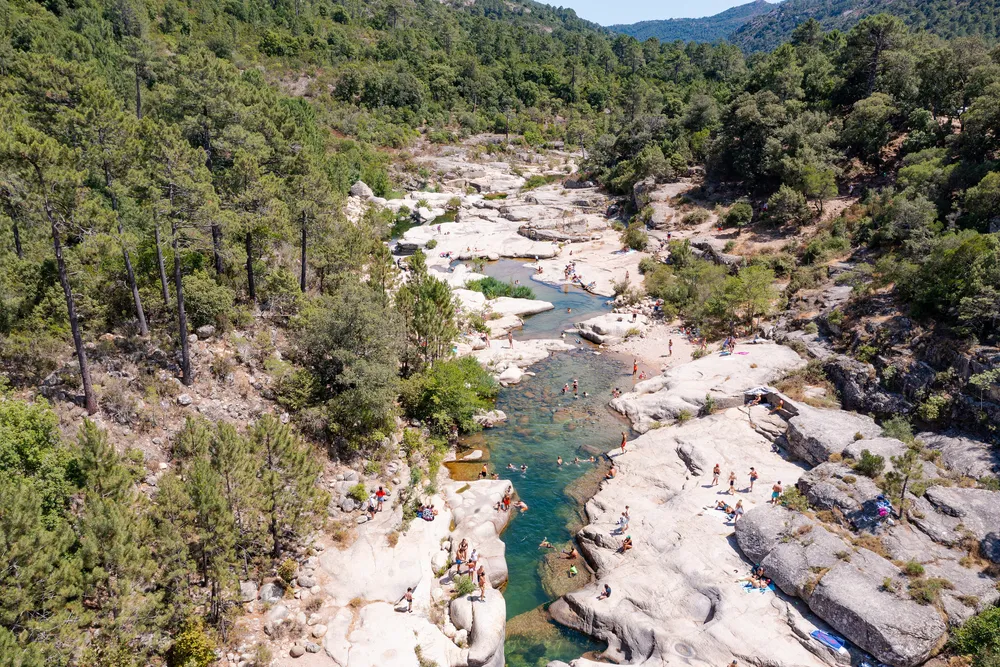
A long green pool on the Cavu, lined with granite slabs and pine treesPhoto : dronepicr, CC BY 2.0, via Wikimedia Commons

The three pools

The busiest pools are the ‘three pools’ (trois piscines), about 1.5 km from the entrance car park. According to the Zonza tourist office, they take their name from a restaurant above them. The water, green or turquoise depending on the depth, flows from one basin to the next over small rock sills. Around them, the granite slabs form natural terraces to lay your towel on.

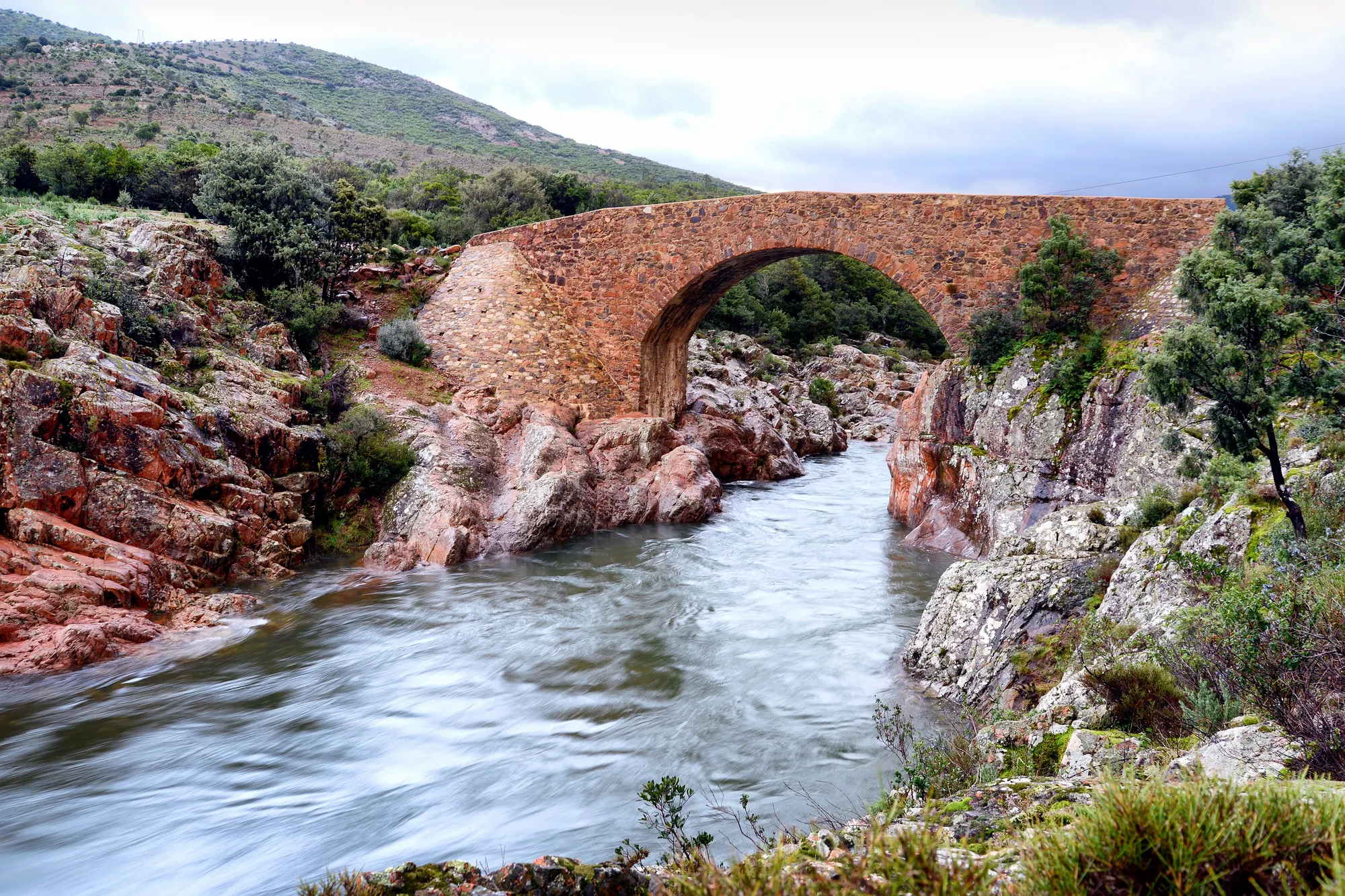
There are more pools all along the river, from the car park up to the Marionu bridge, further upstream. If the three pools are packed, walk a little way up or down the river before you settle in.

Why go

To swim in fresh water, in the shade of the pines, when the heat weighs on the coast. The access points near the car park suit families; the three pools take a little more walking. The site is popular in summer: in July and August, come early in the morning, or aim for June and September.
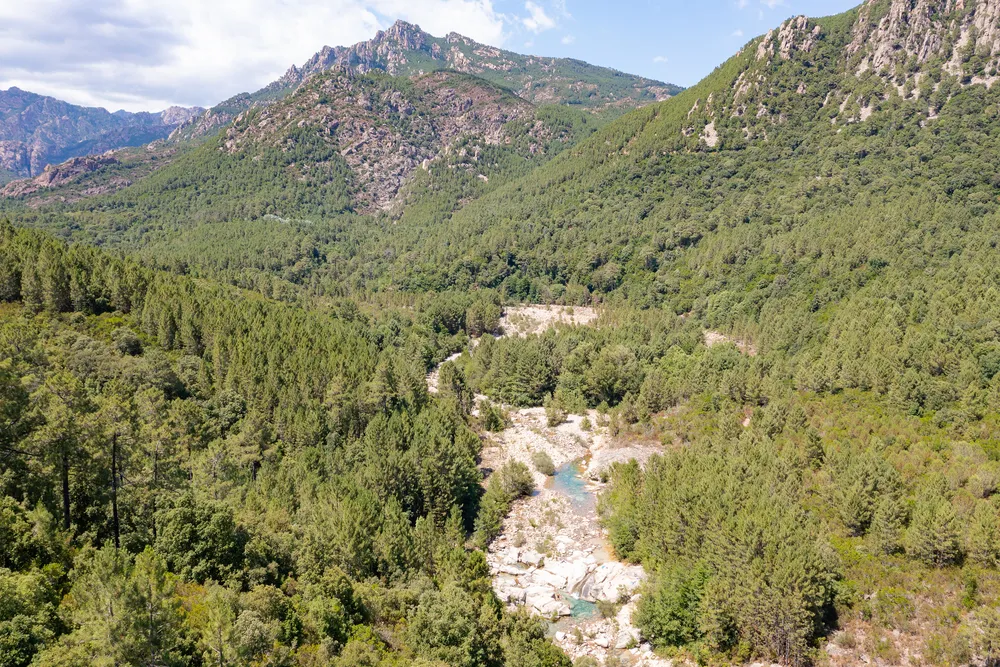
The pine-wooded Cavu valley, with the river between its slabs and granite peaks in the distancePhoto : dronepicr, CC BY 2.0, via Wikimedia Commons

A river under monitoring

In 2014, the Agence régionale de santé de Corse (the Corsican regional health agency) linked more than a hundred cases of bilharzia (schistosomiasis), a parasitic disease, to swimming in the Cavu in summer 2013. Swimming was banned that year, then reopened under monitoring. The tourist office says that the parasite has not been detected since, and that swimming would be banned immediately if it came back. Before you swim, check the signs at the entrance to the site or ask at the information office.

The valley beyond the pools

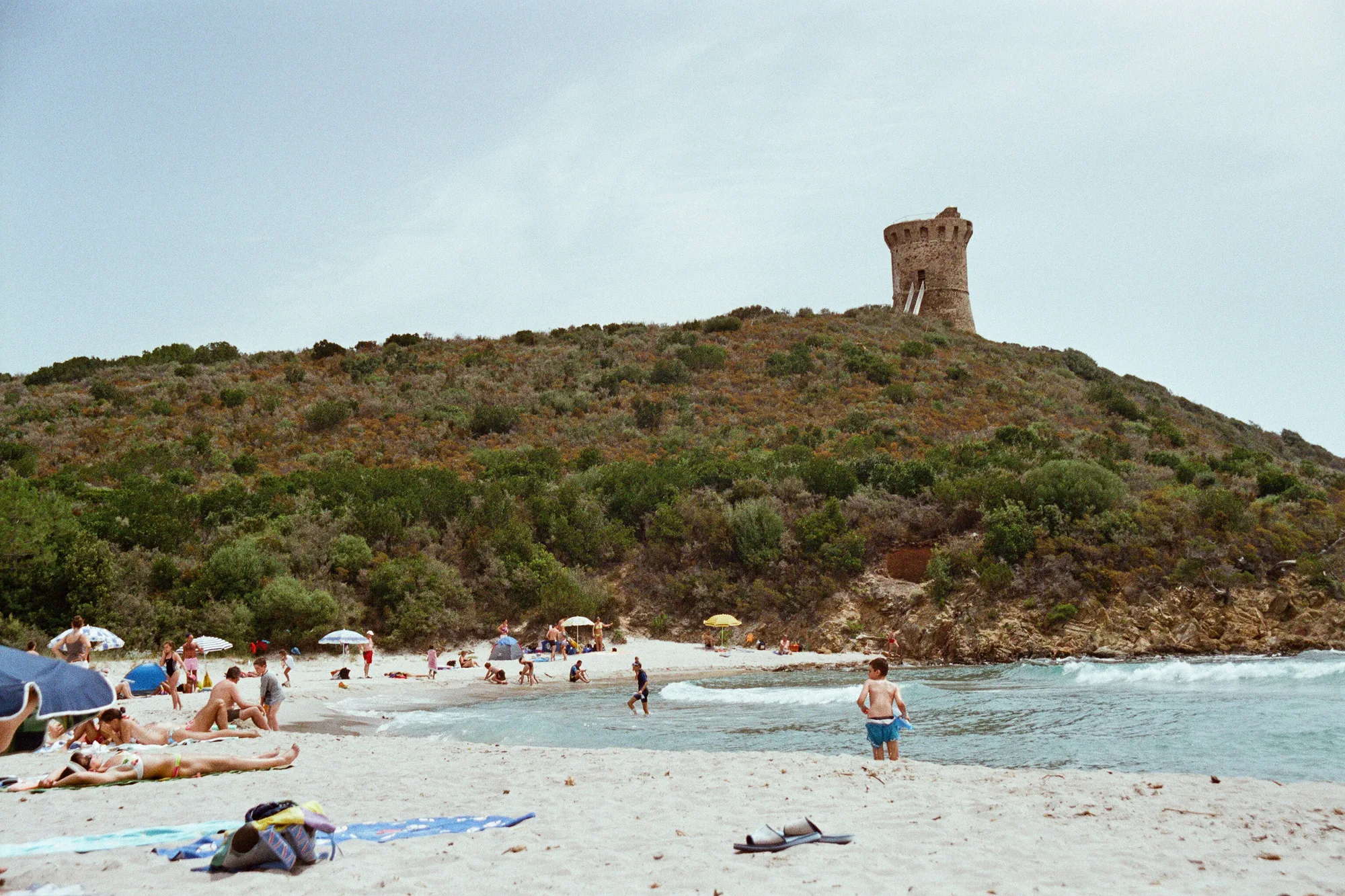
The valley is also good walking country: the botanical trail follows the river up to the Marionu bridge, and the more demanding A Ranedda loop has views over the valley. The Cavu then flows down to the sea, which it reaches south of Fautea beach. So you can combine a river swim in the morning with the beach in the afternoon.

Updated 2 November 2026

Getting there

How do you get to the Cavu natural pools?

By car

From Porto-Vecchio, follow the T10 north to Sainte-Lucie-de-Porto-Vecchio, then take the D168a towards Taglio Rosso, which runs up the valley. Allow about half an hour from Porto-Vecchio and less than a quarter of an hour from Sainte-Lucie, outside summer and without stopping (OSRM calculation). From Bastia or Ajaccio, about 2½ hours.

Parking

In season, you must park in the commune’s paid car park at the entrance to the valley, near the adventure park and the tourist information office. Camper vans have a separate paid car park, also at the entrance. The commune asks you not to leave vehicles in the car park between 9pm and 6am. Residents and others entitled to park in the valley do so free of charge with a badge issued by the commune of Zonza.

Do you have to pay?

Access to the pools and swimming are free: only the car park charges, in season. The commune had not published the prices or the dates of the 2026 season when we checked, on 2 November 2026: ask the Zonza town hall or the Cavu tourist information office, open from May to October at the entrance to the valley.

Shuttle and walk

In high season, a free shuttle runs between the car park and the three pools. On foot, the pools are about 1.5 km from the car park, a 20 to 25-minute walk along the valley road (OpenStreetMap pedestrian routing). Other access points to the river, easier for families, are close to the car park.

Reduced mobility

Access to the three pools was improved in 2023 but is not suitable for people with reduced mobility, according to the tourist office. The commune allows holders of a disability card to drive up free of charge to Ranuchjaghja, above the pools.

Hikes

The path

The botanical trail to the Marionu bridge

Distance
About 2.3 km from the entrance car park
Time
About 30 minutes one way
Level
Easy

The path follows the Cavu from pool to pool, past the three pools and on to the Marionu bridge. Signs along the way name the maquis plants: strawberry tree, myrtle, mastic tree, cork oak.

Source:

Office de tourisme de l’Alta Rocca, ‘Ponti di Marionu’ route

Rules

Rules and water quality

Water quality

Swimming in the Cavu is covered by official health monitoring. The commune can ban it by order after a poor test result: follow the signs on site and check the results on the official bathing water website or at the information office.

Respecting the site

Take your rubbish home, avoid polluting sun creams, stay on the paths and do not build stone dams: the tourist office points out that the river environment is fragile.

Safety

Safety and precautions

1

Flash floods

Do not swim during or after a storm, or after heavy rain: the current quickly becomes dangerous. A storm in the mountains makes the water rise even when the sky is blue above the pools. Get out of the riverbed as soon as the weather clouds over.

2

Jumping and diving

Do not dive or jump in without knowing the depth. The water level drops as the summer goes on, and a rock you cannot see from the slab may lie just below the surface.

3

No lifeguards

Neither the commune nor the tourist office mentions any lifeguard cover. Keep children within arm’s reach and get in gently: the water comes down from the mountains and stays cool.

4

Slippery slabs

The rocks are slippery, even in high summer. Wear shoes that grip on wet granite.

5

In an emergency

Call 112, the European emergency number, from any phone; 15 for the SAMU (emergency medical service), 18 for the fire brigade, 196 for sea rescue.

6

An area to avoid

In 2026, the ARS de Corse (the Corsican regional health agency) lists the Pisciarone area, on the Cavu, among the bathing spots where swimming is banned or permanently advised against (2026 list of bathing waters). Swim elsewhere in the valley and follow the signs on site.

Find your bearings

Where it is