Driving round Cap Corse
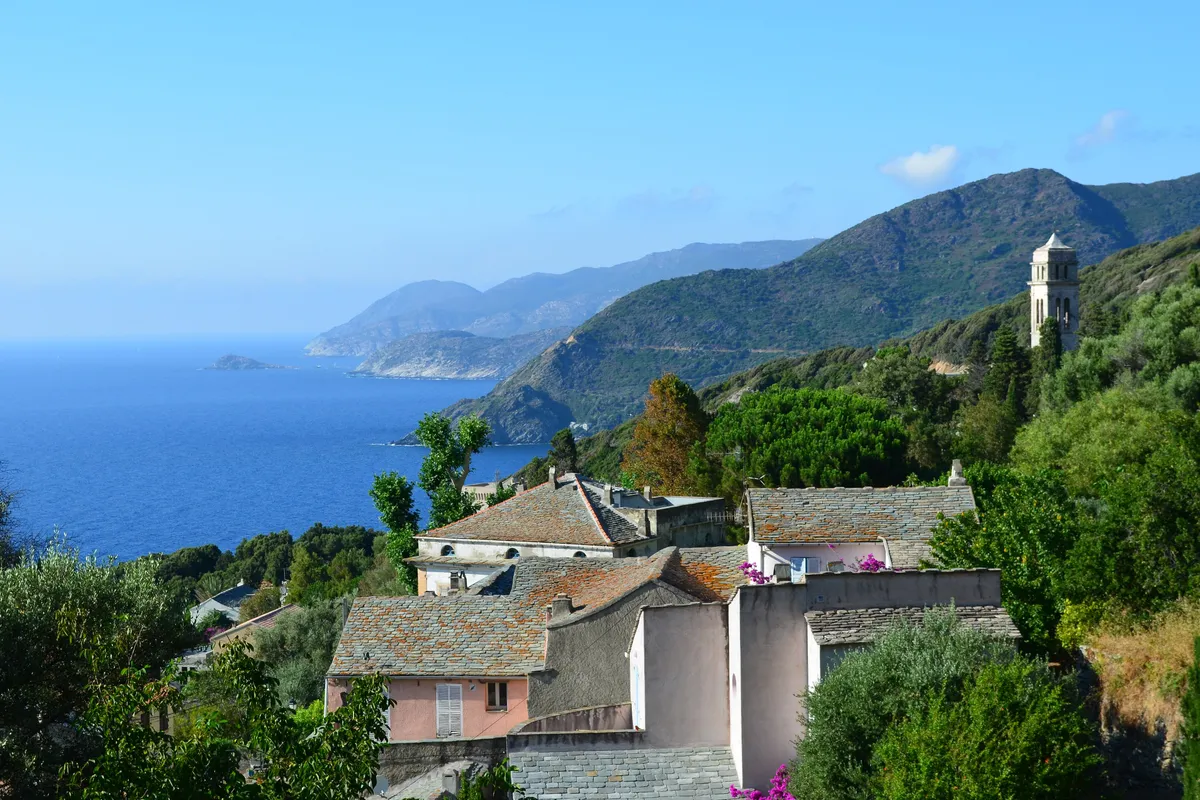
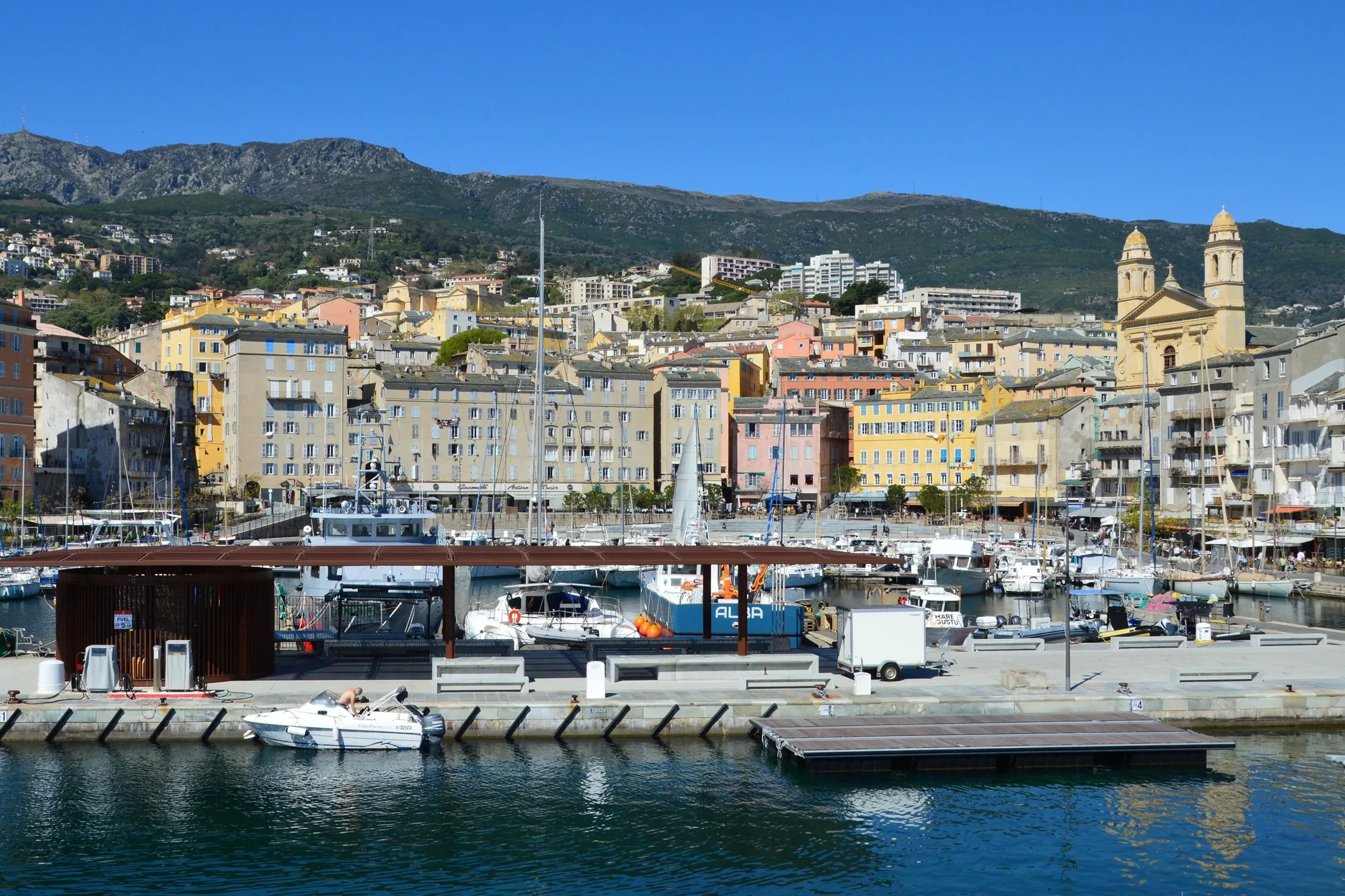
North of Bastia, Cap Corse juts out northwards between two seas. A single road goes round it: the D80, which follows the east coast to Macinaggio, rounds the tip and comes back down the west coast to Saint-Florent. On one side, marinas at the water’s edge; on the other, villages perched above the cliffs.
From place Saint-Nicolas in Bastia to Saint-Florent, the drive covers about 120 km and takes 2½ hours, outside summer and without stopping (route calculated with OSRM). With the detour to Barcaggio beach, allow 135 km and 3 hours. Getting back from Saint-Florent to Bastia over the Teghime pass takes another half-hour. The road is narrow and bends constantly: set aside a whole day, ideally with an early start.
Without the detour to Barcaggio, Macinaggio and Centuri are 19 km apart, about a quarter of an hour’s drive. The route is shown on the map at the bottom of the page.
Erbalunga
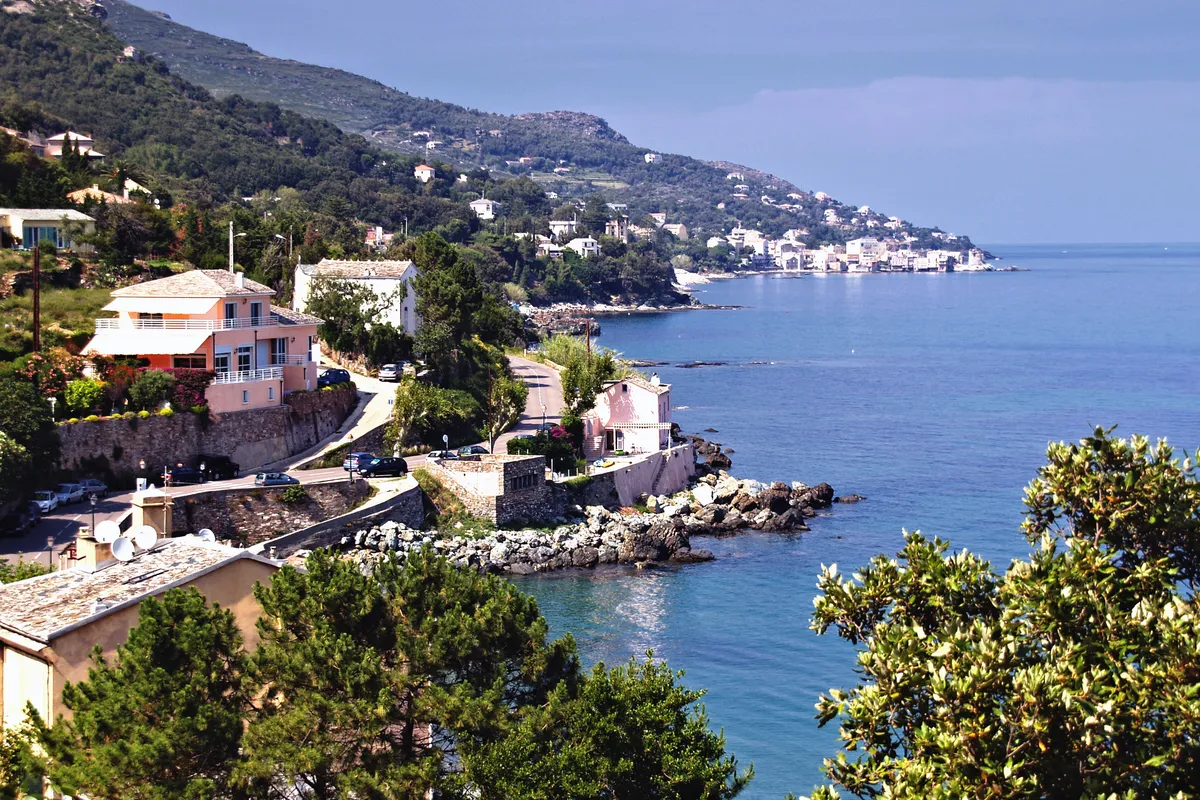
A quarter of an hour from Bastia, Erbalunga is the marina of the commune of Brando. Its tall stone houses huddle together on a rocky point, around a small harbour where fishing boats lie at their moorings. On the rock at the harbour entrance, the ruined 16th-century Genoese tower is listed as a historic monument.
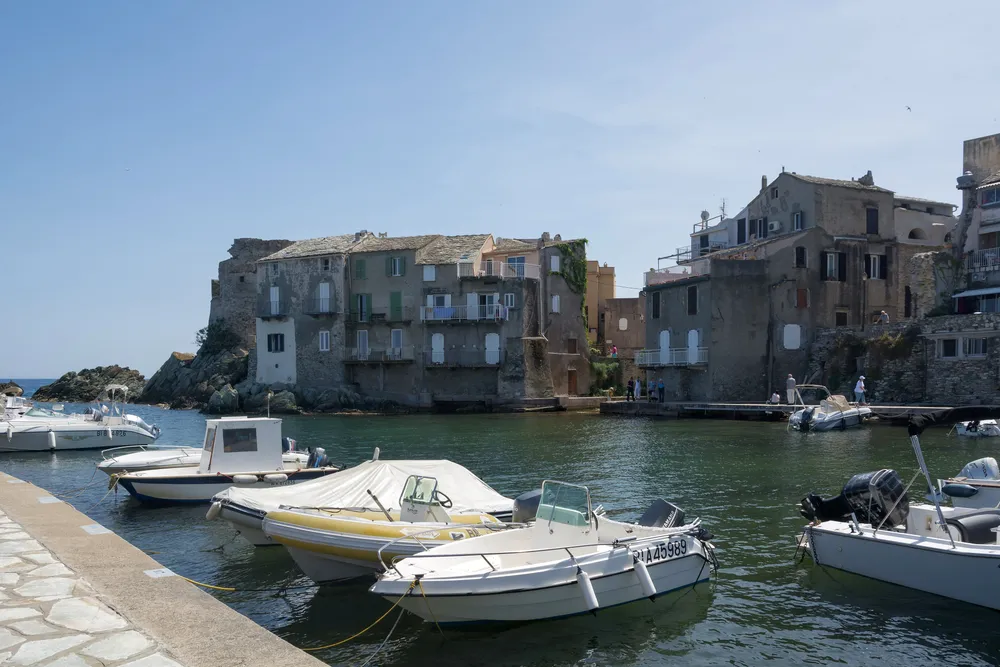 Photo : Isiwal, CC BY-SA 3.0, via Wikimedia Commons
You explore it on foot: a few lanes, the little square, the harbour, then the tower. The nearby beach is a pebble beach, the first chance for a swim on the drive. Park at the entrance to the village, on the Cap road: the lanes are not made for cars.
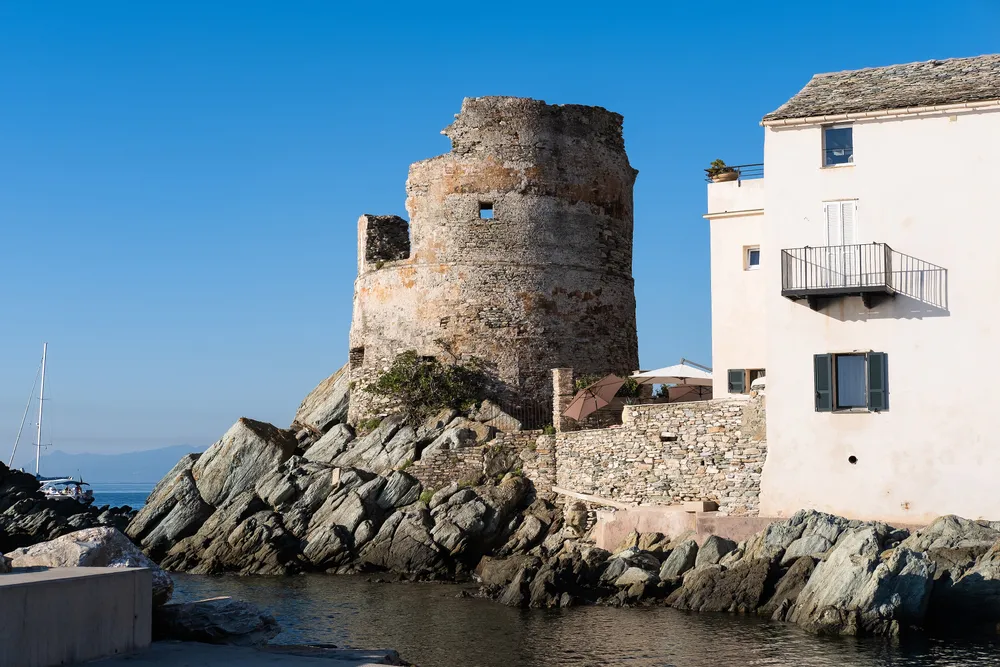 Photo : Espandero, CC BY-SA 4.0, via Wikimedia Commons
Erbalunga is also known for its Holy Week. On the morning of Good Friday, the Cerca procession sets off from the old pieve church of Brando and stops at eleven churches and chapels, with the commune’s four confraternities. At nightfall comes the Granitola, a procession of penitents that coils round on itself. In summer, at the end of July and the start of August, the village’s open-air theatre hosts the concerts of the Nuits du piano d’Erbalunga.
Macinaggio and the tip of the Cap
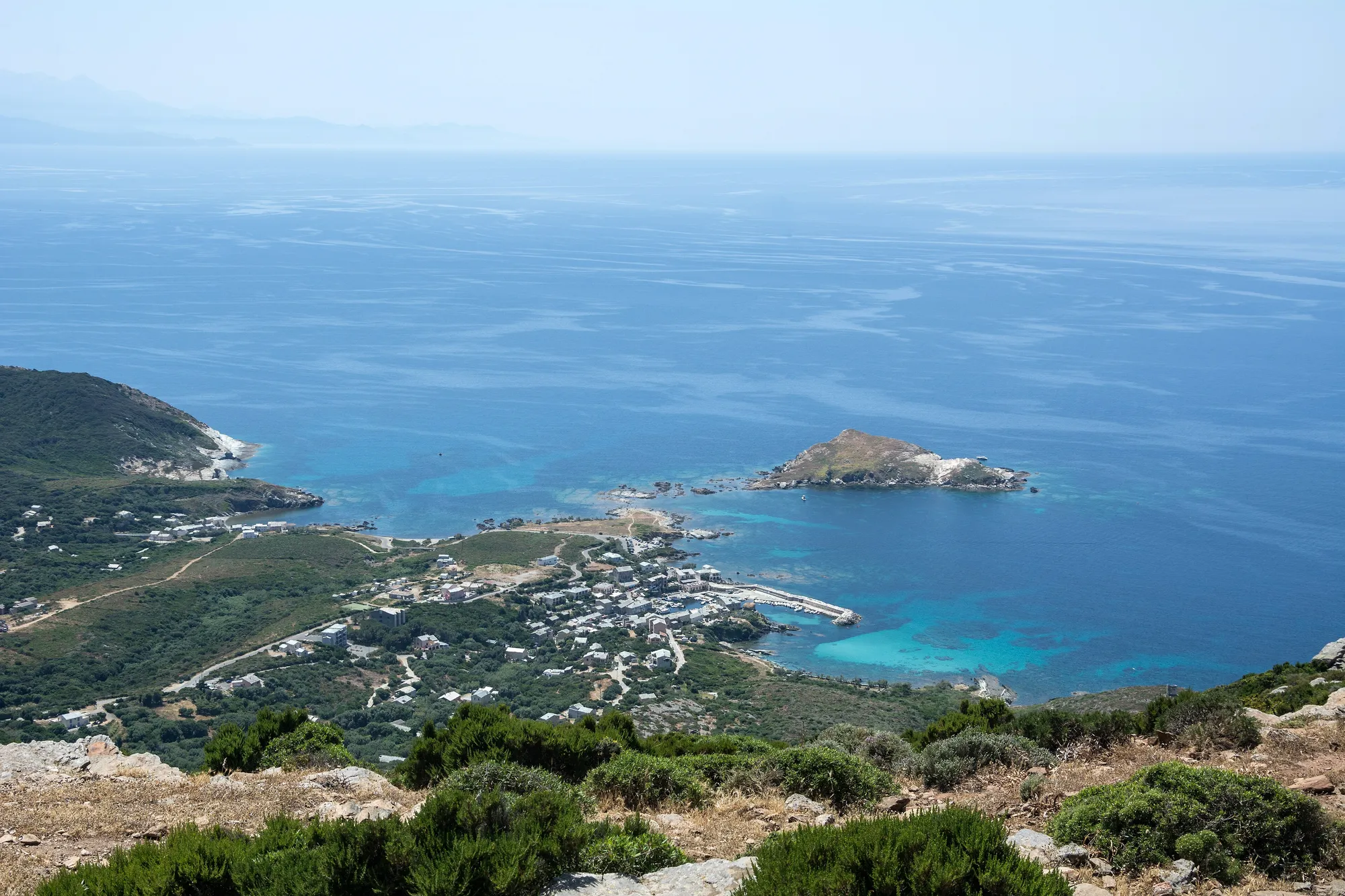
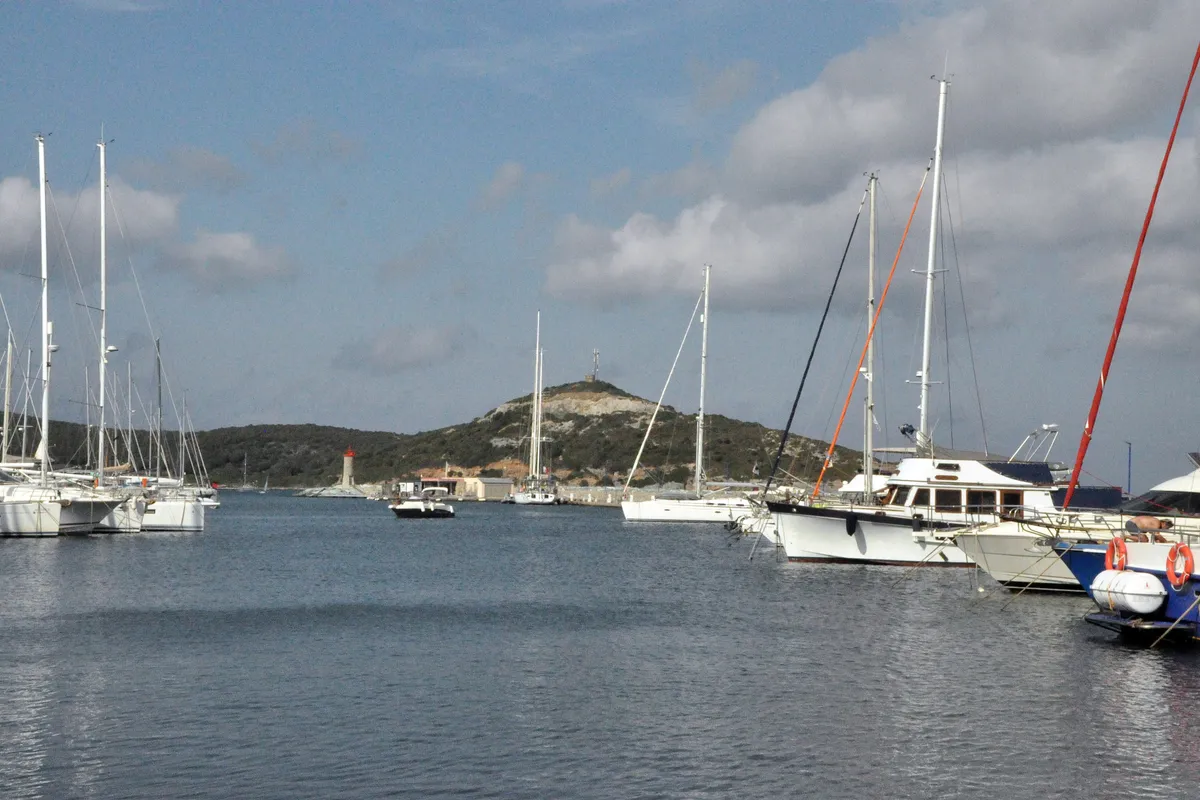
After Erbalunga, the road runs past a string of marinas to Macinaggio, the port of the commune of Rogliano, at the eastern tip. This is the start of the customs officers’ path (sentier des douaniers), which goes round the tip to Centuri. It sets off from the end of the harbour, past the last car park. Within an hour and a quarter on foot, you pass the Finocchiarola islands, Tamarone beach, and the Santa Maria chapel and tower.
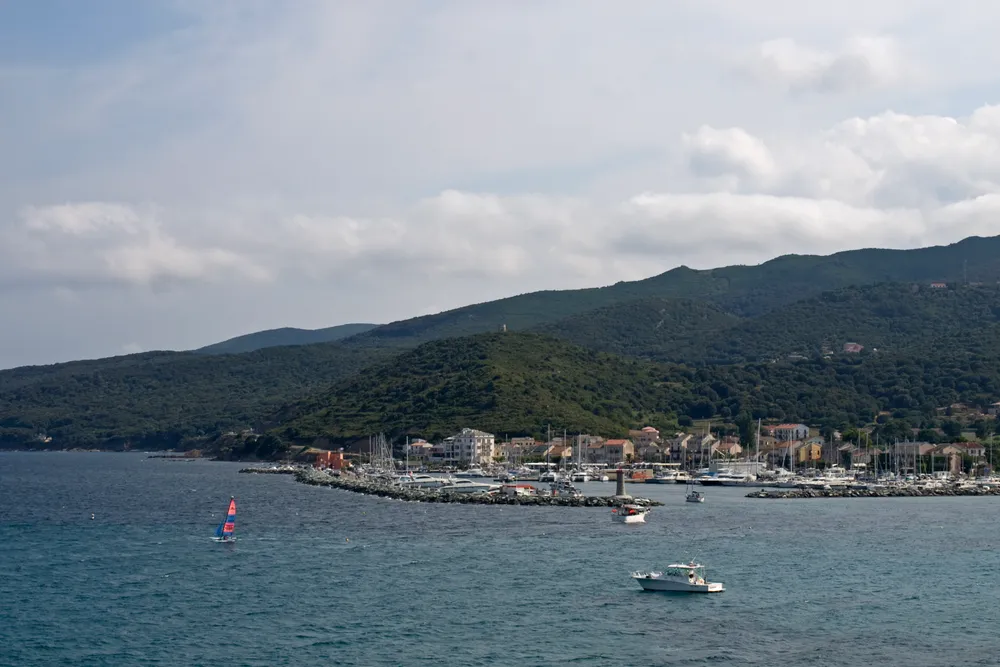 Photo : Ymblanter, CC BY-SA 4.0, via Wikimedia Commons
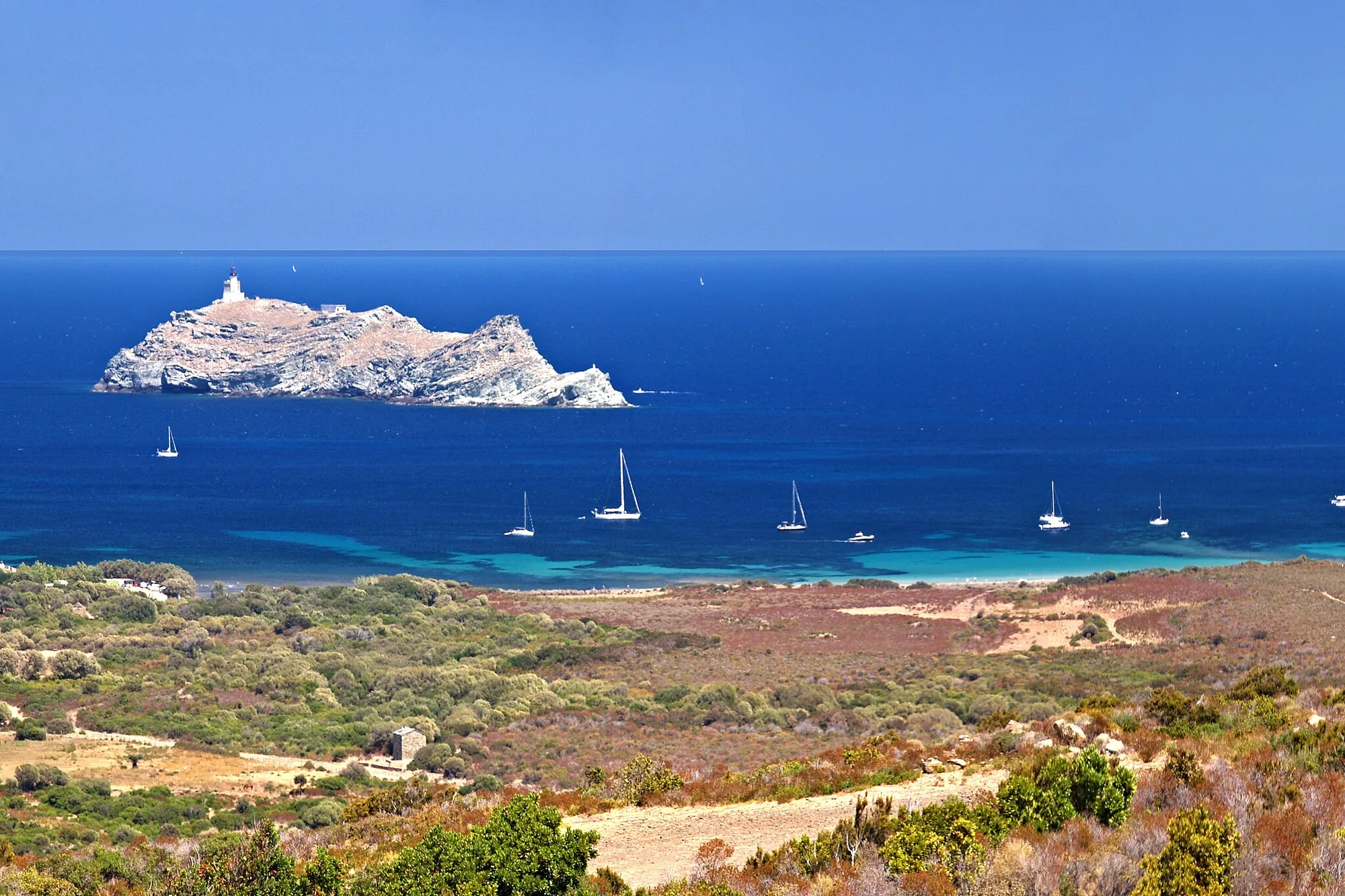
To Barcaggio, the Agence du tourisme de la Corse (the Corsican tourist board) allows 3 to 3½ hours on foot. From April to early October, a shuttle boat links the two harbours in about an hour: you walk there and come back by sea. By car, Barcaggio beach is half an hour from Macinaggio, at the end of a narrow road. It is a long curve of sand facing the island of Giraglia.
Between Macinaggio and Centuri, the road passes below the Mattei windmill, in the commune of Ersa. Park below it: a ten-minute walk is enough to see both coasts of the Cap.
Centuri
Centuri is the first harbour on the west coast. The tourist office describes it as France’s leading port for spiny lobster fishing. Fishing boats sit alongside café terraces, facing the islet of Capense. The commune has eight hamlets, including Camera and Cannelle, on the hillside. In Cannelle, the main lane runs under vaulted passages to the fountain: worth the detour if you have an hour to spare.
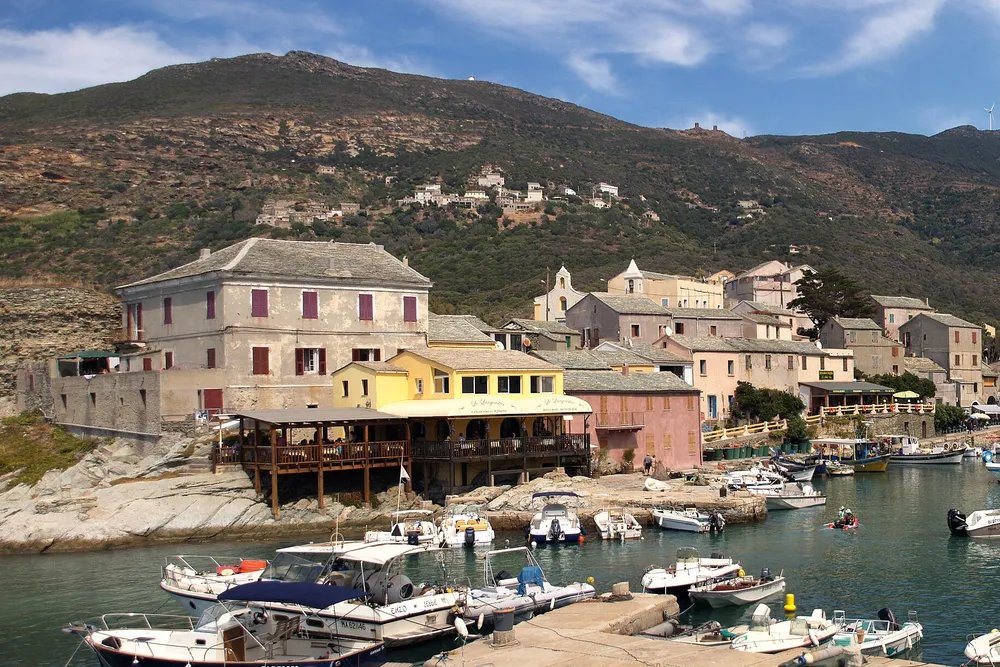 Photo : Pierre Bona, CC BY-SA 3.0, via Wikimedia Commons
Pino and Canari
Heading south, the D80 runs high above the sea. Below Pino, the round Scalu tower guards the marina and the remains of a former convent. Above the village, a small road leads to the Sainte-Lucie pass, then to the Sénèque tower (Seneca’s tower): a 25-minute walk from the public car park, with a view over both seas.
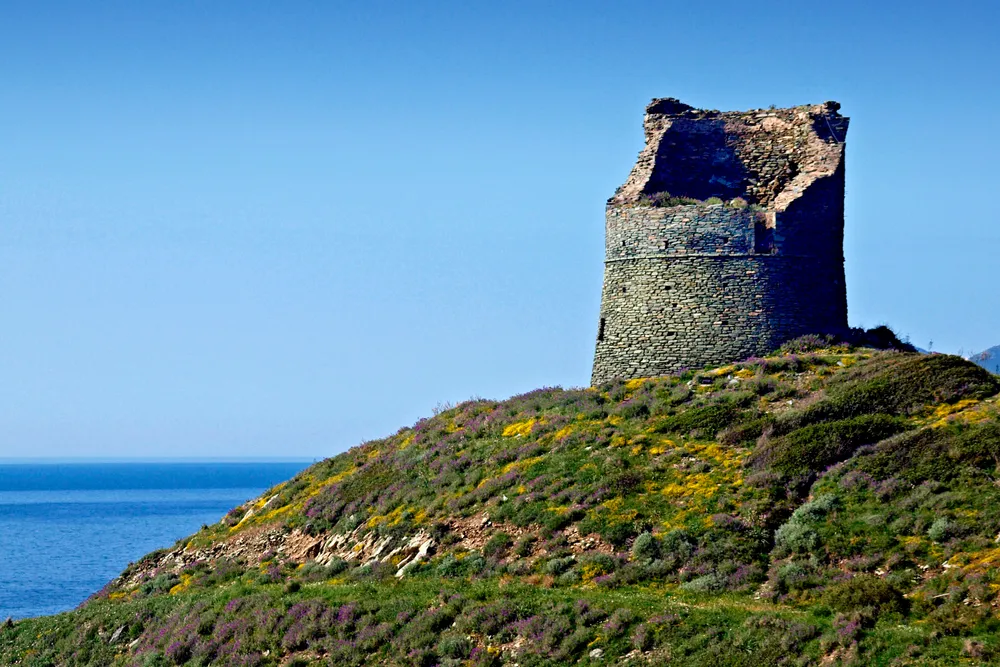 Photo : Pierre Bona, CC BY-SA 3.0, via Wikimedia Commons
In Canari, stop on the square by the bell tower: the view opens out along the whole west coast. Further down, the marina of Albo has its own beach and tower. Between Canari and Nonza, the road runs past the former Canari asbestos plant, which is being dismantled (see the practical information).
Nonza
Nonza sits on a rocky spur that drops sheer into the sea. The village grew up around the church of Sainte-Julie (Santa Ghjulia). At the top of the rock, the square Nonza tower is listed as a historic monument; despite its appearance, it is not a Genoese tower. From up there, the view stretches along the whole west coast of the Cap.
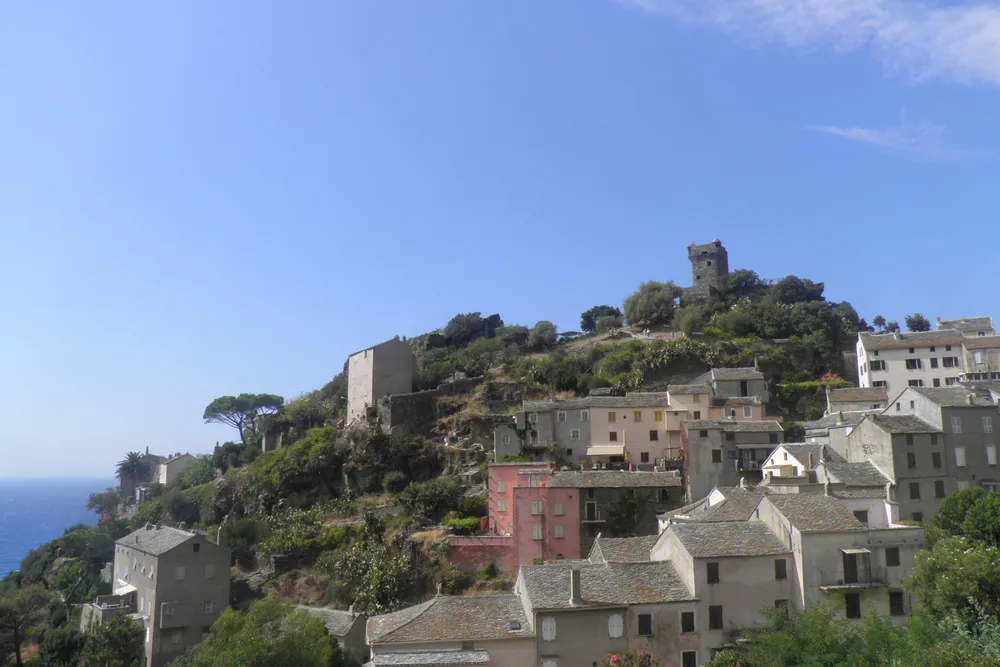 Photo : Gzen92, CC BY-SA 4.0, via Wikimedia Commons
Below the village lies Nonza beach, a long beach of black pebbles. Two paths lead down to it. From the village, near the church, a stairway goes down to the Sainte-Julie fountain and on to the beach: more than 500 steps in all, which you have to climb back up. The other way is shorter: coming from Saint-Florent, carry on about 1.5 km past the village, then turn left onto the small road to the car park. The main beach is five minutes’ walk away.
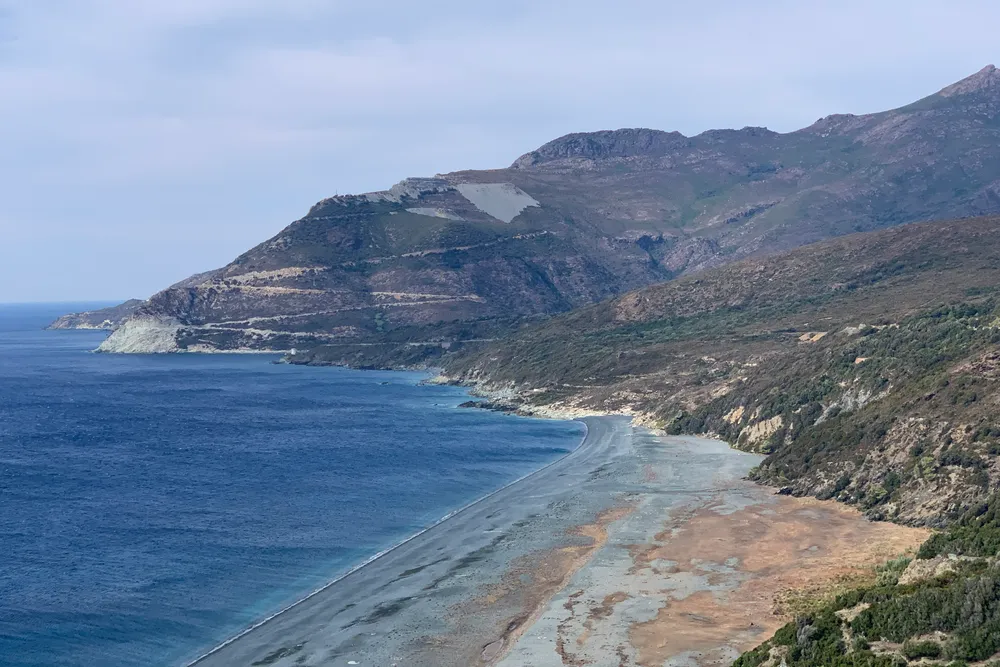 Photo : Chabe01, CC BY-SA 4.0, via Wikimedia Commons
In summer, parking in the village is very difficult: leave the car a few hundred metres before or after it, as the tourist office advises.
Patrimonio and the end of the drive at Saint-Florent
After Nonza, the road leaves the Cap and heads down towards the Gulf of Saint-Florent. Patrimonio is the last village on the drive, surrounded by vineyards below its church of San Martinu. This is Patrimonio AOC country, and the estates welcome visitors for tastings. Also try Muscat du Cap Corse, a naturally sweet wine (vin doux naturel) made in seventeen communes, from the tip of the Cap to the Nebbiu. See our selection of AOC wines.
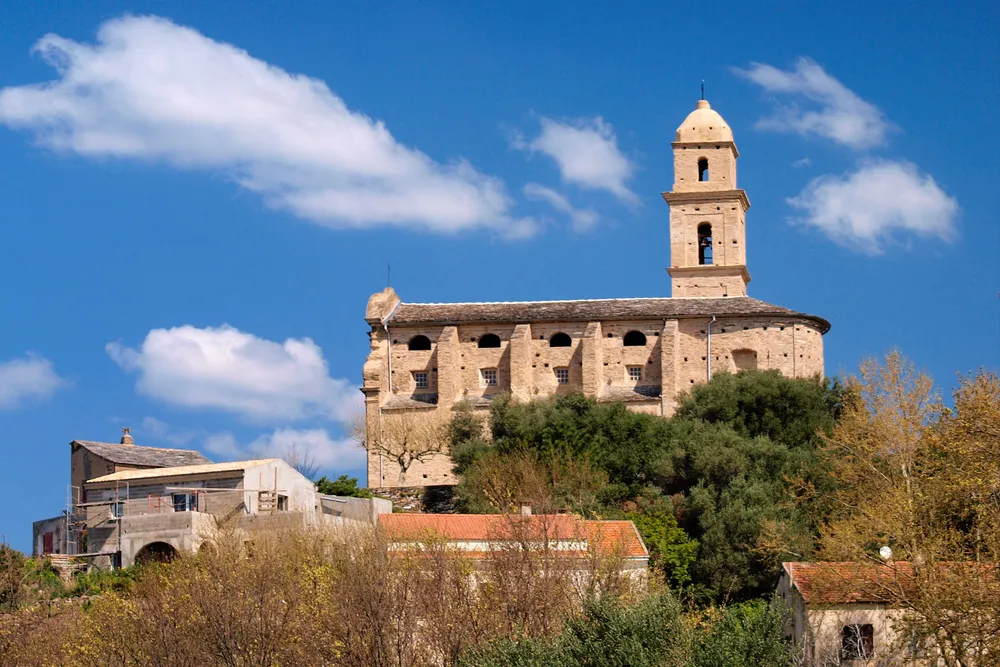 Photo : Pierre Bona, CC BY-SA 3.0, via Wikimedia Commons
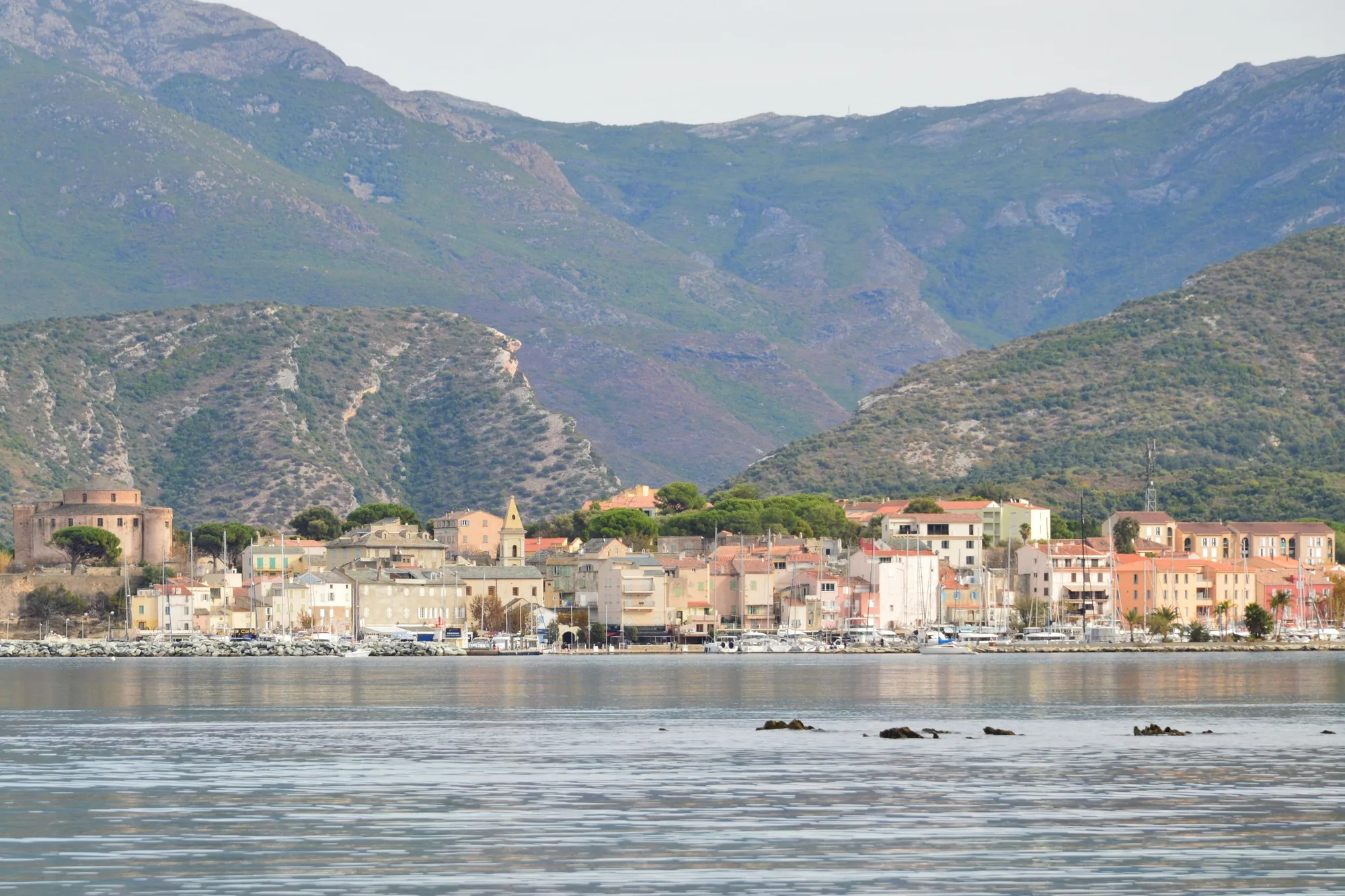
The drive ends in Saint-Florent, a quarter of an hour from Patrimonio. Boats leave from here for the beaches of the Agriates desert. To get back to Bastia, the Teghime pass gives you a last view over both gulfs. This drive is day 7 of our 10-day Corsica itinerary, with a night in Bastia before and a night in Saint-Florent at the end of the day.